E-24
Breaking Walls & Building Bridges: Dr Anita Patil-Deshmukh
In this episode of Grassroots Nation, we speak to Dr. Anita Patil-Deshmukh, Executive Director of Partners for Urban Knowledge, Action and Research (PUKAR), whose life and work have been shaped by a deep commitment to dignity, justice, and the democratization of knowledge.
Born into a family of political activists and freedom fighters, Anita grew up listening to conversations on equity and justice alongside her sisters—among them the late actor and feminist Smita Patil. Trained as a doctor at Grant Medical College, Mumbai, she later moved to Chicago, where she spent over 25 years as a faculty neonatologist. Witnessing the profound impact of inequality on public health pushed her to rethink the boundaries of medicine and eventually shift toward social science and community-led research. Since 2005, Anita has led PUKAR, a community-based research collective that places participatory action research with urban youth at the heart of its work on cities, culture, and community. A passionate advocate for the right to health and human dignity, her work explores the social determinants of health, urban poverty, and the importance of knowledge produced by marginalized communities.
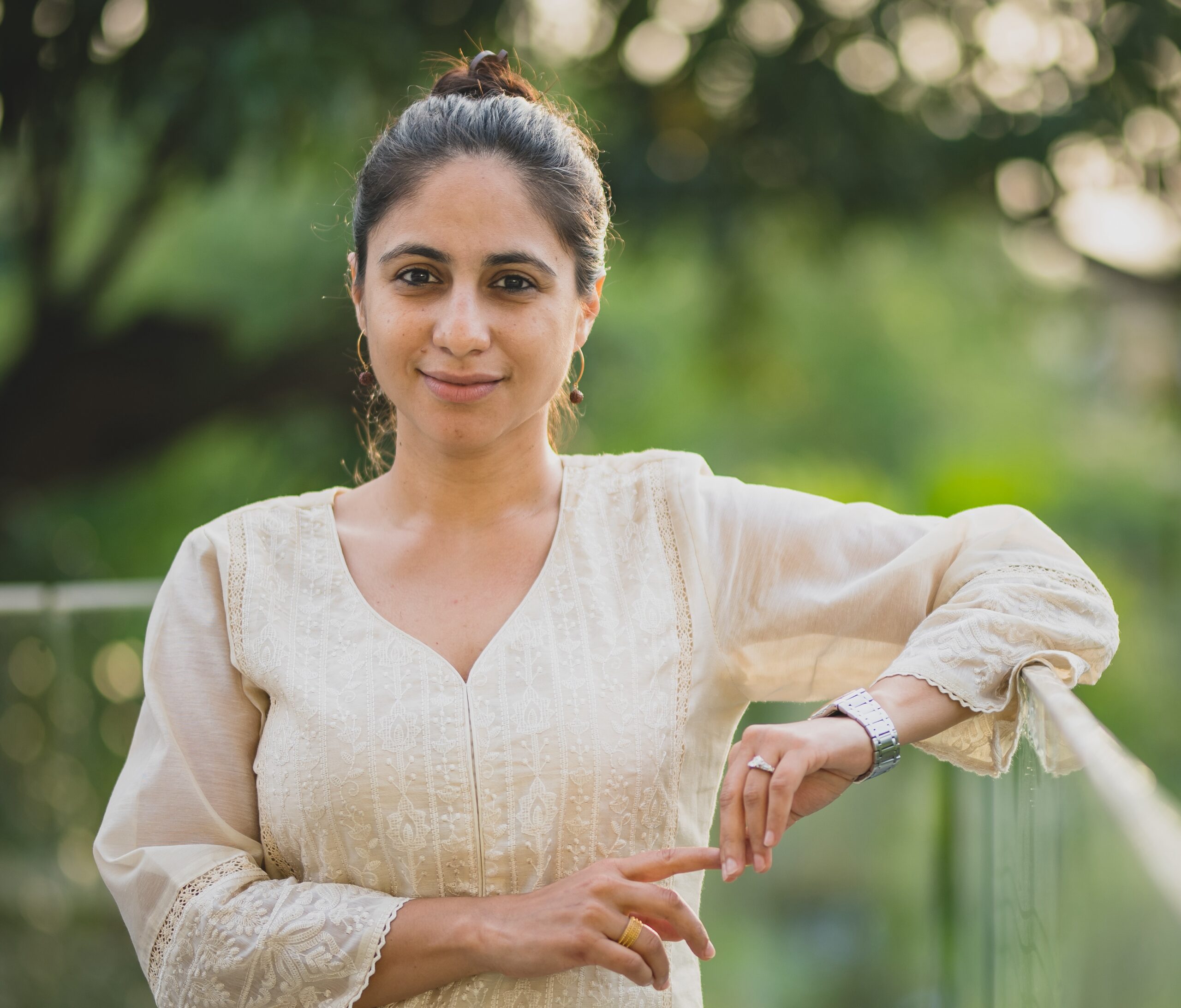
Dr. Patil-Deshmukh is in conversation with Natasha Joshi, Chief Strategy Officer at Rohini Nilekani Philanthropies. This conversation was recorded in Mumbai.
Subscribe to Grassroots Nation: Spotify and Apple Podcasts.
Speakers
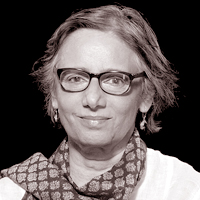
Dr Anita Patil-Deshmukh
Dr. Anita Patil-Deshmukh is a US-trained neonatologist, public health expert, and Director–Programs at PUKAR, where she leads research on urban poverty, social determinants of health, and youth-led knowledge production.
After two decades as a faculty neonatologist in Chicago and extensive grassroots engagement across India, she returned in 2005 to work in the development sector.
Her pioneering work with barefoot researchers in urban slums has earned global recognition, including the Harvard School of Public Health Innovator of the Year Award (2012) and an honorary PhD from the University of Bradford (2019).
Natasha Joshi
“You are the owner of this country, and good governance will come only by demanding it.”
Dr Anita Patil-Deshmukh
HOST
Welcome to Grassroots Nation, a podcast from Rohini Nilekani Philanthropies, a show in which we dive deep into the life, work, and guiding philosophies of some of our country’s greatest leaders of social change.
Dr. Anita Patil-Deshmukh is the Executive Director of Partners for Urban Knowledge, Action and Research or PUKAR, an organization based in Mumbai that aims to democratise knowledge production among disenfranchised youth and communities.
Today’s episode, Dr Anita Patil Deshmukh.
Dr. Anita Patil-Deshmukh’s life has been shaped by remarkable influences. She was born into a family of political activists and freedom fighters—her father, Shivajirao Giridhar Patil, was a social activist and politician from Maharashtra. She and her sister Smita Patil, the late actor and feminist, grew up listening to some of the country’s great social and political minds debate equity, equality, and justice in their home. For Anita, Smita, and later their youngest sister Manya, these were dinner table conversations that would inspire and shape their outlooks on life.
Anita’s path shifted when she trained to become a doctor, studying medicine at Grant Medical College, Mumbai. As a young woman, she left India for America, settling in Chicago and specializing in neonatology. She worked as a faculty neonatologist for over 25 years, where she witnessed the impact of inequality and inequity on the public health of communities on a regular basis.
A neonatologist by training, Dr Patil-Deskhmukh became a social scientist by choice. Like many of her generation who were raised with Gandhian values, yet working in the US, Anita found herself fundraising for Indian NGOs through the pioneering India Development Service and longing to move back home. This brought opportunities to return periodically and work in India. During these years she supported the work of a long list of important organizations from Gram Vikas, Vigyan Samiti GVVS, to SEWA, and this finally led to her running PUKAR.
In 2012 Dr Patil-Deshmukh received her Master’s Degree in Public Health from Harvard University. Since 2005, she has been at the head of PUKAR, an independent research collective that places community based Participatory Action research at the heart of their engagement with urban youth. It is a cross-disciplinary community-based centre that works on community, culture, and cities.
Dr. Patil-Deshmukh is a passionate believer in human dignity and the right to health. Her research interests—the social determinants of health, urban poverty, and knowledge production through the lens of marginalized youth—have been instrumental in shaping PUKAR’s vision and work.
Today, she is in conversation with Natasha Joshi, Chief Strategy Officer at Rohini Nilekani Philanthropies. The conversation was recorded in Mumbai.
NATASHA JOSHI
Hi, Anita. It’s such a pleasure to be sitting opposite you and having this conversation. And welcome to the Grassroots Nation broadcast. How are you feeling?
ANITA PATIL-DESHMUKH
I’m feeling honoured truly, because I have heard of the people you have interviewed previously, people like Ashok Khosla and Aruna Roy, who have been leaders to whom we look up to even today. So it really feels fantastic to be in this space and to be talking to you.
NATASHA JOSHI
I met you recently at the Pukar youth fellowship graduation ceremony. I think the thing that got me thinking at that fellowship ceremony, given that this fellowship has gone on for like multiple years, I was like, what is the origin story of this fellowship, this organization? And then of course I was like, what is your origin story?
Tell me a bit about, you know, the family that you were born in, your father. He had this journey as a political activist, a freedom fighter.
ANITA PATIL-DESHMUKH
So my father, along with his mother and his six other brothers, were working in Sane Guriji’s farm. Now Sane Guriji was a social activist in Maharashtra, a very well-known person who believed in equity, equality and justice very strongly. So my father was raised there for a considerable amount of his life in the initial. And then at age 14 he gave up school. He was I think 7th grade then and joined the freedom fight. I think they succeeded together to blow the train up which was carrying arms for the British government.
And then of course he was caught. He was put in jail. From there he ran away, jumping over the wall, he was shot in his legs twice, but he managed it. And then he was absconded for a year and then he was caught again in Lucknow. And then he was in an isolated cell for the remaining time.
And I think that was very common at that time. Many, many people did lot of studying in jails because they were stuck and they would do a lot of reading. So that’s what happened. He came out and my mother met him at some gathering, sabha, what we call it. And she was very impressed by what he was talking about. Freedom building new nation. So she ran away from home and they got married in a big sabha when SM Joshi and Nana Sahib Gore, both of who were a very well known Maharashtrian leaders.
So they said, yeah, we, we announce these two people married and that’s how their marriage started. And then I was born. They lost my brother. Actually, they were very poor. See, they had no home. They was going from place to place, staying with somebody now and then, later person, that person in that whole process, I mean, nobody would believe they were that poor, but they were. And when my brother was born, he got sick. He was nine months of age.
Yeah, they lost him because they didn’t have money to take him to a doctor and getting treated. After that I was born. Then my father realized that he was then a member of Praja Socialist Party and he was building unions of textile workers there. So he was always travelling.
NATASHA JOSHI
This was post-independence.
ANITA PATIL-DESHMUKH
This is post-independence. Then I was born and then they were, back to square one. Now who’s going to feed this child and us? So my father, a very smart guy, he said, “listen I cannot earn any money.” My younger sister, my Aathya and my mother were very close friends. So he picked both these women and he stuck them in a hostel to – “you learning nursing while I continued to do the building of the unions”. That time, girls from good families, will not go to nursing. So there was a shortage of nursing.
So those people, although neither my mother nor my Aathya were school educated, they both had to leave schools and drop out of schools. My mother used to maanjaw barthans in other people’s homes. Yeah, She also came from a very poor family, so she had to drop out after 4th grade, which was, I think, very common in those days for girls to drop out of school even today. Is that common? So they both went to nursing school and my father essentially raised me for the first six years of my life.
So it was just me and my dad.
NATASHA JOSHI
And but he was also very busy and active.
ANITA PATIL-DESHMUKH
Yeah, so he would leave me alone at home.
So whenever there was no food at home, he would feed me only bananas because there was no money and no money to buy food. So the cheapest thing available was a banana. So he will just give me so many bananas. I have developed such an allergy to his banana that I quit eating bananas.
Then we moved to Pune. My mother was still in Dhulia, but we moved to Pune and then the only place he could find the cheap room was, you know, red, red light area.
So I was two years of age. So that was what ‘51? I was born in ‘49, so ‘51-’52. And that’s where we used to live. In a chawl. And he would whenever he was available, he will make some, he will cook for me and give me food and then he will disappear. So I was used to being my on my own. And at night he will leave the lights on and go because a lot of the meetings used to happen at night with the workers. They were available in the evenings or at night. Then my father would often leave me with SM Joshi’s house, Nagavuri’s house, Rajnath’s house. This is all, that one’s house, that one’s house. And he would say, kabhi kissi se kuch mangna nahi hai. Chup betna hai. Han, kissi ko. Takleef nahi dene hai. I think that has also stayed with me that I would never ask for anything personally because you know it’s something you don’t do. So Smee was born in 1955, she was born premature.
Smita Patil, She was my younger sister.
She was six years younger than me. And by then my mother had got a job in a Municipal Corporation hospital which was built… both sides of the hospital were farms and the hospital was built in the middle of that farm because it needed to support the– it was a maternity home and it was needed to support the women who were working in those farms. So that’s where we grew up. We had a small two room place and we were very happy.
I had a very happy childhood, but we were always, even in that two room place, we had many, many, many socialist leaders who came and visited us. Madhu Danda, they came. Nath Pai came. Nana Sahib Gore came. I remember Madhu Mama sleeping on the table, dining table, and the roof was leaking, so he took a raincoat and slept under the raincoat. I mean, I have such fabulous memories of those times
We were always surrounded by debates about equity, equality, justice.
NATASHA JOSHI
Then what’s your earliest memory of understanding what this was? You know, because when you’re little, you’re not even understanding what this discourse is. So what is your earliest memory of listening and starting to understand what your father does, for instance?
ANITA PATIL-DESHMUKH
The earliest memories of that was how anybody who came to our house was treated. And when my father would have a driver, my father would always say to my mother, pehli isko kilao. Then he will eat. And whenever they had to drive at night, he will say to the driver whatever his name would be said, tum peeche sojao, and I will drive half the way through. Then you drive and I will sleep at the back. These were the memories of equality, iniquity. They sat with us right from the early times.
Whatever we ate they ate it, there was never that. So that has continued with us all these years. That never changed. And I think that was my understanding of whether it was equity equality or whether it was how do you treat people? The other very strong memory I had is my father was then building unions of oil and petroleum workers. Now the majority of those people were Muslims. Oh, we didn’t know that. We had no clue. They were Mistry uncle and Mahadev uncle and Barkat Katali so Hamare Leto and we will go to their homes.
And although I did not like meet, I remember used to sit around that big thali with loads and loads of biryani and I was used to sitting in one corner eating chawal and khatiti. I also remember very distinctly dancing in the Muharram with the masks. Natasha, the three words we never understood neither me nor Smee – one was gender because my father did everything at home, one was religion, and one was caste. We had absolutely no clue that these things exist because it never existed in our home, never existed in our conversations.
I think my biggest inspiration and both my gurus were in truest of the sense my parents. So whatever I always think, whatever is good in me today, it’s because of them. I can’t deny that.
After then Mania was born. She’s nine years younger to me.
NATASHA JOSHI
Yeah. And then at some point, you know, your father became more prominent, right? He became more established or, you know, he sort of started becoming more lead streaming politics. And like, did your childhood and then your teenagers and your young adult would change as a result of like as your father’s profile also sort of grew?
ANITA PATIL-DESHMUKH
So my father first became MLC and then he became MLA of Praja Socialist Party and they remained a part of Praja Socialist Party until 67. And all these Praja Socialist Party members, they all came home. So we were always, you know, they were not strangers to us. They were like Mamas and Chachas and this and this and this. There was no change in our lives. My father was always aware and my mother practically raised us. And because I think we had a fairly easy childhood, I don’t remember having our life changed dramatically. No.
My father was again, whatever his politics, he never brought it home. And he was the most feminine man I have ever known. So he will say to my Vidya, you get ready, I will iron your sari… Vidya, you do this and I will plait the kid’s hair. He will do everything at home, cooking, cleaning, bathing us, making our clothes whenever he had time. So we always thought that everybody does everything.
NATASHA JOSHI
You mentioned that gender was not really a thing. When did you first realize it in your own lived experience? And when did you start to realize that, you know, these social ruptures exist, Gen. You know patriarchy exists because you grew up in this, you know, microcosm.
ANITA PATIL-DESHMUKH
The first time I realized all of this was when I came to medical school in my college I think we were also very naive in many ways. And because we have not, we didn’t have too many friends outside, you know, we were so busy in our own home.
NATASHA JOSHI
So from school you went to College in Pune? What university was this? Or which college was this?
ANITA PATIL-DESHMUKH
66-67.
That time it was known as MES college. It was also in Marathi. So we learned in Marathi in school.
NATASHA JOSHI
And what were you studying?
ANITA PATIL-DESHMUKH
I was never given a choice to think about what I would want to become. Ever since I was a child. I mean like 7-8 years old, all I heard from my mother is you have to become a doctor and go to the villages and serve poor people. That was it. So I didn’t think beyond that. I didn’t know if anything existed beyond that. So I’m supposed to become a doctor, That’s it.
But for medicine, I came from Pune to Grant Medical College and that was a huge cultural shock. That was the time I realized caste, class, gender, hierarchy, all of that came to me in that it was awful.
NATASHA JOSHI
Say more about that. Like, how did you realize it? What happened when you came to Grant Medical? It was Bombay, right? Yeah. What are your memories of that time?
ANITA PATIL-DESHMUKH
So I remember I used to drive scooter and I didn’t think driving scooter was any different. I mean, me driving scooter was any different than a boy driving scooter. That kind of distinction didn’t exist in our home. I always look back when I say, you know, we were very stupid in many ways. We were naive to the point of being stupid. Never realized all of this. So I came to Mumbai and I used to drive school. I had my oil plaits, my sari, and I didn’t know a word of English. How would I know English? And here I go to Med school. And that time in Grant was a government college, right? It was not a BMC college, so they used to have 30% reserve seats for Indians who are sitting in Nairobi. So those guys or boys and girls came high fi speaking all this fancy English. And they used to look at me as a monkey se, no, zoo se koi monkey nikal ke hamare class me aagaye jissko koi akal nahi hai. So those five years of Med school were horrid from me. They were awful. Because, you know, I mean, I had a lot of inferiority complex to begin with because you don’t know English, you can’t dress like them, you know. So and then they had also, I realized the class.
We were involved in Rashtra Seva Dal Kalapatha which was an offshoot of Raja Socialist Party and the principle behind that was education through entertainment. So ever I was what me was probably 6 years of age and then me we both used to go and participate in the Kalapatha even earlier than before Smee was born. So we used to do dance dramas and the the the usually thematics were… so first a dance drama was Jai Ramche Ashru. It was on partition because then it was on farmers. Then it was Mangalavarchii Manch when the yarn had gone to the to the Jupiter. So we used to do that. Then we did Maharashtra darshan.
So Maharashtra darshan was essentially related to the cultural and cultural ethos of Maharashtra, which meant dance and all the Saints. So we had a very strong this thing of saying Namdev, Nyaneshwar and all of that. So it was all related to that. So we used to do this dance dramas and we used to go from village to village to village to village to village. The dance drama was about 2 1/2 hours and Vasant Bapat was a very well known professor and also a poet. He had written it all down. And then we had, we were almost 50-60 of us.
So all the boys who danced with us were from the slums, from Santa Cruz slums. And all of us were like lower middle class, middle class girls. And my mother used to say in every Ganapati holiday and every Diwali holiday and every summer holiday, we had to go and do this. Again there everybody had to do everything. There was no difference that, oh, you are a boy so you will pick the trunk and I’m a girl and I will not pick the trunk aisa nahi tha. Everybody had to do whatever it came. We had to fold our own clothes, fill up the trunks, take it outside, take it to the bus.
We have to pick up the build the stage because many a time the stage wasn’t built, you know, used to go to small, small villages to help the boys to build the stage. So again, this was such a strongly Gandhian philosophy. Jobi kaam hain sabko karn hai. Nobody is going to, nobody else is going to do your work. You have to do it yourself. So all this was inculcated in us very, very deeply. And I remember Nilu Phule, big actor, so Nilu Mama used to come home and used to tell my mother accha tomhare dono betiyo ko bhejo.
So I will be sitting behind his cycle on the backseat and Smee will be in the front seat and he will cycle us to the Bhudwar pet office and we will practice.
NATASHA JOSHI
So it also tells me why when you came to like Bombay, and with the medical college how this idea of class and hierarchies started coming in and then so you finished your training in medicine and then when did you decide to go to Harvard and how did that happen?
I didn’t go to America in the 1st place by choice. That was the first thing my parents had told me long ago. Partner, we cannot do that. Neither did they. Look at their history.
Now in this atmosphere of this Grant Medical College, how the hell am I going to find anybody? So then at the end of, I am already 23 years of age. And when ever since I was 14 years of age, there were people from my village who were after my father, kiski shaadi karadu, choda sal ki hi gayi hai tum kaise rakh sakte ho. Yeah, is so my father and mother held everybody until I was 23. Now they said you haven’t done anything. Now we have to find somebody for you. That’s how it happened. I ended up in America. I was not very happy about it.
NATASHA JOSHI
So you got married?
ANITA PATIL-DESHMUKH
Yea I had to get married to somebody who was in a distant relationship but who was in California.
Yeah, I I reached California, I think end of 74.
NATASHA JOSHI
That would have been another culture shock, Or was it not?
ANITA PATIL-DESHMUKH
But when I look back, I think my cultural shock from Pune to Mumbai was much worse than Mumbai to California because by then at least even there I didn’t know English as well as one should know. And when I asked for help, because, you know, I had to give exam after exam after exam, so we had to fill those big, big, big forms and I didn’t understand the English. So when I asked my husband, Ki bhaiyya kuch, madat karoge aap, because I don’t understand how to do that.
So he said very simply, he said, listen, I came to this country on my own and I did everything on my own. Now you have to do everything on your own. I felt hurt, which was a very difficult thing. But you know, Natasha, I give my husband a lot of credit for having said that because then I decided that never again will I ever go to this person asking for any help. Yeah, everything I will do on my own. And I did it. So then I did my I found my own internship, my own residency program.
I did 4 years of … I did 2 years of medicine, two years of pediatric.
Which was it’s called Medfeed in America, but I basically did last two years in pediatric, which is related to children’s specialty and then I did three years of intensive care fellowship.
NATASHA JOSHI
And what did you notice in the hospitals and in that system in the US at that time? For instance, did you become alive to the race issue in America at that point, or was it still under the wraps in some sense?
ANITA PATIL-DESHMUKH
I have only one experience so let me tell you, I didn’t want to go into private practice because I knew with my brown skin I’m not going to get any patients. So I chose a specialty where my skin colour will not matter. Intensive care, you know when people are sick they are going to come to irrespective. So that was a very thoughtful choice made because I used to see how the other Indian doctors fared. And the second thing is I made a choice that I will work for a University Hospital.
I will be, I will be employed because at a University Hospital, everybody who comes to your door will be treated. That’s not true if you are in a private practice or in a private hospital. And you know how we were raised, we were raised everybody who comes to your door, you have whether you are at home or you are in the hospital. So those choices were made very thoughtful. Ki Jobi mere darvaze pe ayenga na me uski madat zaroor karungi.
So majority of the intensive care units globally or at least in America and emergency rooms are usually. Staffed by foreigners. So that was very clear to us. It was Indians, Koreans, Chinese Mexicans, Polish, but not Americans. So we just said these guys are superior, so they do not want to work hard like us, so we will work that. We needed jobs. So it was a combination of that. And in the intensive care unit, we were treated equally.
Actually, nurses to lovers. Most of the nurses loved us because we were always at their beck and call. Simple. So they loved us. I didn’t feel this, but one time I did. I was in the hospital
So I was in the hospital. I was monitoring. The patient was in labor and the fetal heart tones were not looking good. So I told the nurses, my staff nurses that please call the OB. He needs to come in and deliver this kid quickly before, you know, things get worse.
So since 8:00 at night, we kept calling him because the people are looking bad, they are looking bad. We kept calling, we kept calling, we kept calling. Doctor Cohen was her doctor. You know, he was a six feet 2 inches tall OB white man. And he said, yeah, I’m coming, I’m coming, I’m coming. Finally. And no, then I no, the nurses said, Anita, he’s not listening. You call. So I said, okay, I’ll. So I called him. So he said, yeah, I’m coming. You know, angry tone.
Finally he arrived at 1:30 at night and he we had a long corridor and he came in and I was at the end of the corridor and he screamed from there. He said you brown skin, shrimpy looking woman, you are going to tell me when I should deliver my baby. That is the only incidence I distinctly remember where my skin color and my looks were.
NATASHA JOSHI
So how long did your medical career last.
ANITA PATIL-DESHMUKH
It lasted until 2004. But, in 1987, this is the most interesting part of my life in America. I joined as a volunteer in a pioneering developmental organization which is called India Developmental Service. It was started in 1973 by S R Hiremath, the environmentalist from Karnataka.
AUDIO SR HIREMATH [https://www.youtube.com/watch?v=T4EkeNcWqPQ, 0:24 – 1:20]
With our contacts all over the country things are progressing very very well but then came the emergency and when I thought that if we don’t have the larger Democratic we cannot have a meaningful atmosphere for the rural poor to assert their rights and uh take charge of their lives and lead a meaningful life which was essentially what our objective was.
ANITA PATIL-DESHMUKH
So they had been functioning and in ‘87 they found out that I was in the area and they came to me saying Anita please join and Girish had come. See ‘86 we lost my sister and then Girish Karnad had come to US University of Chicago so he must have mentioned that Smita’s sister is here or something like that so they came hunting for me and they said come join us. It was a purely voluntary organization until today. And we used to support integrated rural development projects across the country. So we would do the fundraising and we used to send 3000 dollars per year for three years to small organizations as a seed money. You know that time this CAPART organization of government existed who used to give funds to civil society or rural organization lekin unka problem kya tha they said ki teens saal ka dikhao. Now small organizations cannot create the three years record until they have funds. So we had decided that we will do this seed money for three years. So then they have created a record. Then they can go to CAPART, NABARD, idhar udhar jake fund milenge.
I joined them and then when we were a group of all professionals, doctors, lawyers, bankers, all of us were like that. We all had our own careers and in the spare time, whatever spare time we had, we would do ideas work which included reviewing projects, doing fundraising and creating a newsletter. Used to do a newsletter every two months. So everything we had to do, everything ourselves, it was all voluntary, right?
So we could hire somebody to do anything. To tum jadhu bhi lagao, tum video call bhi karo, tum likho bhi, tum hi karo. But we all enjoyed that. So in that and we also used to do every year seminar on developmental issues. So it was water, education, gender, environment does that everything. So every year we used to get activist from 1 person from India.
So guess we all have whom We had Vandana Shiva twice, we had Medha Patkar, we had Aruna Roy, we had Mirai Chatterjee from Seva, we had Yunus, we had fantastic people. And at least Medha and Vandana Shiva, Rajinder Singh, Viradri, Jal Viradriwala, all these people, I hosted them at home. So imagine my training, it came from all these gurus. So that was huge and it actually gelled very well with my socialist Gandhian background. It just was a perfect fit for me. Ke Oh, this I enjoy lot more than intensive care unit. I knew it then, but you know, I was a single parent.
I had to educate my two kids.
So I couldn’t give up. But I continued to do this volunteering. Of course, they all, they’re also had to do this begging business. So they said, Anita, you have to do fundraising.
Now my problem used to be, okay, I came to you and asked you, okay, Natasha, give me $100 next year. I’m going to come back to you again. And then you’re going to say, Anita, tell me what happened to my $100.00.
So I said how am I going to come back to you until I actually find out what happened to your $100.00? So what I decided to do is every year in January when it was dead cold in US, I would come home to India and I will pick up one or two States and I will go and visit the projects we support.
This was in 90s, yeah, you know, 80, I mean 91-90-92-93-94-95.
NATASHA JOSHI
Yeah. And did you see things turn because of the 91 liberalisation? Did you, did you start to see certain changes quickly? Were you able to tell that there was this moment? Now in hindsight, we look at 1991 liberalisation as this big like watershed moment in the Indian economy.
But were you seeing it on the field from like the 90s because you every year were coming, what were what were you observing?
ANITA PATIL-DESHMUKH
So observation was this, that the travelling had become better, but did the situation in the rural sectors change? Not really. So there I didn’t see any different because all our projects are the integrated rural development project. I didn’t go and visit any cities, but travelling there was definitely an improvement that I saw. So that was an improvement I felt was definitely there. And also I saw that the middle class had become more prosperous. That was absolutely obviously seen.
But in rural sector, I didn’t see a whole lot of difference between what was there in 92 and what was there in 96. There I didn’t see a change. And the other thing in our project proposals, what we decided to do was to focus more on gender, that okay, women need to be empowered. So we may need to get some work. They need to get some skills. So that was something we did. And I think that realization came to us being in America. That was not India born. IntYeah. So this empowerment of women and that must happen that rrealization actually came from the US.
NATASHA JOSHI
But also, what was the India, what was happening in the Indian civil society space from whatever, you know, in those 80s and 90s – while you were in the US doing it through that secretariat?
ANITA PATIL-DESHMUKH
So my connection to the Indian civil society was only through the organizations we supported or people like Mira who came or Rajinder Singh or Vandana Shiva. As far as the awareness about gender, I must confess that a lot of it came to me through Shyam and Shyam Benegal,and the movies he created. And while we were in Chicago as a fundraising event. I have called Shyam to fundraise to Chicago five times with with his films. So we will invite Shyam and Mira ki okay, please tumhara film leke ao and then we will screen the film and then people will gather and that is how we will do fundraising. So a lot of that was absorbed by me through Shyam’s films. And how did I get to know Shyam? Of course because of Smee! So a lot of my education related to this gender issue was more pronounced through his films and the discussion we had. And we used to have a very good amount of discussion because I had known Shyam for such a long time.
NATASHA JOSHI
So coming back to the mid to late 90s, you were making these trips here to do those in some sense donor reporting and just understanding what progress is looking like. You were fundraising and then how did that journey mature and at which point did you decide to come back to India?
ANITA PATIL-DESHMUKH
Natasha, when I left from here, I always told myself that I’m coming back. I didn’t know and I was under the stupid impression that I’ll be able to convince my husband and we both will come back. That didn’t work out. Then I decided oh maybe I will have a child and then it will change. Oh when I had a kid I had no time for the kid. So what did I do? I picked up my 5 week old kid and put it in the laps of Smita and my mother and I said take him. I didn’t have time, I was so busy in learning. And happily so, because, you know, he was pampered and looked after. Smee used to take him around. He said no, he’s my kid, I said bhai leke jao. Yeah, because she will always have him. She always used to tell you this is my kid and it happened, there were some rumors because she came to America and she went back with the five week old kids! So it was like two things. It was a hilarious story and she was unabashed about it, though. Tho he was here. And then my husband still didn’t come back. And then things just got worse and worse and then we split. Tho I couldn’t come back until my child was in the graduate school. I mean, until he graduated. That was the divorce decree.
So I was pretty much stuck. But you know, what actually kept me going was my work with IDS.
So that was my real energy, energizer, my stimulation. And then I used to come home every year. My parents were here, Prateek was here. So also my parents raised in essentially. So that was a very, those are mostly my learning years and during every time I will come, I will go and visit SEWA. I will go and visit this guy, I will go and visit that guy. I will go to GVVS, so I met a lot of people during those times who were doing developmental work at the grassroots and I did a lot of my learning and my inspiration came from them.
NATASHA JOSHI
Was the funding for that and the support for that still coming from abroad or was there any kind of it was either… was there government money? Because I’m thinking about what has changed from them to today and who is supporting these programs. The actors were all local and they were all grassroots and they were all leaders… But was the money coming from either diaspora or large foundations abroad? How is this work being funded, this developmental work in India?
ANITA PATIL-DESHMUKH
GVVS was funded by a local organization. This they used to do watershed development in Rajasthan. SEWA was mostly funded by the government and many other organizations, 2-3-4 organizations in Tamil Nadu and in Orissa – again partly formed, I mean partly funded by local organizations like Banyan Tree and stuff like that. So they were some larger organizations which were also supporting these people, but there was also a large amount of foreign funding coming through. So I believe there was some amount of philanthropic support, but that was mostly local. So Tamil Nadu project, you know, local projects, local organizations, lot of these were like family funds, lot of these were family funds and they will support small, small projects.
But I didn’t realize or I didn’t see any sustained effort or sustained philanthropist or you know, some structured efforts to fund this. Now at least I didn’t hear about that. And then there was a large movement during those years in microfinance. So microfinance was big then. So we used to support microfinance all the way from eastern UP all the way down to Karnataka. So I learned a lot about microfinance- good, bad and ugly. I also made a lot of women during that time who were not very happy with the way microfinance recovery was done.
NATASHA JOSHI
Okay, why? What about?
ANITA PATIL-DESHMUKH
Because they felt that they were under a lot of pressure to do the recovery and they were really not in a lot of time they were harassed about it. Yeah, so that I heard from the women in absence of the people who are funding them. So when, you know, Ramesh Bellamkonda came with me and then when they sat, they will be telling me this. But once, the next day when he’s not there and I meet them, then they will tell a different story. So I saw that.
I knew right from the beginning and I wanted to come back to India. One thing that weighed upon my mind very heavily was the fact that I went to a government school. So my father paid 20% of my fees, 80% was paid by the government, and the government paid me what people’s tax money. So I knew that it was the people of my country who had made me a doctor. That was a huge debt on my mind that I’m not doing anything for my own people who made me a doctor. So the only way I can pay that debt back is that I go back and I do something for them. That was very clear in my mind.
So that was one thing. And actually, I love my country, jaise bhi ho. I’m an American citizen. I have two kids there, but that never became my home country. I could never do that. And maybe it is partly because of the fact that my parents were here and all my upbringing was in this country and everything good in me was from this country.
As it happened, Arjun Appadurai, who founded Pukar, founded it in 2001. He was at the University of Chicago. He used to head Humanities. So many of our programs we did yearly seminars many of those seminars, some of the people we invited were my friend and his friend – Sheila Patel, you know, Kalpana Sharma and all these guys. So we knew a lot of common friends and Shyam and Arjun were good friends.
So every time Shyam will come, you know, we will have all these conversations. So Arjun knew my work with IDS very closely. So when he heard that I’m thinking about before that, what happened was this, I had invited Amartya Sen – I was invited to become a member of the Chicago Council on Foreign Relations. So there you know, I was helping them with some seminars. So we invited Amartya Sen. So Amartya Sen came and after that in 1998 when he became… he got the Nobel Prize.
I contacted him again and I said we really want you to come to IDS because now that you have become a Nobel Prize winner you know we want to felicitate you. So he came. Then he came again. I invited him to the Chicago Humanities Festival. I was again invited to be their fundraising. It always came to mind, this fundraising business was always a huge story.
So for six long years for the Chicago Humanities Festival, I also did their fundraising. So I invited him again for the Chicago Humanities Festival. So we had a very good close equation with each other. So when he found out ki I’m thinking of going to India, he said yaar tu ye neonatology kya karogi? So he knew that you know we are having a hard time surviving kids who were born at term and where are you going to head into this prematurity and this and that. So he said jana hi hai tho do something where you will impact a larger number of people. So it was he who said go and do public health.
So then I quit and I went to Harvard to do public health. And when Arjun heard that I’m going home anyway, so he said, oh, I desperately need somebody to take over Pukar because Rahul is leaving, blah, blah, blah, blah, blah. So that is how it fellin my lap. I didn’t seek out anything. It literally fell in my lap.
NATASHA JOSHI
So you finished your program in public health at Harvard. What was that like?
ANITA PATIL-DESHMUKH
That Natasha, for the first time in my life I had no other responsibility. No sisters, no guests, no IDS , no patients, no children, nothing. It’s just me and my studies. It was a seductive time in my life. If I could have more money, I would have definitely done the Masters in Development for two years at Kennedy School. I was in Kennedy school for six months anyway. But it was the best time of my life and I wish I could just go back and experience that. It was beautiful. Bas padhai karni hai, aur kuch nahin karna hai, just me and me and me.
I still keep thinking, you know, now I’m old enough, I think I should just go back and do some fellowship.
NATASHA JOSHI
So you took up the offer to take on Pukar and steer it in India.
What was the mission at that point like? What was the scope, scale? What was the work in Pukar happening in 2005?
ANITA PATIL-DESHMUKH
That time Pukar was very different. The Pukar that time was about urbanization and globalization because that was Arjun’s strength. His core strength was in those subjects. Most of his research and writings are on those subjects. So they used to do before I arrived, they used to do seminars on these issues related to and discussions and stuff like that. And then in 2004, Arjun wrote an essay called Write to Research, which got published in some very fancy journal.
And based on that, the previous Executive Director Rahul Srivastava created a small project called Tarunayee, where the students from Wilson College who were non-english speaking kids, he taught them to you go back and look at your community and figure out what’s going on in the community and figure out what’s going in your community and write something about it. That was the seed of the Youth Fellowship. So that particular project we took to Ratan Tata Trust and Ratan Tata Trust supported Tarunayee for one year and they liked the results. So the Youth Fellowship was launched. Youth Fellowship was launched in 2005.
HOST
The Youth Fellowship is PUKAR’s flagship project, is a unique knowledge initiative, which empowers and provides a space for young people to use research as a pedagogical, interventional, and advocacy tool to negotiate the city and focuses on transforming the quality of life in Mumbai. The project aims at democratizing the research process and makes it accessible to everyone who is inside as well as outside the formal education system.
Every year over three hundred young people come together to join the fellowship to better understand their localities and neighbourhoods.
ANITA PATIL-DESHMUKH
If I remember currently, lot of projects were about really basic necessities like water, ration space, later on – and some of them are really hilarious. I mean, we had a project where the boys made a research project and why girls do not want to marry boys who are living in chawls. It was very simple. Now you don’t have a toilet in your home. Simple but a lot of it used to be about PDA systems water, a lot of it. So basic necessities of life. There were a lot of those problems. We had another group of women I think 4-5 years ago, they looked at all the women who are about thirty and still unmarried and how does the community looks at that.
In other, some of those were then in between, I think in between 3,4,5 years, we had a lot of projects related to gender, sexual harassment, a lot of it related to sexual harassment. They all came in a crop. Some of them did a very lovely job. Yeah. And then more and more, I think at least in the last three years, we have definitely seen changes in the youth fellowship where some of our youth fellows actually come from sophisticated colleges. Ruparel, etc.
And then there you can see the difference in the class when they choose the topics classically and I’m sure you noticed.
NATASHA JOSHI
I saw that too. I mean, it was clear that you had the kind of slightly more affluent students and they were choosing topics, you know, it was mental health and it was, you know, self-care and things like that. And then there were these projects by communities who wanted to look at the Sarpa Mitra project where they wanted to look at the lives of people, volunteers who catch snakes.
And then there was the project about looking at why some people get possessed by spirits, you know? And so I think to me, what’s interesting is one, just there is so much hyperlocal context in India and how do you archive and understand these hyperlocal contexts? Best way to do it is by bringing in community people to query their own things. But the other is also when you look at at a cohort level, you see what kinds of themes young people are choosing. It’s a great barometer for what’s important to them, right? What’s top of mind?
So if at one point it was provisions, then it became, you know, gender and freedoms, you know, and now perhaps it’s mental health. You can also get an interesting like, you know, cartography of society as to how things are changing. So this is one huge piece of Pukar but Pukar had many other elements as well.
ANITA PATIL-DESHMUKH
Yeah. So initially we had only one vertical under Youth Fellowship, I mean under which we ran Youth Fellowship, youth and knowledge production. Then in 2014, no, then we had Ford Foundation, so Ford Foundation project also came through. One of my youth fellows, Kahaani, so Ajit Abhimeshi was one of our youth fellows. He used to live in Girangaon. A lot of these guys lived in Girangaon then. So one year and Ajit had already done one year of youth fellowship and he was in the second year of youth fellowship, second project.
And he came in the afternoon crying and I said Ajit, what happened? So he said Anita, there was a theatre next to me and I saw all these Marathi movies all in my father’s hand and it was there and then this morning I saw they were bulldozing it. So he was crushed. So it struck me then that Girangaon is being, undergoing this change. Then I took that project to Raveena Agarwal. She was the Ford program officer and we presented that project and she loved it because she’s a Mumbai girl. So she was born, raised here.
So definitely had an attachment to the city. So that is what we did. We did six years of documenting Girangaon and how we changed and we did this. Natasha, I hope I find some sociologist to do this. We have 250 video recorded interviews of Girni Kamgar, the mill workers. We have close to 20,000 photographs over the years. We have three websites, which is like a museum and lot of some of our work was actually kept in the museum under our city by CMSS. So that was a fabulous project. We had fun doing it.
So Ford came and then in 2008 I launched the Healthy City. Healthy City because David Bloom was my professor in Harvard, also is a dear friend. He’s the person who coined the term demographic dividend. Yeah. So David and I are buddies. So I brought David to India and I said David, this is where we need to start the health project. I took him to Kalabandar, which is a slum located on a Bombay Port Authority slab. We have been doing research there for last what, 20-15 years?
So we started the Healthy City project and what we have done is we have explored social determinants of health. Whenever I visited these IDS projects, I realized how much the social determinants impact health. Until then, I didn’t. It didn’t strike me. It impacts your health or your poverty impacts your health or your transportation impacts your health. It came to me then. So I was always interested. Ki ye dekhna zaaroori hain. So that’s how we started.
We have done 25 projects almost and we have 9 papers in peer reviewed International Journals. So we have done reasonably good and we have done health, helped a lot of people. We did 2000 women breast cancer screening. Then Azim Premji Foundation came into our lives in 2015 and then we started strengthening local democracy in Balgarh and Vikramgarh. That has been going on since then.
And two years ago we launched a vertical on environment. So Greencliffe Foundation from UK. Again they came hunting for us. They said we have heard about you and will you do this? So we did that so… And gender we launched in 2015 that came out of one of my projects. I used to mentor a team of 11 Muslim girls from Mumbra and you know, I went out to Mumbra to talk.. You know, we were hunting for young girls who will come and join the youth fellowship.
So I found all of these girls and then kispe research karna? Kispe research karna? Because we would not tell them. They have to figure this out. We never told anybody ki kispe research karna hai. So they said somehow it they came to Mahawari. So they did the research on Mahawari.
NATASHA JOSHI
Mahawari’s.
ANITA PATIL-DESHMUKH
Menstrual cycle. Then they said, abhi they have to do some action, right? Based on the evidence, kya kare, kya kare, kya karem hey said lekin Anita, none of our Ammis and khalasm kissi ko nahi pata. So I said, okay, you start that project. It was then I realized that most people know nothing about it.
So we have all these verticals but that also is Natasha, one bad thing about that is we are sector agnostic therefore funding becomes very difficult, yeah.
NATASHA JOSHI
So since you say funding, right, how has the sector changed from when you started in 2005 to today in terms of interacting with other nonprofits, the vibe of the nonprofit space and funding? Like how do you, when you look at it, what, what has changed?
ANITA PATIL-DESHMUKH
So one thing I realized right from the beginning is as far as connecting with other nonprofits is concerned, there was always this barrier that you don’t go and do anything in partnership with other organizations. Like now we have CORO, we have MASU, we have there. Somehow there was always this unseen barrier thatnobody would want to do any partnership work or collaborative work and it didn’t occur to me that what is the issue? Then I realized it is related to the fact that everybody is vying for the same pie. So it was the funding issue that would never allow part partnerships to develop. So that I understood as far as the funding was concerned, initially see, we lucked out, we had Ford.
I think in my entire 20 years of this journey, there are two funders whom I would, whom I look at, as, you know, admirable people. One is Ford and one is Rohini Nilekani Philanthropies for a simple reason. They both have the same philosophy. They trust us and they are not into numbers and result framework and this and this and this and this. Neither of them have that. What they are saying is you go out, you do your work, you tell us where are your problems are and you tell us what you learned.
Both have the very similar attitude towards funding. Rest of the funders bhaiya nahin poochon, and honestly a lot of them – results framework and numbers – and I have definitely seen a shift in the civil society sector where it has become increasingly corporatized and it is very scary. It is very disheartening also that there is so much of emphasis on compliance. Of course part of it is also the government, we understand that, but then there is equal emphasis from the funders about this number business and it is always per head cost.
NATASHA JOSHI
How do you differentiate what you’re seeing right now as this emphasis on outcomes, but in a very narrow way? And let’s say what the donors of IDS were saying, ki what happened to my $100? The idea is that it’s natural to say aapne kahaan kharch kiya, kya kiya? But what’s the difference between just a donor asking kaha gaya paisa to what is happening today? Like how do you see that difference?
ANITA PATIL-DESHMUKH
So when the $100 wala, when he or she asked, we could say no, you know, we went to this and this is the potter’s thing… and now the women have learned to do pottery and they thought they were comfortable about that. To them, what was important, somebody actually went and saw it, and my money did not go into somebody’s pocket. It was utilized. That was it. So they didn’t ask for anything more than that. They did not give us $100,000. They gave only $100. So they were okay with that.
Now it’s a different story. When you’re giving me $100,000, then you’re asking 10,000 questions. That’s what it is.
NATASHA JOSHI
That is a challenge. What might you say today, like, especially if there are any younger founders, you know, leaders of nonprofits, founders of nonprofits listening to this conversation, what what might you say to them to energize them in terms of how to keep things going? The question is what is a reflection of what makes a good non profit? Like a durable healthy non profit, other than the availability of funds – because funding is important, it keeps the organization going but outside of funding what are the other factors that keep an NGO going?
ANITA PATIL-DESHMUKH
I am very clear on that. I think the organizational culture matters a lot. And in Pukar, I can tell you what we did right from the very beginning, I believed in three things. Number one, that Mumbai is a very expensive city to live. Most of my colleagues like me are Marathi backgrounds from lower middle class. So they need to sustain themselves, okay, for them to be able to continue this work. So I believed in giving good compensation. Number two, we are deeply democratic. 1%, one vote, doesn’t matter who you are. So there was no hierarchy of education, of age, of language, of anything. And I wrote about it in two of the annual reports that what we tried very, very hard is to break the walls and build the bridges. That was always my personal thing. And because I grew up that way, I grew up in a non hierarchical place. So hierarchy was not in my this thing. So there was no hierarchy – we believed and we practice participatory decision making and participatory budgeting. So one thing I did very smartly was this:
We decided this is a project we are going to do. We go to the funders, they give us okay, here is your $300,000. We already know what we are going to do with $300,000. I’m going to say okay team, here is the money. Now you decide and I stayed out of it. So you guys decide your salary, my salary program, this, this, this, this, this. So today if you ask me to do budgeting, I cannot do it because I never did it and I’m very happy about it. The biggest advantage was that nobody could come to me complaining. didn’t do it. It’s your problem.
You spend more money than the money given to you. It will go out of your pocket. And that also gave them an ownership. Everybody in Pukar has a deep sense of ownership of what their projects are because it is their project. It is not Pukar’s alone project. It is not one Anita. It’s like, and I believed in giving people autonomy and I believe that people need to give their freedom. We need to allow them to innovate. And the minute we say we are allowing them to innovate, that means there is a good chance that there will be some failures.
And if there is a failure, then there is a failure. And then we have to learn and then move. I’m here to hold your hands and pick you up, but I’m not taking that responsibility. It is your project. I’m here to help you, but I’m not going to lead it. You lead it. Main tumhare peeche hoon. Lead mai nahin karungi. The only projects I personally lead and I do a lot of field work even today because I cannot do without field work. Agar mai logon se nahin milungi my bheja chalega hi nahin. My conceptions, I mean my conceptualization essentially comes only from meeting people, not from reading papers. Woh kabhi nahin hua.
So, but I will say tum karo. The other thing I observed very, very, very carefully is I never told anyone of my colleagues to do things which I have not personally done. It was a principle I observed. Kyunki agar main khud nahin karungi na to mujhe pata nahin chalega ki unko kya problems aate hai? Some of these things I maintained right from the very beginning. So we have a retention rate of close to 75-80%. You saw them right, all of them standing in the line. That is, to me, that is the crux of the matter.
NATASHA JOSHI
I know that you are nowhere near done. Today, is there anything that feels unfinished in terms of your journey? If you look back any missions you had, any purpose you were working for on the social side, like what feels unfinished, if anything?
ANITA PATIL-DESHMUKH
Yeah, two, three things. Number one, we have all this data on Girangaon that we need to compile and actually create a book. The original idea was that Raveena and I had talked about it a while ago that you turn it into a book, which can become a curriculum for undergrads who are studying cities. That how city came into picture and how it was dismantled and so that was one. So that’s completely unfinished. And the second thing which really have not really done is we also needed to do some documentation of youth fellowship which we haven’t done. It’s a very important thing to do.
NATASHA JOSHI
You know, my last question, Anita, for you is you said you love India and what do you feel hopeful about for India?
ANITA PATIL-DESHMUKH
Let me put it in one simple word. I’m very happy that my father is not alive.
Looking at India and what is happening to his democracy and what is happening to his secularism. He would have died every single day. It’s a very, very difficult time for our country, especially for our poor people. Every day it hits me hard that we really haven’t done as much as we should have. I mean, if we have to send free food to 85 million people, what have we done? What have we achieved?
So it’s a very difficult time. And the hope is that all these youth fellows who come out of these youth fellowship programs and other people, hopefully they will have learned something and they would have grasped something about not just about themselves, but about their communities, but about their villages, their cities.
And hopefully they will do something about it in their own lives. And many of our youth fellows who graduated have gotten involved in many social sector organizations, which is fantastic.
Many, a few of my youth fellows actually done PhDs in very formal institutions like Cambridge and LSE and places like that. And they’re the topics that they are focusing on definitely relate to equity, equality and justice.
And I think the constitutional fellowship that which we are learning – running now for the last three years, we are trying to teach younger people the importance of taking the Constitution to every single citizen and to teach citizens that you are the owner of this country and that good governance will come only by demanding it. So those are the things that need to be done.
And as long as I’m able to work, I will definitely – rest everything, even health, I will quit eventually. But this constitutional fellowship, I’m never going to quit.
NATASHA JOSHI
Thank you for leaving us also with this legacy of work, these young people and really sort of touching my life also. Thanks.
ANITA PATIL-DESHMUKH
Thank you, thank you. It’s a huge honor. So thank you very much.
HOST
Thank you for listening to Grassroots Nation. For more information, please reach out to us at www dot rohini nilekani philanthropies dot org or join the conversation on social media. Stay tuned for our next episode of Grassroots Nation.