
E-30
Sunita Narain: Reflecting on Four Decades of Environmental Work
Sunita Narain, Director General of the Centre for Science and Environment (CSE), sits down for a conversation about India’s environmental journey, the politics of pollution, and the fight for a more just and sustainable future through the work of the CSE.
For over four decades, Sunita Narain has been one of India’s most influential environmental voices. Joining CSE in 1982 under its founder, the late Anil Aggarwal, she co-edited the landmark first State of India’s Environment report in 1985 and has since worked at the forefront of debates around air pollution, climate change, water, sustainable mobility, and the rights of communities affected by environmental degradation. Her approach has consistently connected environmental protection with the needs of India’s poor and marginalised.
Sunita Narain is in conversation with Anumita Roychowdhury, the Executive Director at CSE. She has led some of CSE’s most significant campaigns on clean air and sustainable mobility, including the Right to Clean Air campaign, which helped drive stronger vehicle-emission standards and Delhi’s transition to CNG public transport. Together, they reflect on the evolution of India’s environmental movement, what has changed and what hasn’t and why science, public action, and grassroots mobilisation remain essential to environmental justice.
This episode was recorded at the Centre for Science and Environment in Delhi. Grassroots Nation is a podcast from Rohini Nilekani Philanthropies. Learn more at www.rohininilekaniphilanthropies.org or follow @RNP_foundation on social media.
Speakers
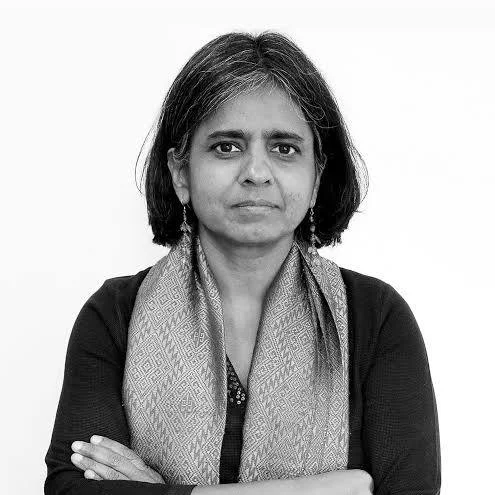
Sunita Narain
Sunita Narain has worked at the Centre for Science and Environment (CSE), a research and advocacy centre based in New Delhi, since 1982. She is currently Executive Director of the Centre, Treasurer of the Society for Environmental Communications and Editor of the bi-monthly magazine Down To Earth.
She is a writer and environmentalist who uses knowledge for change. In 2005, she was awarded the Padma Shri by the Indian government. She has also received the World Water Prize for her work on rainwater harvesting and for her political influence in developing paradigms for community water management. In 2005, she also chaired the Tiger Task Force, at the request of the Prime Minister, to develop a conservation action plan for the country after the loss of the tigers in Sariska. Sunita Narain was a member of the Prime Minister’s Council on Climate Change as well as the National Ganga River Basin Authority.
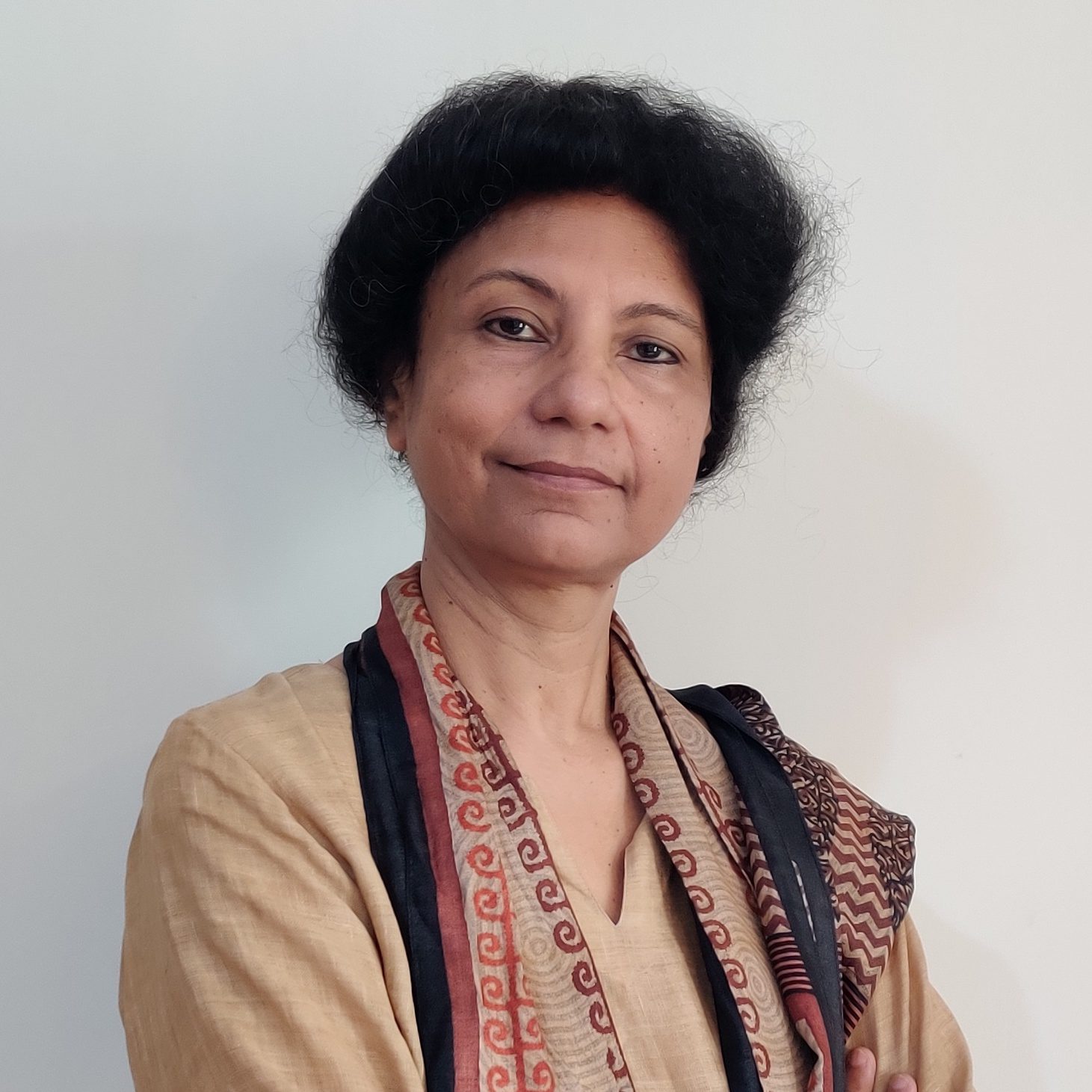
Anumita Roychowdhury
Anumita Roychowdhury is the Executive Director of Research and Advocacy at the Centre for Science and Environment (CSE), the New Delhi-based think tank. She has had a distinguished career in research, communication, and advocacy on sustainable urbanisation, encompassing clean air action, clean and low carbon mobility, and sustainable buildings and habitat. She has worked extensively to build the campaign on Right to Clean Air that has catalysed several developments including improvement in emissions standards for vehicles, massive replacement of diesel-based public transport vehicles with natural gas-based fleet in Delhi, curtailment of dirty fuels in industry in Delhi, and promotion of policies on sustainable mobility. She is also steering CSE’s global programme on clean air in Africa. She has also played a strong international role in contributing towards urban air quality management strategies and participated as a member and an advisor in national and international committees and organisations. She is a recipient of the prestigious 2017 Haagen Smit Clean Air Award given by the California Air Resources Board/California Environmental Protection Agency of the State of California, USA.
“Environment is not against development. It is about doing development in a way in which you secure your future, your present and your future.”
Sunita Narain
Note: This episode is produced for the ear and designed to be heard, not read. Readers are encouraged to listen to the show to get the full experience. The transcripts are meant as support documents and may not include inclusions from the day of recording and may contain errors. The audio version is the final version of the show. Ignore the timestamps mentioned. Ignore grammatical errors.
HOST
Welcome to Grassroots Nation, a podcast from Rohini Nilekani Philanthropies, a show in which we dive deep into the life, work, and guiding philosophies of some of our country’s greatest leaders of social change.
Sunita Narain is the Director General of the Centre for Science and Environment, where she has spent more than four decades working on air pollution, climate change, water, sustainable mobility, and the rights of communities affected by environmental degradation. Her work has helped shape some of India’s most important environmental policies.
Sunita began her career at the Centre for Science and Environment in 1982, working with the late environmentalist Anil Aggarwal. In 1985, she co-edited the seminal State of India’s Environment report, which documented the severe realities of environmental degradation in India and exposed its devastating impact on the daily lives of the rural poor.
Since then, through her research and advocacy, Sunita has influenced public opinion on environmental challenges, particularly in countries of the Global South. Over a career spanning more than four decades, she has conducted in-depth research on the governance and management of the environment and directed campaigns on air pollution control, community water management, pesticide regulation, and other critical environmental issues.
Her efforts to combine science-based evidence and solutions with a pro-poor perspective have helped mainstream environmental concerns in public policy and society. Her work has been richly recognised in India and internationally. Sunita is a recipient of the Padma Shri and was awarded the Stockholm Water Prize in 2005, as well as the Prince Albert II of Monaco Foundation Award for her work to build a water-literate society.
She has been featured twice on the list of the world’s top 100 public intellectuals by Foreign Policy/Prospect. In 2016, Time magazine featured her as one of the 100 most influential people in the world. In 2020, she was conferred the Edinburgh Medal for her leadership in championing climate justice for the poor and disenfranchised.
In this episode, Sunita is in conversation with her colleague, Dr Anumita Roychowdhury, Executive Director of Research and Advocacy at the Centre for Science and Environment.
Dr Anumita Roychowdhury is an environmental researcher and policy advocate who has played a leading role in India’s fight for clean air and sustainable mobility. As Executive Director of Research and Advocacy at the Centre for Science and Environment, she has been closely involved in campaigns and policy efforts that have driven cleaner vehicle standards, the transition away from diesel in public transport, restrictions on polluting fuels, and more sustainable urban transport.
Dr Roychowdhury has had a distinguished career in research, communication, and advocacy, working across a range of issues, from sustainable urbanisation, clean air action, and clean and low-carbon mobility to sustainable buildings and habitat.
She was a key member of the campaign for the Right to Clean Air, which catalysed the overhaul of vehicle emissions standards, the large-scale replacement of diesel-powered public transport vehicles with natural gas fleets in Delhi, significant restrictions on the use of dirty fuels by industry, and the promotion of sustainable mobility policies.
Dr Roychowdhury is a recipient of the prestigious 2017 Haagen-Smit Clean Air Award.
This episode of Grassroots Nation was recorded in Delhi at the CSE.
SUNITA NARAIN
Hello everyone. I’m Sunita Narain and I’m here with a very, very old, dear, valued, wonderful colleague of mine, Anumita Roy Chaudhary. Anumita and I have worked together at the center for Science and Environment for many decades now. CSE is an organization based in Delhi. We do public interest research. We write on environmental issues. We push, we cajole, we try and make a difference. And I will leave it to you if you do think we do make a difference. But today’s conversation is really a conversation between old colleagues, old friends trying to explain to you what our journey has been, what we do, why we do it, and try. And also try and convince you, we hope that the work that we do is important.
That the way we do our work is something that we believe is important. And we hope you will agree.
We thought what we would try and do in today’s episode is to talk about our work from the beginning and bring you up to speed to where we are today.
ARC
You know, Sunita , when you were talking, it took me back so many decades back, you know. And I’m thinking with you, I have now spent more than 30 years, right? But for you, even more. But you were really the part of the genesis of this institution. But we never thought that this was an institute, just yet another institution. It was an idea that took shape in a very uncharted way. And it challenged! It challenged established views.
But before we really try and understand those different faces of our evolution along with the environmental movement in this country, it would be of great curiosity, Sunita, to really know from you that how did it all begin?
SUNITA NARAIN
It’s fascinating, Anumita. And sometimes, you know, life is all about coincidences. I mean, I was in school, a fairly elite school of Delhi, I went to a meeting, met some young people there. I mean when I think of the young people coming together to fight today for the environment, I think back on the fact that that’s how it all begins. Your passion, your commitment, that’s when it starts. And we set up a group called Kalpavriksh which was a small student group.
And we got an invite from this man whom we did not know, called Anil Agarwal, saying that he had set up, he was wanting to work on a report called the State of India’s Environment Report. And it was an ambitious project. Sounded a bit crazy in fact because he called it a citizens report. He said it was a report of citizens to the government. We’d never heard of something like this. He picked up the idea as he wrote, in fact in his first foreword, from Malaysia, from another consumer action in Malaysia and Penang where Anil had seen a report to the government and he was very impressed by this. And he came back saying, let me work on this. And he had just come back from London, he didn’t know many people in Delhi, he was a journalist and he was bringing together this sort of gaggle of people to understand how he would put this report together.
And if I close my eyes, I can still visualize that, you know, that day when we were sitting in the lawns of another good friend of ours, Amit Baruah, who then became the resident editor at Hindu and is now and has always been in our lives, his father’s house in Pandara Road, young people sitting together listening to this idea of putting together a State of India’s environment report. And it was a game changer.
And if you give me a minute I’ll explain why in my view it was a game changer because till then environment was still a very elitist concept. We didn’t even know what environment was. You know, it was pretty trees, it was tigers. What this report did and it took a year to build the report and bring it together through the voices of people, through the reports from the ground was to really understand how environment is a survival base of people. And when we wrote at the end of the report that environment and development are two sides of the same coin. And I keep remembering it even today, it’s even more relevant today for us to remember that environment is not against development. It is about doing development in a way in which you secure your future, your present and your future.
And what the report did was to understand just the impact of a deteriorating environment on the lives of people, whether it is on the quality of water or the biomass based subsistence economy that the report brought out at that stage, stage was the basis of life. So in some senses, the beginning of CSE through the State of India’s Environment Report, the SOE, 1982 and then 1985, those two reports helped to shape, at least in my mind, the politics of environment, the ideology of environment, which is distinct from the rest of the world where environment is seen to be something you fix after you do development.
So you do development, you do pollution and then you fix it to clean it up. But for us, it was always about how to do development in a way that you can secure your present and your future and for large numbers of people. And I feel very privileged that I was part of that because that grounding, you know, we all need that grounding in life.
And I’ll turn to you now because your grounding is right after mine, when you joined and you joined soon after that in the late 80s. And you have to tell everyone your first assignment and where you came from.
ARC
Absolutely, Sunita. So here I am again, just like you had no idea about what this organization was all about. And then Anil calls and I’m then doing my PhD in JNU and in history. And then he says, well, you are working on urban studies, which was my specialization. He said, why don’t you come and just write about that? What are the environmental issues in hill towns of India? I said, that sounds very interesting. Of course I’m doing my studies. I’m going to have my academic career after this, so why not do this is fun! And I did that. And then when he said that, okay, now would you like to be with us to take on this fascinating and new program that we are taking on, which is the ecosystem study of eastern Himalayas, where you need to go to Arunachal Pradesh, to Sikkim, the most pristine tribal belt of India and yet ecologically most fragile. Try and go and uncover what exactly is the link that you talked about, the link between environment, development, marginal people, livelihoods and all that interlinkages. Go and discover what it is that the lived environment all about. Of course I couldn’t say no to it and just stayed.
And then once I was in it, I just stayed back and never returned to what I was doing. Right. So that actually brings me to the next question, Sunita, because that period when I joined and I saw all of you working on the State of Environment and one very interesting part of that SOE exercise was how you mobilize citizens to write… It was more of a bottom up approach to documenting and creating a narration around what communities are facing and experiencing. Now from that perspective, and I remember that was a time when you and Anil had also gone to the villages of India. That was a time when you wanted to look at how village democracy needs to work for natural, you know, the resource conservation and your visit to the Chipko, to go and meet the Chipko women and then to the villages. And from there I think what was, what came out from that was fascinating where you understood that where the solutions are to the resource conservation of this country, especially Water and the Dying Wisdom report that took shape after that, that will be a fascinating story to hear from you.
SUNITA NARAIN
So let me explain the evolution and I think people would like to hear how ideas evolved. I mean, and please, as you listen to Anumita and me, just remember we are still in the 80s decade and most of you would not have been born at that time. Okay? So we are taking you back to a time when you were not born. But please bear with us because it was a fascinating time in India and it was a time when I think, I wish many of you we could write this history more visually because so much we learned at that time in the 1980s, remember, Anil went and did presentations to the Parliament on the State of India’s environment report, we had the National Wasteland Development Board set up because at that time the whole idea was how can we plant trees and do them at a scale that we need to do it in India? And that was the 80s.
So for many of us who talk about tree planting today, please think about the efforts made in the 80s and the learning we had. And that’s the time when, as you were reminding me, we went and looked at… So Anil and I were obsessed, so how would you plant trees? Because in India it’s a very interesting question that if you were to throw some seeds on any barren piece of land, technically we have water, we have sun, you should see a forest. So why don’t we see forests?
And this was right after the time when India was going through this horrific drought. I mean, today when you and I are talking, it’s the year of the Super El Nino. And the decade I’m talking about, when I was traveling through Jhabua, through other parts, it was a time of El Nino and we were seeing the worst drought possible. We were literally seeing water carried from across the parts of India in trains. Because I have never seen that kind of desperation of water.
And came out of that the whole idea that let’s plant trees at a scale and give money to communities so that tree plantation can be a source of revenue. So Anil and I had this bee in our bonnet. So, you know, if you throw seeds, it will grow. Why don’t we have forests everywhere? And what does it take to grow trees in India? And it was a fascinating learning. And that’s what came out with our report Towards Green Villages. I still think that’s the best thing we’ve ever written. And it was a small report, but it really put out one clear message: you cannot plant trees without cooperation of communities. And communities will only cooperate when they get benefit from the harvesting of the trees. Very simple. And if you remember, and I’ll just jump to the next one just because there was such a link in this, in my life at that time. So just as we were finishing the report on this Towards Green Villages, if you remember, at that time we had got the call from that minister, the Himachal Pradesh Chief Minister, I’ll never forget this. And very worried, calling Anil and asking him that, you know, “Mr. Agarwal, what do we do? I’ve just got this letter telling me my people should stop eating rice and they should stop keeping cattle because of methane. And that is creating a problem of climate change? And what is this climate change? And how do I tell my poor people of Himachal not to keep cattle? What is this all about?” And Anil and I had never heard of climate change. I mean, I think back on it and just thinking, you know, 1989, never heard of climate change. We knew something about ozone, not heard of climate change.
ARC
Exactly. So this is where I really come back to that other issue that we were talking about. So clearly, Sunita, I mean this evolution and we are still in 80s, right? But now this is going to connect us to the 90s. And this incident that you’ve just explained, your conversation with the Minister, it triggered one of the most pioneering work in India’s environment where for the first time we kind of moved from what we understood as the village democracy to the global democracy, right?
And how did that evolution, right, connect? So this report that you did, you know, Global Warming in an Unequal World, and it was certainly catalyzed and triggered and provoked by this conversation that you had with the Minister. Tell us about that. Because that actually brought in a completely, a new principle of survival emission versus luxury emission. And so you were the architect of that concept.
HOST
The 1990s were marked by economic liberalization and rapid industrialization, which set the stage for stronger environmental regulation later in the decade. The Narmada Bachao Andolan, a movement against the Sardar Sarovar Dam, became one of India’s most prominent environmental justice struggles of the decade gaining national and international visibility.
Through the 90s Sunita Narain steered pioneering projects and reports like the landmark Global Warming in an Unequal World with CSE founder Anil Agarwal. The report was the first to use the term “environmental colonialism” and provided an intellectual foundation for the “common but differentiated responsibilities” framework used by developing nations in international climate accords.
Building on the organization’s work in the late 1980s through reports such as Towards Green Villages, Sunita advocated for participatory democracy, arguing that the environment must form the basis of livelihood security for India’s rural poor. She also campaigned extensively during the lead-up to and aftermath of the 1997 Kyoto Protocol, demanding that every human had an equal entitlement to the global atmospheric commons.
In this next section, Sunita and Anumitha do a deep dive into this decade.
SUNITA NARAIN
I call it the goat phenomena. I often write about it saying, this is really what we learn from goats. So we had just completed this report that I talked about Towards Green Villages, looking at village democracy…coming up very clearly with the principle that participatory democracy at the village was needed if you wanted to plant trees. And there was a connection hardly ever made because trees were seen to be a technocratic thing. Go plant a sapling, it’ll grow. Give a sapling out. Forest department would plant saplings. And we have the largest goat population of the world. That’s the highest density of livestock. So if you can’t keep the goat out of the forest, it’s going to eat up all the sapling. How do you keep the goat out? You keep the goat out by promising people that they will get a benefit from it. And we learned this very clearly, that the goat could not be kept out by any guns and machine guns or anything you do, any fence you make, any tunnel you make, the goat will come over it. So you needed the principle of cooperation.
Now, this is where the Chief Minister calls and we start looking at this thing called climate change, global warming. And there were two principles we had learned which we took forward. One was we knew the poor were not the cause of environmental destruction in the country. That, we had understood by them. Their use was what was called intensive use. So, yes, their firewood use, their water use, their survival needs would definitely create an intense pressure on the land. But the extensive destruction that we were seeing was more for the urban industrial economy. And that was very clear. So it was very clear that even if there were millions of poor in India, their firewood need was not leading to the destruction of forests in India. So how come the same poor were now responsible for this thing called climate change? So that just didn’t make sense to us. Two, we were very clear that any, if it was a global common called the atmosphere, it was no different from a global common called a pasture land or a forest.
Now in both of them, the principle was cooperation. And if every country did not participate and got a fair share, you would not lead to cooperation. So equity climate justice was the first thing that needed to be discussed for an effective climate agreement. And that’s what brought us to this report called Global Warming in an Unequal World, A case of Environmental Colonialism. Oh, it really hurt at that time. And remember it was a report against the most powerful think tank of the world at that time. We were these itsy bitsy little NGO out of India. No Internet at that time. You know, this was a different time when spreading information also in the world was so tough. I mean, today we take it for granted that anything you put out reaches the rest of the world. And you know, it was the World Resources Institute, WRI, based in Washington, which had come up with a report which said that not only did the, you know, that everybody in the world was responsible for climate change, including countries like India, and they did that with this very sophisticated hidden calculation.
And if, you know, it’s a little bit of, I think people would like to hear, so I can explain this a little bit, it’s so fascinating. So climate change, as you know, is all about emissions that are done by countries for their growth. Greenhouse gas emissions come out largely from fossil fuel. This is 1991, at that time. At that time, the bulk of the emissions were from the developed world. China had not grown, India was not there. So greenhouse gas emissions were from the developed world. There was no two ways.
But climate change is not just about the emissions that come out annually. They’re also about what is called sinks, which is the earth’s natural cleansing ability. The Earth has an ability to clean the emissions. Now what WRI did very cleverly and hidden it in a footnote, the back of the report was they took what was gross emissions to net emissions. Gross is everything you emit. Net is minus the sinks. And they allocated the sinks based on how much you had emitted.
So if the United States was the largest polluter, it also got a larger share of the global sinks. And we turned it around saying, but the sinks are everybody’s property. It’s a global property, let’s distribute it. In our case, we did per capita. It changed the whole calculation. And oh, it created such a fuss. They hated us and they still hate us. Okay. But I think it’s important for the voice from the South because we believe in climate change. We want it fixed, but it cannot be fixed on the backs of the poor.
ARC
Clearly, this work catapulted CSE to the global political landscape, right? And climate change, you know, that whole platform. And that also gave us the entry first to the official delegation to the Rio summit, the first summit that happened.
So that was 1992, and when the first summit happened, climate change summit, and we had all gone there. But this is what you really need to tell us about that. You know, that was really the beginning of the multilateralism, and for a global governance on climate change. And today we are all so frustrated with that process. But even then, when we were critiquing that platform, but now when we look back, we find that so many important principles were established in that platform, starting from the common but differentiated principle exactly to address the issue that you have just raised. The fact that in that platform then even the Global south had the negotiating power to actually pull down certain proposals from the Global North. For instance, the Forest Convention.
HOST
The forest convention from the 1992 Rio Earth Summit is formally known as the Forest Principles. As countries could not agree on a legally binding treaty due to divides between the Global North and South, a non-binding compromise addressing global forestry issues was arrived at. The convention upheld that nations had the sovereign right to exploit and manage their own forest resources according to their national development needs.
ARC
Now, looking at that, and clearly that was the beginning and our role in that global climate politics. Now, this beginning, this also coincides with one fundamental change in CSE’s own evolution. This was the beginning also of the Down to Earth, because by the early ‘90s, after doing several SOE reports, we realized that how explosive the information was in that domain now and doing one report once a year or, you know, in two years will just not help us to influence, to inform, to communicate. Right? And that’s the reason why we created this phenomenal platform again, which is Down To Earth, a fortnightly science and environment magazine.
SUNITA NARAIN
Brilliant. I mean Anil when I think back on it, of course, a fortnightly magazine, what a pace it is! We have never missed an issue. We are now at 380 issues of Down to Earth. Not missed a single one. It’s been an incredible journey with Down to Earth and it helps us to stay in touch. Why I like Down to Earth and I believe it’s part of the way CSE works. And you know, you talked about the SOE bringing information from ground up. I think the idea that you can report on what’s happening on the ground, bring voice and an image to what is actually changing is so important before you put the theory on it. And you and I know because we have gone through the drill on this that keep your theory and your opinion for the opinion pages. Tell me what’s happening! Just report what’s happening because that tells me the human story. Let that speak. Let the truth speak. And the rest of it I can understand, analyze. And I think when I think of the world of AI today and how abused information is getting and I’m taking you to today, but I want to make this link that I think that role of information as really someone which helps us, as something that helps us to stay grounded is so important and I think we need to come back to it.
Yeah, just to wrap up this phase. I mean you put it so beautifully. But just to wrap up this phase. I keep saying Anumita when I think back, it was really the time of innocence. Remember we had all those people who came. Who was that big film star who had come to Rio, Roger Moore, and he had said that this is the first day of the future. We were all on the beach screaming … and there was so much energy and so much hope. I think we were. And I think that’s what we have to bring back today because we can’t lose it. That time in the world when you and I, young as we were, we were in Rio and we really, as you said, there was so much power to influence and influence with ideas, influence with the idea of morality as well, with the idea of justice, with humanism.
I mean to me, when I think of today, and I think that’s what we have to bring back. We have to bring back morality into our discussions. We have to bring back humanism into our discussions. Because for the last four decades in some senses the world has become so technocratic in its thinking. Everything is about some technology which will come and fix something. You know, we have lost the ability. And I think Rio was really about a collection, a collective of people who came together to say we want a just world. And because it is just, it will be sustainable.
But enough of the 90s – the 80s – we are now in the 90s and that comes the next phase of CSE. And that’s where you were…and it’s very interesting because you were at that time pregnant. I’ll never forget this, how we had to drag you back. And it was wonderful to see your daughter getting married last month. I mean, it’s been such a journey for us.
HOST
In 1996 Slow Murder: The Deadly Story of Vehicular Pollution in India was published by the Centre for Science and Environment. Written by Anju Sharma and Anumita Roychowdhury under the direction of Anil Agarwal, the report exposed the severe public health crisis caused by vehicle emissions in Indiaand triggered major legal interventions for clean air.
The report highlighted how poor fuel quality, bad vehicular technology, and weak government policies ignored public health and examined the shifting responsibility among vehicle makers, oil companies, and regulators.
SUNITA NARAIN
So remember Anil came back that day to the office and said, where is all this? I’m seeing all these lines of cars standing, getting their pollution under control checked. What is all this about? Will it really fix pollution? What is this pollution all about? It was our first time we talked about air pollution.
ARC
Exactly.
SUNITA NARAIN
And you were put in the thick of it. So tell us about your journey with air pollution.
ARC
I will never forget that afternoon, Sunita! And it was, remember when, yes, Anil came back fuming and he went and asked this question to Central Pollution Control Board and they said, it’s air pollution. They said, what is this pollution all about? Where is this pollution coming from? And they of course had very messy data, in fact no data at all. But whatever little that they had showed that after shunting the polluting industries out, vehicles had become the top polluter in the city. So his single question to us was that why do India’s vehicles pollute so much? And we had to troop out. And I remember going and trying to understand why vehicles pollute so much in India. And that discovery that for years that old dinosaur carburetor technology in our cars and scooters had not changed at all. And the fuels that we were burning were the murkiest of all.
It’s so dirty, so thick with, you know, sulphur and all other stuff that when you burn it, it would just create that black smoke. So imagine that journey, that investigation that it started. It was so amazing that at that point of time we went and challenged all the industry scions, if you remember, from Rahul Bajaj to Brij Mohanlal Munjal to Venu Srinivasan. But the fact is they engaged, but they engaged.
So we were combative, we were challenging, but we could still engage and have constructive engagement across the table. So what it led to is that book Slow Murder. And if you… that was November 1996 and this is 2026, exactly 30 years. Right? And, but that really gave us the sense of what it means if you have science and data as your warheads, you know, the power of information that you just said. Because we never did a rally, we never did organize any, you know, signature campaign… for us, it was always only information and science.
But then that catalyzed, in fact that really gave us, and it was also, it kind of transformed us as well from passive researchers. Now we were turning into advocates, right? And wanting to influence policy. And what the work that we have done that catalyzed so many different developments from the judicial intervention and that it led to the setting up of EPCA. And you were part of that. And so that we got all the legal mandate as part of that. But that also catalyzed the public opinion, all other changes that it led to. So this really takes us to the next stage because this really transformed us. This was the 90s and here, if you recall, Sunita, so at one level, air pollution campaign that catalyzed so many changes over the next decade. So it was just not then – that led to the CNG revolution in the city. And after that they were leapfrogging our emission standards with several other changes in Delhi. But simultaneously during ‘90s, our work on water also deepened and the Dying Wisdom work that you have done. So what is this spectrum that was evolving for us at that point of time? How will you put that in perspective?
SUNITA NARAIN
You very rightly said, Anumita, that that was a stage of CSE when we moved from being researchers to being policy advocates. And we had decided that the pen was the way we would move policy. I mean, even if you and I tried, I don’t think we could ever do an effective dharna or a protest. We’re not that kind of people. We don’t know what kind of following we will get on that. But we know science information and can persuade if you can put, if it speaks truth to power. And your report Slow Murder was so important at that time. And you’re right. At that stage we also started working on water. And again, it’s such a cool coincidence. A lot of these things have started by And I’m so glad you and I are talking about this because in some senses, our own colleagues, I often tell them how much of our story has come out of just looking out of the window and seeing something that is happening, questioning why is it happening, and then going on a journey, you know, it’s not come out of some, you know, demand from somebody saying, take a look at it. It’s really been, I mean, the same thing with Dying Wisdom. I mean, how did it start on a journey with Anupam Mishra, Anil, me, in his going to Bikaner to see Shibu Suren’s work … stop seeing in a village what looked like a spaceship, an upside down spaceship standing. And first one we saw, we didn’t understand. Next one we saw, we stopped and asked. And when we stopped and asked, I remember the, you know, the, you know how villagers are when some city person asks them this kind of stupid question. That’s exactly the look I remember there was on this woman’s face when we went and said, well, what is this? What? It’s our well. We don’t see a well. And what was it? It was a tanka. It was a catchment. And then they had this upside down structure which would look like a closed structure. Imagine a spaceship. And all it did was that, that little catchment, whatever rain fell, went into that covered world. And the maths of it was that one hectare of land, 100 millimeters of rain got you 100 million liters of water, you know, and that started the whole journey of Dying Wisdom.
And looking at the gazetteers understanding what was happening and what an incredible understanding that how every part of India had its own water management system built on the rationality of using nature for as much as it can give. And I think that’s the principle that we learned, which is you not overused it, but you looked, you learned from nature and you built your water management system on the ecosystem in which you lived.
So Rajasthan had a rooftop water harvesting system, little rain roof, capture it, capture it wherever it falls, hold it and capture it. You did moisture irrigation in other parts, you did flood irrigation. Northeast, if you remember, they had that incredible bamboo irrigation system, the south of India, the tanks. I mean, today. And I feel again, I feel very good when I talk about this because that report, again, like the work we did on air pollution has. It’s not gone, it’s not over, it continues. I mean, that work we did on community based water management systems, learning from the traditions of India was what took us to the question about making water everybody’s business. Then it took us to challenge the central government which was looking at a centralized water policy and talking about how you needed to recharge every well in the country and every tank needed to be revived because you were creating a system otherwise of being dependent on concentrated surface water sources, long distance water carrying as compared to decentralized water harvesting systems.
And that then led to in the decade of the 2000 came MNREGA and came beyond that…so in some senses again the 90s was about learning new ideas, seeing the challenges that existed in India. But I think to me, if you asked me to say what is what defines us, you and me, CSE, I think it is the ability is the courage to push the envelope of new ideas. And that’s really in some senses what we did.
In both the cases in air pollution you said stop looking at the tailpipe, look at the quality of fuel, look at the quality of the emission technology. Go from two stroke to four stroke, go from diesel to CNG. Now you’re saying go to electric. So you’re pushing the envelope to say let’s leapfrog, let’s move it beyond just talking about what is status quo. Same with Dying Wisdom. Moving it from a paradigm of management of water which was surface water, dams and you know, the whole debate of dams, no dam, we said that’s beyond that. It’s all about holding water where it falls. Do a dam as well, but don’t displace people. And if you displace people, rehabilitate them. But it changed the nature of discourse. So I think people, we need to leave you behind. Now we’ve completed two decades, right Anumita?
HOST
At the start of the new millennium the Centre of Science and Environment felt that for stronger advocacy stronger evidence was a must. The Environment Monitoring Laboratory was established in 2000.
In the early years, the lab documented and scientifically validated evidence that showed the anthropogenic nature of environmental pollution and ecological degradation. However, over the years Lab’s mandate has expanded from just pollution monitoring to performing overall environmental monitoring.
In this section Sunita and Anumita talk about the lab’s earliest and perhaps, most groundbreaking work.
ARC
To really generate evidence, hard scientific evidence, give the proof of the damage, proof of the harm, right, to drive policy. When we started that and that led to an explosive story and this is the story that you will have to really tell us that when we wanted to test, and we started by testing pesticides and cashew first and then in the food, but then it was the Coca Cola and the Pepsi and that led to a very different paradigm shift in the way we work, communicate and you know, influence.
So what is that story? I think everyone would love to hear that story from you.
SUNITA NARAIN
I mean, you know, thinking back, Anumita, we were so unprepared, so unprepared. We were babes in the woods. We really had no clue. We had a lab, we were testing. We were merrily doing things. No idea. So we tested bottled water. Why did we test bottled water? Because we were testing tap water. And when we tested tap water, we didn’t find anything because, you know, tap water goes from different sources and it’s difficult to find any heavy metal at that time. I’m sure now you will find pesticides and heavy metal in the tap waters we didn’t find.
So we said, oh, but why don’t we test bottled water? And they found out that the factory was producing the water from the groundwater. We got the bottles, we tested, found pesticides in it. Total shockwave. All the top companies were there. And then of course somebody came from one of the top companies, you will remember, and abused us and challenged us and said we were all wrong. You know, very young at that time. We said, oh what the hell, we should check their real product. And we, I mean, I think back on it, we had no idea that there was only two companies, Coca Cola and Pepsi Cola. I mean if I’d known, I keep thinking, would we still have tested? Because we like to. We don’t go after company, we go after a series. And you know, and there’s always, you know, if you somebody is good and somebody is bad, it’s always a better way to be able to convince somebody to move ahead. But two companies, and then we tested and then of course all hell broke. I mean, we found pesticides in them, they challenged us, their sales dropped. There was uproar all over the country. Then of course there was the Joint Parliamentary Committee was set up. Mr. Pawar, Mr. Sharad Pawar, an incredible politician, amazing man, was the chair of the committee. And JPC put us through, really, really, we learned what it was like to convince politicians about the science and the policy of it. And I have to say, Anumita, that that experience gave me huge respect for India’s politicians. You know, I remember going to their, you know, going to meet them and they would always have these hundreds of people waiting for them and you know the stress level with which they work. You and I have no idea what they deal with.
But what I came back with is if it was for public policy, if you could convince them on the science of it and your intent and I think that was the most important thing that they needed to know that we were not doing this for money. We were not blackmailers, we were not extreme extortionists, we were not doing this to harm anybody. We were doing it for public interest. And we presented a very cogent way ahead. We said we really needed policies in which you would manage your nutrition and your poison because there’s always a trade off. So yes you need to use pesticides but where and how much and how do I balance it on, on my plate and the whole diet and ADI and I remember talking to them and some point I know many of them I lost as I was explaining all these principles of MRL and ADI but they understood that this is about public policy, it is about the quality of life, it is about public health.
And we got an incredible report, the joint parliamentary committee. I just think sometimes time has worked against us. That report came if you remember at a time when the government was just about changing so we didn’t get the actual benefit of getting as much out of the report because all new governments want to start afresh. But it was an amazing time and I think for us and as you know Anumita, that work on food and nutrition has remained at the core of CSE because for us then junk food, the policy on junk food, challenging for the front of the pack regulations, looking at the amount of salt, sugar, fat we have, you know, understanding that India has a double health burden. On one hand overproduction and overuse of food and junk food and the other hand malnutrition.
And the food policy has always been at the core of a lot of work we do and continue to do to push but I think that learning was very powerful and also being going to the joint parliamentary committee and making a presentation and I mean it’s all experiences which make you what you are today. Good, bad, ugly, I don’t know but it make you what you are. And I think that’s the, that’s really been a very important part of my personal journey, taken us to where we are today. But I think our viewers and our listeners are going to wonder if you’re only going to live in the past or we are going to come now to telling them where we are now,
ARC
Because after this clearly it has really changed the way we worked. After that we kind of became lot more solution oriented and dog with a bone that we always love the way you describe us. And if you now recall from after this, so that decade and the decade after 2011-2020, that was a time and especially then we were hugely concentrated and focused on leveraging the EPCA platform to get things done on ground.
SUNITA NARAIN
So just to explain, EPCA is a committee set up by the Supreme Court. It was a very unique committee because, because it reported to the Chief justice in most cases, but it was an independent committee and it was largely a committee to follow through on the Court’s order. So we didn’t give the direction, but once the court gave the direction, as most cases, a direction never gets followed through. So we could both help to advise the court on the direction. But that of course all parties then court listened to everybody and then finally gave its ruling. But whatever the ruling then to follow through. So you’re right, EPCA, sorry, I interrupted you.
ARC
That exactly is the point – to follow through. And so whatever directives came and I remember the time spent to see that it gets implemented. And today when we look back that 20 years of experience with EPCA, if you look at the wins in Delhi NCR, the kind of energy transition that it led to, the fact that this city today is saying that it has almost eliminated industrial coal, that the diesel consumption has come down hugely because of the CNG revolution and also the restraints on diesel fuel and diesel vehicles.
So a lot of these wins were possible at that point of time, which cumulatively when we look by the time of the 20s, that Delhi had actually bent its pollution curve. So the beginning of the ‘20s and which is bringing us to what is happening today, the beginning of ‘20s, therefore is a sense of when that you could get things done, and you have seen the impact of that. And yet we found that the problems just don’t go away.
And the challenge is that how do you still keep reinventing yourself to stay ahead of the curve? And while doing that, it also changed us in many ways yet again. Now this time, how do you get implementation done and how do you therefore deal with the capacity gap in the regulatory system, in the societal system?
And yet another opportunity for us to, for the metamorphosis, you know, this amazing institution therefore that we created, AATI, if you want to reflect on that, that how even though that is one institutional development, but how that symbolizes the new generation challenge. Because by the ‘20s now we realize that now that when we look forward, what we have to deal with today, the new generation challenges and the action and solutions that we have to now see that they get implemented on ground and make a difference. These are to just sum that up, you really want to see a massive energy transition across sectors. You want to see mobility transition so that you can tame the motorization and you want to see massive circularity. And these new generation challenges are demanding huge regulatory capacity, new regulation development and new implementation strategy. Now how are we positioning ourselves now?
SUNITA NARAIN
I think it’s a very important question, not just for us, but for a lot of us who work in this field, Anumita. Because today I think what we have learned is, and you’ve put it very clearly, but I will add one more word to it: scale. You need scaling up and you need the solutions to be scaled up at speed. And what is very clear to us is that that scaling up, and that’s why even when we worked on water on excreta, excreta matters on the whole question of non sewered sanitation, the work that you have done on electric mobility, the idea is how do you move the governmental system to move on the ideas we have? I mean, there are two ways to move with government and that’s always the case. One is status quo, which is easy because they are comfortable and they’re wonderful people, but they are built to work within their own systems.
I mean, you and I have worked with water engineers for so long to know that for them, the very idea that you could build a non sewered city is still something which is completely anathema to them. I mean, their whole training has been that you do a flush toilet or any other toilet you intercept it, their whole design is about how to design amount of water, to flush the waste, to take it, to treat it and to put it in reverse.
That’s their design. In your case, the work that you constantly do and do so brilliantly on the whole issue of reinventing mobility to say that it’s about the right to walk. How are you building your city without pavements? How do you? So it’s an imagination issue. And it’s not because they don’t. They are. And you and I know they are wonderful people, but it’s just the way they have been trained. And it’s an imagination, but it’s also the courage it takes to be different.
So it’s about courage to have an idea to stay with it, an imagination which can think about something differently to work. Whether it is CNG, whether it is mobility, whether it is excreta, it is all about rethinking an idea to say a new future is possible, a new way is possible of doing development. But then how do you get it implemented? And that’s really where you and I could write reams of reports and books and be very happy that we have new ideas. But we are not that kind of people. We wanted to see it happen. We want to make a difference. So how do we do that?
And you know, that’s where we came up with the idea of setting up the Anil Agarwal Environment Training Institute, saying we want multipliers in society and that we need to cut the ladder somehow. Because by the time young people will learn how to make, as you work on the whole quest, no glass buildings, but how to make a building which is designed for the heat of India.
By the time they learn that and they come into becoming an architect or a city contractor or a CPWD engineer, it’s going to take another two generations by the time they also get to a point of decision making. So how do we cut that? We cut that by actually going straight to the people and saying, here are new ideas. Come and share that knowledge with us. And I think it’s been incredible to see this place of learning, not for senior people, but for people who are writing the files or thinking about how to do mobility planning. I mean, your most successful program is to work with bus, city bus. What do they call them? City bus…BSCS,
ARC
State transit agencies.
SUNITA NARAIN
The transit agencies, how do they rethink their transit system for electricity mobility? What does it take? What is the best experience from other cities? You know, the work that we do on solid waste where just to teach cities how to segregate. What is the best example? Who’s doing what they’re doing? Can we learn from it? I mean, to me that building new multipliers in society is about scaling up.
And I think what is clear in this new India and this new decade that we are moving from now to the future, very contested times. We have climate change, which is happening. It’s one extreme weather event a day in our life. Something we never thought about when you and I were in Rio. We never thought we’d see it happen in our lifetime. We are seeing it happen. There’s urgency, there’s intensity, There is greater impact. It exacerbates poverty. It means we need to do development faster. We need to scale up actions.
And that to me, is where really the future of all of us has to be. To see how can you scale up, but with a difference. Scaling up business as usual. Governments will do, institutions will do, agencies will do. We want scaling up business unusual. How does that happen? And that really is something which is, to me, you’re in my unfinished business. And maybe if Grassroots Nation invites us again 10 years from now, we can tell you if we succeed, succeeded or not. But for the moment, it is work happening.
There is a lot more to be done. The challenges are huge, huge, as I have just explained you and I know. But I think that also gives us the courage to go on. It gives me certainly a lot of excitement every day. New things to learn, new things to do. And I think we will fix it. All of us together. Not us. All of us together. And I think that’s the joy of this work is seeing so many people who are literally what makes India tick. This is the miracle of India, a miracle of the world. The people who believe, the people who care, and the people who do.
HOST
Thank you for listening to Grassroots Nation. For more information, please reach out to us at www dot rohini nilekani philanthropies dot org or join the conversation on social media. Stay tuned for our next episode of Grassroots Nation.