
E-31
Dr Himanshu Kulkarni: Aquifers, Communities and the Path to Sustainability
Groundwater is one of India’s most important natural resources and one of its least visible. On this episode of Grassroots Nation, we speak with Dr. Himanshu Kulkarni, Co-founder and Director of ACWADAM — the Advanced Centre for Water Resources Development and Management in Pune— about a lifetime spent understanding groundwater.
Dr Kulkarni is one of India’s foremost hydrogeologists. Over more than four decades, his work has taken him from scientific research and academia into villages and communities across India, where he has worked to understand aquifers not simply as geological formations, but as shared natural systems that have to be understood and managed collectively. At the heart of his work is a powerful idea: when it comes to common resources like groundwater, knowledge has to reach the people who depend on the resource every day.
Through ACWADAM, Dr. Kulkarni has worked with communities to map and understand their aquifers, and develop locally grounded approaches to managing water. His work sits at the intersection of hydrogeology, community action and public policy, by bringing scientific knowledge into conversation with the lived experience. In 2025, Dr. Kulkarni became the first recipient from the Indian subcontinent of the biennial International Water Prize, awarded by the Water Center at the University of Oklahoma, an international recognition of his life’s work.
In this conversation, we talk about aquifers, groundwater, water equity and sustainability. What does decades of working with communities teach us about natural resources? What can science learn from local knowledge? And can a deeper understanding of the water beneath our feet help us build a more sustainable and equitable water future?
In this episode, Dr. Himanshu Kulkarni is in conversation with Uma Aslekar, a senior scientist who has been working with ACWADAM since 2002. This interview was recorded in Pune at the ACWADAM office. Grassroots Nation is a podcast from Rohini Nilekani Philanthropies. Learn more at www.rohininilekaniphilanthropies.org or follow @RNP_foundation on social media.
Speakers
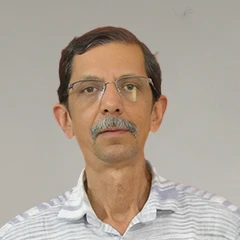
Dr Himanshu Kulkarni is the Founder Trustee and Executive Director of ACWADAM, a not-for-profit knowledge institution and think-tank working on groundwater since 1998. He is a hydrogeologist by qualification – PhD from Pune University in 1987 – and has been working on aquifers and groundwater across India’s diverse groundwater typology for nearly 40 years. He has been a CSIR research scholar, UNESCO scholar and a Fulbright Fellow during his career.
ACWADAM’s work under Dr. Kulkarni has followed the principle of bringing communities closer to their aquifers and managing groundwater as a common pool resource through the process of Aquifer-based Participatory Groundwater Management. He has, through ACWADAM, steered the concept of hydrogeology based ‘springshed’ management that has now become so important from local to national levels in India and its neighbouring regions.
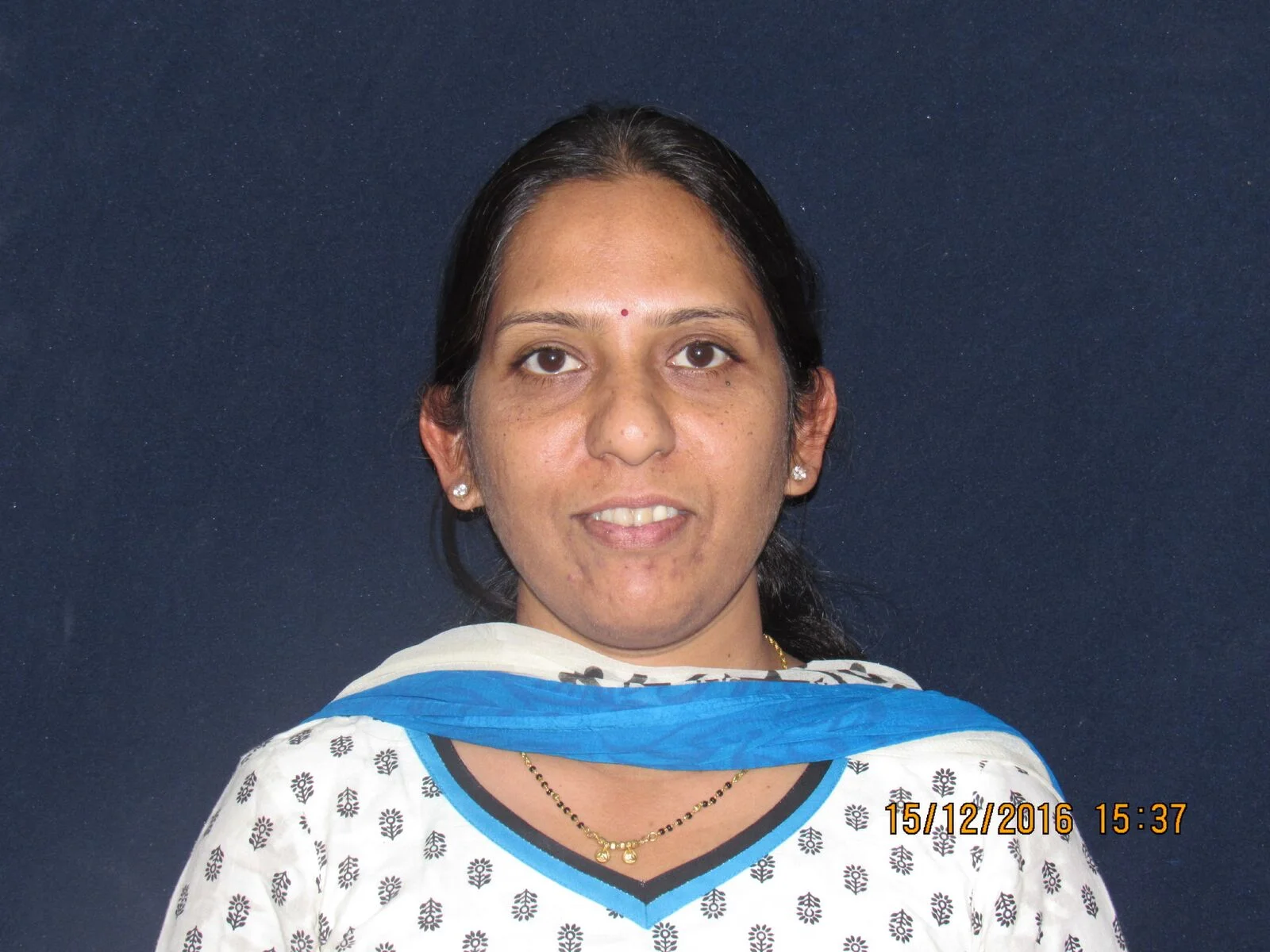
Uma Aslekar
Uma Aslekar is a senior scientist with ACWADAM. She has been working with ACWADAM since 2002. A geographer by education, Ms. Alsekar completed her M.Sc. in Geomorphology from the University of Pune. Earlier on, she worked with the National Commission for SC/ST, Govt. of India as an Investigator, for four years.
“Every well will teach you something. Actually, a well will talk to you, if you have the right mindset.”
Dr. Himanshu Kulkarni
TRANSCRIPT
Note: This episode is produced for the ear and designed to be heard, not read. Readers are encouraged to listen to the show to get the full experience. The transcripts are meant as support documents and may not include inclusions from the day of recording and may contain errors. The audio version is the final version of the show. Ignore the timestamps mentioned. Ignore grammatical errors.
THEME MUSIC
HOST
Welcome to Grassroots Nation, a podcast from Rohini Nilekani Philanthropies, a show in which we dive deep into the life, work, and guiding philosophies of some of our country’s greatest leaders of social change.
In this episode of Grassroots Nation, we meet Dr. Himanshu Kulkarni, Co-founder and Director of ACWADAM the Advanced Centre for Water Resources Development and Management, a non-profit organisation based in Pune, Maharashtra that works at the intersection of hydrogeology, community action and public policy, promoting sustainable groundwater management and community-based water governance.
For more than four decades, Dr. Kulkarni has worked with one of India’s most important and least visible resources: groundwater. Dr. Kulkarni’s journey began with geology. He completed his Master’s in Geology and went on to earn his PhD from Pune University in 1987. Over a career spanning more than four decades, he moved from scientific research and academia into extensive fieldwork, working with communities to understand and manage the groundwater beneath their feet.
During his doctoral years, he was mentored by Dr. S. B. Deolankar, whose work introduced him to the possibilities of groundwater science and then to the pioneering Pani Panchayat movement led by Vilasrao Salunke.
In 1998, seven geologists from Savitribai Phule Pune University came together to establish ACWADAM, with a belief that knowledge about common resources such as groundwater should move beyond the walls of academia and into the communities that depend on them. That idea has shaped Dr. Kulkarni’s work ever since.
Through ACWADAM, which he co-founded, he has helped villages understand their aquifers, identify groundwater recharge opportunities and develop community-based approaches to managing a shared resource. Working with civil society organisations, state governments and the Government of India, he has helped bring hydrogeological science into local water management. The work has expanded from groundwater management to spring shed management, particularly in the Himalayan region, and has involved partnerships with many CSOs, state governments as well as the national government.
His work has also contributed to some of India’s major groundwater policy initiatives, including significant inputs into the National Aquifer Mapping Programme during the 12th Five Year Plan. He has served as Co-Chair of a Working Group for the programme and has contributed to national discussions on sustainable groundwater management.
Alongside his field and policy work, Dr. Kulkarni has continued to teach and mentor the next generation of water professionals. He has served as a Visiting Professor at IIT Bombay and the Tata Institute of Social Sciences, and is a Professor of Practice in Rural Management at Shiv Nadar University.
Dr. Kulkarni’s work has extended beyond India through international research and collaborations on groundwater and water management.
In 2025, he became the first recipient from the Indian subcontinent of the biennial International Water Prize, awarded by the WaTER Center at the University of Oklahoma, it is an international recognition of a career that has remained deeply rooted in the field — in villages, aquifers, springs, and the communities that depend on them.
In this episode, Dr. Himanshu Kulkarni is in conversation with Uma Aslekar, a senior scientist who has been working with ACWADAM for over two decades.
This interview was recorded in Pune at the ACWADAM offices.
Welcome to Grassroots Nation.
____
UMA ASLEKAR
Good morning, Dr. Kulkarni. Could you tell us something about your fascinating journey from the beginning? Where did it all begin?
HIMANSHU KULKARNI
So, good morning, Uma. Well, you’ve been part of the journey, but let me go back a little more. Well, I don’t know where it began, but formally it began when I was a student of geology in the sort of late 70s and early 80s and when I chanced upon one of the best teachers of groundwater during my post graduation.
And that really was a turning point because I liked the subject, I liked the way he taught. And that actually became a long association both between teacher and student and with the subject of groundwater. Of course, perhaps there were some unknown seeds that were left to germinate on the topic of groundwater, because I have very strong memories of the first well that I saw as a child and memories around the well, the, the sort of drawing wheel or the first spring on a fort, on a not so well known fort in North Maharashtra where my grandparents took us for a picnic.
So that was of course, one set of memories, the other set, the other few memories were related to 1971-72, when large parts of Western and Southern India faced severe drought. It was almost a famine because even middle class families in Pune weren’t even able to get wheat and rice through rations. So I believe we were eating some imported grain which I think then was called millo or something.
We were sent as kids in school to the ration shop to fetch our weekly ration of millo. But what also, what also I remember from those days was a lot of the farming communities and this was all over the newspapers. A lot of the farming communities all over Maharashtra were actually working as labor on the roadside. And you know, since there was no water, there was no crop, there was a famine, they probably had lost the Rabi crop. And therefore there was a lot of distress amongst people.
And I remember the distress, food, water scarcity from the 71-72 drought, which came back to me in my own understanding of groundwater in my later years. Now I just sort of quickly come back to the 80s. So after my love with groundwater and my association with my teacher, Dr. Suvaden Deolankar , I was actually interested in pursuing a PhD. So when I enrolled for my PhD with him, the first place he sent me to was the Pani Panchayats. In Purandar taluka.
And he himself came along and introduced me to Vilasrao Salunkhe. And I think that was another turning point in the entire understanding on water. The belief on water as a common pool resource and many other things that unfolded in the future.
HOST
The Pani Panchayats were community-led water management groups in India that promoted the fair distribution, conservation, and shared use of surface and groundwater. The movement was started in 1974 by Vilasrao Salunkhe in Naigaon village, Purandara Taluka in Maharashtra, in response to the government’s inability to deal with the prevailing drought. The model ensured equitable water rights for farming and basic needs based on households rather than land ownership.
The initiative was scaled up and led to the setting up of Gram Gaurav Pratisthan (GGP) that encompassed both groundwater and surface water management.
____
UMA ASLEKAR
You briefly mentioned about Mr. Vilasrao Salunkhe but were there any other political or leaders who really influenced your early career? I mean, were there any leaders who influenced this journey while you were a student still at the university?
HIMANSHU KULKARNI
I think there were many social leaders. I don’t think there were too many political leaders at that time because of political discourse. The mainstream political discourse both at the center and the state was around dams and large projects. Dams, canals and large projects. Groundwater was only emerging as an also ran element in the water race. But yes, there were many social leaders. The first one of course was Vilasrao Salunkhe. I also met at that time through my teachers, Dr. Ghare who was working in the social sector who moved from academia to the social sector.
He was of course a much senior person but he had a lot of contacts with people who interfaced academia and the social sector. Then there was Dr. Vijay Parnjpye who again was transitioning from his academic role to a larger role of an environmentalist with the organization called Gomukh. So I remember these three people distinctly. But my teacher also took me to meet with leaders like Anna Hazare who was kind of beginning with his entire watershed and village decentralized village decisions and actions on agriculture, on water at that time.
So these are the four that I can readily remember at the beginning.
UMA ASLEKAR
I think you were teaching at the university and later you also worked in the private sector. So what was that point when you decided that I want to start ACWADAM or I want to start this wonderful experiment that you actually started with. So could you tell us something about that?
HIMANSHU KULKARNI
Yes. So it was an experiment which was probably thrust upon me because that’s when I started my PhD. I was, you know, my teacher and I, who never considered himself to be my teacher but he always said that we learn about this subject together. So first and foremost Dr. Deolankar was a very young PhD guide. I was his first PhD student and since I had a fellowship from CSIR we had a certain degree of freedom to explore where we could embed my PhD work.
So we went to many, many areas in the state of Maharashtra and finally landed up at the village called Pabar where I finished my PhD. I did my postdoc and then I was on a, on a sort of research scientist position for a few years at the university. I also taught there. But during this entire phase of almost 12 to 13 years, my focus remained on one village, one aquifer. And I actually saw the groundwater story unfolding before my eyes.
The story of the green revolution push, the story of the push for groundwater, the cropping pattern change, the energy transition, all of this was unfolding before my eyes. So I actually saw the whole sort of national and global scenario which of course I came to know later. But I actually saw the national and global scenario unfolding at a local scale. And fortunately for me, during different phases of my research work, I was able to document this entire story.
So you know, while this experiment was in motion, I was also part of many other experiments that Dr. Deolankar was part of. One of them of course was the Pani Panchayat understanding the Pani Panchayat model. The other one was, you know, three leading scientists from, you know, Dr. Athole from NGRI, late Dr. Thawle from NGRI, then Dr. Limaye was a well known hydrogeologist of course, then moved to the US.
They were collaborating with Dr. Deolankar at Pune University to conduct one of the first artificial recharge experiments, injection recharge experiments in India. And they were doing it in multiple locations. But I was put in charge of managing the experiment on the Pani Panchayat campus in Kharag, a very drought prone area. So I was kind of exposed to both elements of groundwater, the socio economic element on one side and the more technical scientific element on the other side.
And somewhere in the sort of mid-80s, late-80s, a realization set in that, you know, sciences like earth sciences, geography, geology and more specifically hydrogeology need to be taken out of the ivory towers of academia and embedded into the, how do you call these, these, these laboratories of nature, within society, within communities. So the first feeble attempt at doing this was to begin a small extension center at the Pune University which with many efforts, and maybe my efforts were not professional enough, didn’t see the light of the day. So what was left was to move out of the university. And I did that.
And I also wanted to experiment with the corporate sector, which was a story that is best untold. But even then the experience there was exposure to different sites in Western and Central India. And then at one point in time I decided that we need to embed this entire pedagogy, this entire person purpose within some kind of an institution and therefore best to start with an Institution, which is independent of all the other baggage that goes with putting your ideas in an existing institution.
So rather than doing that, this is what struck me as something good. And I wouldn’t say it struck me alone. It was a very informal set of associations at Pune University with our teachers, our students. So almost three generations of teacher, student team, about seven or eight people, and we decided to set up ACWADAM. I decided to jump out of the corporate and academia as a zero startup. There was no salary, nothing. And we started like a zero, zero budget startup.
And of course then the story is you were one of our first recruits. So you know the remaining story as well. But we can come to that as we go along.
UMA ASLEKAR
So that is interesting because that’s how ACWADAM was formed, which is, I believe, is one of the very few organizations who only work on this issue of groundwater. That’s really fascinating, but while during your journey as a change maker, I’m sure you had to do some sacrifices, so could you tell us something about that?
HIMANSHU KULKARNI
Moving out of academia and moving out of the corporate was of course, one big sacrifice because, you know, there could have been a secure job. I liked my research in academia, I like teaching and corporate of course the exposure was going to be phenomenal. But the commitment on both the groundwater side and the social side was enough to push me into this. I don’t think I made any sacrifices.
There were others who made sacrifices, so the family, for example, or the teachers who I had to fall back on often, especially for technical imports or in the early years when I was doing, you know, juggling a lot of things, administration, compliance and projects and technical matters. I needed some company and I needed some backup. So all of the trustees actually put in their time. It’s all pro bono, and they give their time. They give their time to accompany me to the field in extremely adverse conditions.
So these conditions is something that they could have avoided, but I think they had an equal commitment to the cause of groundwater and groundwater for society, which I think for which they put in a lot of sacrifices. Of course, at home, the family had to support the initial phase, especially with my earnings being absolutely nothing. But I think they were also convinced about what I was doing. So I guess that’s all I’ll say about sacrifices.
UMA ASLEKAR
So when you started ACWADAM, I believe in 1999. And you started with a couple of international projects, but also you were exploring ideas with other partners like this training with SPS which you were conducting since early 90s. So can you tell us something about that, how this, this training program helped you in shaping the programs that later on were implemented on ground?
HIMANSHU KULKARNI
A lot of good things happen due to the associations that you build with institutions, with individuals. So, you know, one of the drivers of the whole ACWADAM experiment was different people coming to us at the beginning, after we registered or even before we registered, prompting us to actually register as an institution.
And many of them said that there are certain answers that we want on the topic of groundwater. But we aren’t getting those answers from mainstream academia or experts, you know, known experts. And some of these questions were seemingly trivial. And I’ll give you two examples. The first question was, you know, there’s this conservation structure like a large check dam in one village, in one watershed, but it does not provide any benefits at all to the wells downstream of the structure in that particular village.
Rather, another village which is about 10 of 12 km away to the west, benefits. It’s in a different watershed, it’s a different village and it still benefits. Can you explain this to us? So I’m just posing this as a question. The second question was also something from the field that, you know, watershed is something that an organization wants to begin. We have started experimenting with a small watershed, but there are certain questions that have come up.
So there’s one part of the watershed where we’ve constructed small check dams, but once it rains, the water holds only for a day. So is the check dam leaking or is there a lot of recharge? All the water is going into the system as recharge. So these are the kinds of questions, but I think the larger question that they had was can you train our people, our trained staff, people on the ground, people working on watershed management on the subject of groundwater.
So our first training on groundwater outside academia actually happened with watershed professionals in Madhya Pradesh at the behest of Samaj Pragati Sahayog, led by Dr. Mihr Shah, who then has become a long term associate and friend and guide and what have you. So that was one part. And there were many, many like him. You know, SOPPECOM, the organization here in Pune, led mainly by engineers and thinkers. Vilasrao Sanlunkhe was one of the founders and so was K.R. Datye, with whom I had a longer association from before.
So, you know, these organizations really prompted us with those questions, and we began this association with them. On the other front, my earlier association through the university, with the British Geological Survey and some of the international scientists actually prompted this whole interface of socio-hydrology that we were doing with the larger context of global thinking that was evolving around groundwater at that time.
There were two broad themes on which the world was also thinking then, and these were themes mainly related to the developing world. One was on community action on water, but specifically on community management of groundwater resources. And the other one was the early years of what now is called ‘managed aquifer recharge’. More in terms of how does artificial recharge benefit society? How does artificial recharge benefit the environment or the aquifer system? How does artificial recharge benefit communities?
Are the benefits equitable? Are they efficient? Are they economically productive? So these were the kinds of questions that we explored through some of our early international collaborations with multiple partners. And our foundations, therefore, were built on two major components. One was on aquifers. So rather than talking about groundwater as groundwater, we began our entire journey through the story of aquifers. Because that was how I brought this whole background to the table. My entire training and my entire PhD was not on groundwater. It was actually on aquifers.
So it in many ways scripted my future course in the way I thought about groundwater. And we were actually able to bring in that the aquifer element in a lot of the groundwater work that we did in the field. The second foundation, of course, was partnerships. And we could access a living laboratory only through a partnership. And so our sort of technical know-how and experience and the partners’ experience on social engineering, community mobilization is how we brought these two elements together.
____
THEME MUSIC
HOST
One of ACWADAM’s key areas of work is in disseminating knowledge to communities. The organisation’s 15-day capacity building, foundational training courses focus on participatory groundwater management, hydrogeology, and springshed development, and is a one-of-a-kind program that is open to non-scientists, civil society members, and field practitioners. No heavy formal science or engineering background is mandatory for the course and it combines classroom theory which de-mystify complex hydrogeology concepts with rigorous fieldwork and practical, hands-on data collection methods.
UMA ASLEKAR
So I think, sir, you are one of the best teachers that I have come across. And I think that clearly reflects in that 15 day course that we run, the foundation course on groundwater and aquifers. So could you tell us something about that, how this idea actually struck and how it was materialized in the future? Because that is, even after 20 years, we are successfully running this course. So could you tell us something about that?
HIMANSHU KULKARNI
So let me begin with a slightly lighter thought. So if I had not pursued a career in groundwater, and if I had not found my calling, I would probably have gone to teaching, teaching in a college, or maybe even teaching in a school, because I loved teaching. Now here is where I got an opportunity, through ACWADAM, when we founded ACWADAM, and especially through SPS, to completely change the way groundwater is taught.
So, you know, in mainstream academia, groundwater is taught only at the Undergraduate level or when I was studying only at the Postgraduate stage. So how do you bring a subject which is considered super specialized to bear upon an understanding of, say a practitioner or a user of groundwork? And that’s one of the reasons I, how I think we at ACWADAM had to think through the entire process of demystification of groundwater science. Demystification of groundwater science on two fronts. One is on the training capacity building front.
Second is on demystifying the findings of research on groundwater and communicating those findings convincingly. Convincing communication to make people change their behavior, people change their perspectives on ground modeling. So I think this melange, or what we call khichdi of ideas and thoughts is what really led to this organic development of the training capacity building element at ACWADAM. On groundwater. We focus on aquifers, so we then founded the 15 day foundation course on groundwater where we, in very simplistic terms, we were able to convert a postgraduate curriculum into something which is far more, is simpler, easier to understand and easier to deliver. And I think all of my colleagues, you, you were the first one, helped me do this. It’s a very difficult proposition. I know it’s very difficult to convince academia.
In fact, it was sometimes very difficult to convince our trustees, very senior people from academia who are still in academia to really accept the way this, the way the understanding on groundwater was delivered was being delivered. But I think when they sat through the course, they became more and more convinced.
And after a few years, some of my senior teachers, especially Professor Vansalkar and Professor Peshwa, came up to me and said that we should have actually done this, done something similar for our subjects in mainstream geology. So I don’t know, this is just purely organic, growing from experience. And we have a course where we now, we keep sort of modifying the course every time we run it, taking on new topics, taking on new ideas, taking on new mechanisms of communicating to a very heterogeneous, partly trained, partly untrained, highly qualified, not qualified audience.
And I think it’s one of its kind anywhere in the world where sort of community resource persons or farmers have come to our course and have sat beside senior people from organizations, PhDs from very high level academic institutions and everything in between.
UMA ASLEKAR
Yes, I think you have trained more than, I think 5,000 people across India, even abroad, Nepal and neighboring countries. So I think this 15 day training course also helped you developing partnerships. So I believe ACWADAM has worked with more than, I don’t know, 200 partners or 500 partners. You can tell us about that. But how this partnership model evolved during this journey.
HIMANSHU KULKARNI
So the first lesson I think I learned is unless you have a team, you can’t run anything like this. Neither ACWADAM as an organization nor the 15 day course in the way that we started. And you know that I did a lot of heavy lifting when we started the course in 2006 because. Because I had to convince everyone, I had to first convince my colleagues that this is the way that we need to do it.
This is the content, this is the way it needs to be delivered, this is the way we need to communicate. Now, having said that, I think it also becomes a model for developing partnerships because the idea behind the course is not just building capacity. The idea behind the course is to sort of talk about the capabilities available with ACWADAM. And many organizations who sat through the course, at the end of the course realized that, look, here, here’s something that we could use in our organization.
We would need a certain amount of guidance to do that. We could take part of this training in our own training programs and develop it with the help of some hand holding and some kind of a partnership with ACWADAM. So I think these partnerships evolved. A lot of the questions that the organizations had were answered, at least theoretically, in the classroom. But they came back to us and said that help us take the theory into practice and that transition from sort of knowledge to praxis is what actually happened through these partnerships.
I believe over the last 20, 25, 25 years now, we have worked with about 500 organizations. We might have trained thousands of people, but with 500 organizations, we were able to make certain changes in the way that they implemented water projects. We were able to bring about a stronger groundwater articulation in their water projects.
And we were able to talk about very fundamental elements like managing aquifers as common pool resources in many, many projects. Many of these partnerships were experiments. Many of these partnerships were not fully successful in the way they were implemented on the ground. But never, ever was a partnership where I can say, oh, this has failed 100%. So there was some incremental, if not large, some incremental element that was added to the work that these partners did.
UMA ASLEKAR
So I think one of the great findings or one of the outcomes of these partnership was the Spring Shed program that I think during 2014-15, when we actually started working in Himalayan region, and now everybody’s talking about springs, but I think you were the first one who actually introduced this term, Spring Shed management. So can you tell us something about how you envision that and what do you think about the future of this program?
HIMANSHU KULKARNI
So, Uma, I am a person Who cannot think just sitting in a chair. So I think a lot of the work, a lot of the ideas that we were able to develop at ACWADAM were. I would actually credit those ideas to people who came to us and asked certain questions. So There were about three or four organizations – Dr. Ravi Chopra from People Science Institute or Madhavan, who was heading Chirag at that time, who came to us around 2005 or 6 and brought us a question on how do we embed geology or hydrogeology in our work on Springs? And one actually had no ambition of going to the Himalayas because one had no experience on the geology of Himalayas. But they said, you come to us, take a look. If we are able to do this together, we’ll be very happy. So we did our first
Our first foray in the field on Springs was the partnership with Chirag. Now, fortunately for us, we could seed these partnerships primarily because we had support agencies who allowed us the freedom to go and work on ideas with different partners. And this to me is a real milestone in the entire process, whether it was participatory groundwater management, which you anchored later, and we can talk about that later.
But with Spring Share Management, again, we had resource agencies that allowed us the freedom to go and experiment with new ideas so that projects and programs became more effective. There were many, of course, but two, to name a few. There was the Ford Foundation. There was Argyam Trust from Bengaluru, then there was the Tata Trust, funding on and off, and there were many of them subsequently, many followed. If I go on, I’ll just go on and on. But that was a juncture where we were actually able to go work with Chirag, go to PSI, conduct a training for them.
Himmotthan is something that TATA Trust had just started. So we went and did a training for Himmotthan as well. We also had at that time initiated a program of supporting interns for their dissertations. So we were able to put in place two dissertations with Chirag, mainly on understanding the idea of springs and Spring Shed management. So the idea was born then.
But the term Spring Shed was not coined by us when we explained this idea during a PSI ACWADAM collaboration with Government of Sikkim, the rural management and Development Department as it was called then and the Rural Management development and department RMDD was headed by a very young dynamic officer, Dr. Sandeep Tambe at that time. And Sandeep actually sat through the first training we did for his team in, in, in South Sikkim I think it was not one we did in Gangtok, I don’t quite remember where.
So when Sandeep sat through the training, he said we should call this Spring Shed Management because it’s really an integration of the springs, the topography, landscape, including multiple watersheds at times and the aquifer system below that in some ways connects all of these land surface components together. So it was his coinage. But I think the idea behind the experience behind that coinage came from multiple agencies and it has been to a great extent a large success. So much so that it got mainstream into national programs and so on.
____
THEME MUSIC
UMA ASLEKAR
During this journey somewhere you were also dragged into policy discourse and interactions with while you were with the Planning Commission and later with while this committee was formed for CWC and CGWB merger or the discussion that was happening around that.
So could you tell us something about that experience?
HIMANSHU KULKARNI
So again I will begin on a lighter note. I’m not a great fan of policy and policy making. I’ve never been. I think it’s important. But I am not cut out for policy and policy making. I am cut out for science knowledge on one side, teaching and then working with partners on the ground. I am a field hydrogeologist. So the, the pull really came from Dr. Mihir Shah. I mean I also believe that at different points in policy making on water in India there have been catalysts.And Mihir has been one of the strongest catalysts who has made policy change happen at the center, particularly on water. So he invited me to chair the Working group on Sustainable Groundwater Management in India. Before that I was part of policy discussions but never led a policy think tank or a policy group. In fact, my first foray in policy discussion in any policy discussion was in 1993 to be honest, when Dr. Deolankar took me to one very crucial meeting on the then proposed Groundwater Act for Maharashtra. It was mainly a drinking water related Groundwater Act for the state of Maharashtra, 1993. So just before the act was passed, I think it was late 92 or maybe even thereabouts, about six or seven months before Vilasrao Salunkhe and Professor Ghare and Dr. Deolankar and Vijay Paranjape. And there were a few more people who I don’t now remember.
They had organized this discussion between the government, government agencies, government folks and other civil society and academia. And I probably made a fairly good impression at that time because I was working on groundwater legislation at that time. There was a chapter in my thesis on groundwater legislation. I had produced a paper on groundwater legislation. So maybe that’s the reason why I was able to make an impression. And I was the youngest, the greenest in that small group.
You know, the CGWB chairman was there, the GSDA director was there. There were people from the irrigation sector and they allowed me to make that. So I was quite aware of how things happen in policy. The second was 2002. There was a 2002 water policy draft discussion held in Pune. It was a fairly large gathering, again I think organized by Vijay Paranspe and Vilaslos Angi. And there again I was able to strongly state why groundwater should be included in water policy and how it should be included in water policy. So that was my very brief background.
But when Dr. Mihir Shah actually became member of the Planning Commission handling the water portfolio, he invited many, many civil society leaders to head different working groups. So I was of course there with the Sustainable Management Group. And as luck would have it, the chairman also was a friend, chairman of Central Groundwater Board who was my co chair, Dr. Diman and he provided all the support to me during the working of that group.
And in fact there were some ideas floating around with the CGWB which I was able to bring to fruition with his help. The main being the National Aquifer Mapping Program, NAQUIM as it is called. And we made a strong case for NAQUIM in the report on sustainable Groundwater Management. And the rest is history of course. Subsequently in the next few years, wherever Dr. Shah was invited, whenever he was invited to work on policies, I became part of that particular group. So I was actually able to work with eminent scholars, eminent policymakers through this entire journey.
So whether it was the Planning Commission, the 12 Five Year Plan, whether it was the subsequent group on institutional reform of the water sector, whether it was the Madhya Pradesh Water to Right to Water act, whether it was a Water framework law that Dr. Iyer, one of India’s leading thinkers on water had prompted, whether it was a model bill on groundwater in 2016 or more lately, the Draft committee on the National Water Policy 2019-20, I became part of many of these policy groups and I had the opportunity to state the case of groundwater and aquifers in all these policy groups.
UMA ASLEKAR
So you left university sometime in the late 90s, but you never lost touch with the students you guided. So many dissertations and also PhDs. But later on this subject of ground water, you tried to include in other curriculums, for example, with Tata Institute, what Shiv Nadar University, with IITs and with IDSS. So can you tell us something about that?
How you thought of including groundwater as a topic where it was never taught, for example, Tata Institute, which is where groundwater was a new subject, and this whole topic of groundwater governance. So how all that happened, can you tell us?
HIMANSHU KULKARNI
So I don’t know. It’s again, something very organic, to be honest with you, Uma. My own reflection on coming back one full circle is the fact that this was both a push and a pull. The push came from the ideation that academia was still embedded in groundwater resources development where groundwater was concerned. It was largely about developing groundwater resources where none existed, or developing more groundwater resources even if groundwater sources existed.
So the whole development paradigm was so conspicuous in mainstream academia curricula that the social elements and the science element for changing social behavior or conservation really didn’t find enough traction with academia. So in between, one of my close friends, Vijay Shankar and I, we wrote a paper on, you know, this disconnect between academic curricula and what the practitioner wants. So it was purely experiential.
We looked at curricula and we looked at what our partners wanted of us and there was almost a complete disconnect. And that was one prompt which sort of in some ways pushed me to talk to academia, to look at at least an incremental curricular change and then go and work with other disciplines. In fact, the other prompt came from a very long standing argument with social scientists, economists or even ecologists. When they asked me, okay, why don’t you include social sciences or economics or ecology in hydrogeology? In your training?
I said, we’ll do that, but why don’t you include hydrogeology in social sciences? Why don’t you include hydrogeology in economics or ecology? And it works both ways. So this is what I mean by multidisciplinary and transdisciplinary. I mean, it has to move from interdisciplinary to multidisciplinary to transdisciplinary in any curriculum. And that’s really how the pull started. So people got interested in this idea.
And I think TISS was the first institution which called us before that of Course I was part of curriculum change here in Pune, but TISS interestingly, Social Sciences Institution was the first institution which called us to collaborate on this teaching and to run one paper or a large part of one paper on groundwater management and development, which is part of their water Policy and governance program. So that got it started. And then of course we’ve been part of many academic collaborations including the Shivnadar Institute of Eminence, where I also am a professor of practice now.
But both in the water science and policy course earlier, and which now is the rural MA in Rural Management, we’ve been able to bring in elements of groundwater, groundwater management, groundwater governance, the history of groundwater, all that we teach in our 15 day training programs is slowly finding its way into various curriculum and I’m very happy about that.
MUSIC
UMA ASLEKAR
So if you could go back in time, is there anything you would like to change the way regarding the actions or whatever decisions that you took during your long 25 years association with ACWADAM and also with groundwater?
HIMANSHU KULKARNI
No, I wouldn’t want to change anything. I’ll only say that because if there’s even an abysmally small change I can think of, I wouldn’t have been in this very unique journey that I’m on. I mean, some, some people, you know, during their career go on a knowledge journey, some people go on a sort of wisdom journey, some people go on a spiritual journey. I went on this groundwater journey. I am still in that journey.
So I don’t want to come off the track and I wouldn’t want to have, I wouldn’t have wanted the track or the road to have been very different than what it is now. So I wouldn’t want, I really wouldn’t want to change anything.
UMA ASLEKAR
Yeah, but then I’m sure the sector has changed a lot. So looking forward, what do you see? What do you think? What are the challenges? A for the sector itself and the way NGOs are functioning and with the approach that people look at groundwater. So do you see any difference?
HIMANSHU KULKARNI
I think there is change already happening with groundwater. I think people are more sensitive and aware about groundwater than ever before. We need of course, a larger program on groundwater literacy in India. But a lot of the sensitivity and awareness is a consequence of the stress, the distress or the crisis in the water sector and increasingly now than ever before. I think the solutions that are emerging are technology, infrastructure, large scale programs.
They are based on technology and infrastructure and people ask you to work at scale. Now you have to bear in mind that technology without science doesn’t get you anywhere. And with groundwater being a natural resource, there is this natural science that is at play here and a natural science which is interfacing with social and economic sciences.
So when you’re looking for multidisciplinary solutions to a problem, and mind you, the groundwater problem is what my friend Dr. Tushar Shah has called atomistic. Atomistic in nature. It’s extremely local in nature. So even if you’re working in the same taluka, two different villages might have two different sets of problems vis a vis groundwater. They might have the same problem, but their responses to the problems will be different.
So the environment is different, aquifers are different, society is different. This diversity is something that you cannot easily embrace in scale. It’s like going to the doctor. You know, four patients going to the doctor with a headache. There are two ways that the doctor will treat them. Doctor will say, okay, you take a painkiller, all of you, and go home. That’s scale. But if the doctor puts you through certain tests, what is the prognosis of your headache? She or he might come up with different treatments for these four people.
And that’s how solutions are going to be more than ever before. So I believe, sort of demystifying the science further, groundwater literacy at a large scale and also working on the ground through a multidisciplinary, multifaceted, multi partner approach to bring about behavior change. Because all we need vis a vis ground order is behavior change. Behavior change on the ground with the users, behavior change on the knowledge system in terms of how the knowledge system is delivered, and behavior change in policy making.
And all that behavior change can happen only if people partner and collaborate with each other. I would also go on to say what we at ACWADAM has developed as a kind of a pedagogy for groundwater. So we say that, okay, aquifers and communities have to come together. To do that. You need to understand the principles of aquifers as a common pool resource. You need to understand both the scientific principles and the social elements of those principles. You need to understand people and people’s behavior if you want to change it.
You need to understand processes that bring the principles and people together. You need to understand pilots and practices that stem from the first three. And you need to bring in policy making, which is in line with the first four. Ps, the principles, the people, the processes, and the praxis. To do this, you need partnerships. And because you have an atomistic nature of problems on groundwater, you need a plurality to the approaches that you adopt. I know it’s difficult, but this is really the formulation that we need to adopt going into the future.
UMA ASLEKAR
Okay, so what do you think is the role of civil society with respect to groundwater in future?
HIMANSHU KULKARNI
Well, I think community mobilization is something that you cannot do through consulting organization. Community mobilization is something that is organic, and civil society in India has organically grown primarily because social engineering and community mobilization is required going forward in the future, I think. Well, there’s another reason before I actually go into the future.
One of the biggest problems with water and with groundwater that countries like India will face in the future is a problem of inequity, inequality, inequity, marginalization of the already marginalized. And in some ways, it’s related to the heterogeneity of aquifer systems. So, you know, there’s a natural inequity in natural resources. Natural resources are by themselves not equitable. They have to be made equitable in order that human beings have equal access to water.
I’m kind of oversimplifying it, but as every crisis hits, and crises are going to hit us in the future, as every crisis hits us, we will be challenged. Not so much on the sustainability question. Before the sustainability question, there is the equity question. And unless we are able to address the equity question, it’s going to be difficult for us to talk about sustainable groundwater management or governance. Now, to tackle the equity question through demystified science, there’s no better role.
There’s no other institution who can play this role better than civil society organizations. And I believe civil society organizations have been seasoned to play the role of community mobilization. The canvas is changing fundamentally because urbanization is going to set in at a much more rapid pace. A large part of civil society has experience in the rural sector.
So the civil society will also have to pull its socks up and think about a different model for urban groundwater management and governance and the challenges that go with rural water on the other side. So I Believe equity first, efficiency. What do we mean by efficiency of water? Water delivery, water application, water access. All these will have to become efficient. Efficiency in the science and how we communicate science, and then we come to sustainability. I think this is the way to go. And everyone has a role to play in this.
I said this earlier, that it cannot be replacing one kind of institution with the other. It has to be a collaborative and partnership model. That I think is a challenge, but it’s a challenge that is. That needs to be addressed as soon as possible. Dhan.
So hydrogeology is a science which is best learned through a combination of what you study in the classroom and what you experience in the field. Not just how you apply the science in the field, but the experience stemming from that application. So I have had multiple experiences on this. And one of the first lessons my teacher, Dr. Devankar, told me was that when you study the science of groundwater, you have to listen to people.
Because when you go to a farm or when you go to a well, and we surveyed, what, somewhere between 165 to 350 wells together for almost five years, six years, seven years. And then, of course, subsequently, sometimes I used to go alone, but many times he used to come with. Every well will teach you something. Actually, a well will talk to you, you know, if you have the right mindset. It’s an inanimate object, but it behaves like a living thing. And the more you look at a well, the more you look into a well, the more you look at how the well is used. It talks to you.
So imagine if I’m a farmer because I’m going to the well once every month, once every three months, a farmer is going to her well or his well every day, maybe multiple times a day. So imagine the number of times the well is talking to the farmer. Now I go alone. I know the well is talking to me, but if I have the farmer alongside me, then the well talks to me more than ever before through the farmer. And this is the foundation of, say, the science of what is called socio hydrogeology. So every single place I have gone To. I have listened.
I have listened to groundwater, but I have also listened to groundwater users. I have listened to groundwater observers. You know, once we did a trek with two village chiefs from Nagaland. It was a 15 kilometer trek, and the discussion was simply around whether to revive the dying springs in those two villages or whether to accept the proposal of long, long distance piping again from a large spring system some 15 kilometers away. So we trekked. There were mithuns around us.
I got some fascinating menu to eat. It was pouring. But at the end of the day, the lessons I learned from these two teams, they were two villages, two Naga chiefs. They came with all their paraphernalia with me, and they were able to. They were able to teach me a lot. There were many things, but I think the learning from the ground. The learning from the ground is how your theoretical background gets exponentially amplified because you’re actually looking at aquifers. You’re watching.
You’re not looking at aquifers in a textbook or in an illustration or a picture or in a film. That’s all two dimensional. You’re actually looking at aquifers in three dimensions. And the fourth dimension is communities and society and people. So every single location. I can actually write a story about every single location that I’ve been to. And there are lessons broadly falling into these categories.
There was one particular well in Pabur where we used to go to, and we progressively learnt how the farmer. The farmer had a dichotomous behavior. So sometimes when we went, he used to throw stones at us and drive us out. Don’t come. I don’t want you here. What are you doing? You’re going to come and take over my wealth. Other times he would welcome us. He would not let us go without some snack or tea or lime juice is usually what he offered. And then we realized it was, you know, phases of the day.
So he used to drink at night, and if he went early in the morning, he was in that drunken stupor and he would drive us out. But if he went in the evening, he was a completely different personality altogether. And then he would narrate the whole well story in such a way that it became very fascinating for us.
UMA ASLEKAR
Yeah. So, Dr. Kulkarni, thank you so much for your time. It was a fascinating discussion. Thank you so much.
HIMANSHU KULKARNI
Thank you, Uma. It was a pleasure talking to you. And you made me reflect back lots of memories that come flooding. So thank you again,.
HOST
Thank you for listening to Grassroots Nation. To know more about the podcast visit https://rohininilekaniphilanthropies.org/podcasts/grassroots-nation/ or follow their work on Instagram at @rnp_foundation.