
E-32
Deep Joshi: On Building Talent for the Grassroots
What does it mean to use professional knowledge not just to build a career, but to build institutions that work for people at the grassroots?
In this episode of Grassroots Nation, we trace the remarkable life and legacy of Deep Joshi, a development practitioner who has helped reshape how professionals could contribute to rural India.
A Magsaysay award winner, Padma Shri Deep Joshi was born into a farming family in a remote Himalayan village. Deep went on to study engineering in India and then management in the United States. But it was his return to India that set him on a different path. In 1983, alongside Vijay Mahajan, he co-founded PRADAN, Professional Assistance for Development Action, pioneering an approach that placed skilled professionals alongside rural communities to tackle poverty, livelihoods and institutional challenges.
In conversation with Tarun Cherukuri, founder of Indus Action, Deep reflects on his ideas about talent, institutions and development and how they took shape in practice. Deep and Tarun talk about why he believed young professionals could find meaningful work in the field, what it meant to build PRADAN around that conviction, and what he learnt from working alongside communities over decades. It is a conversation across generations about leadership, professional purpose and the enduring question at the heart of Deep’s work: how do we build an India that works for everyone?
This episode was recorded at the PRADAN offices in Delhi. Grassroots Nation is a podcast from Rohini Nilekani Philanthropies. Learn more at www.rohininilekaniphilanthropies.org or follow @ RNP_foundation on social media.
Speakers
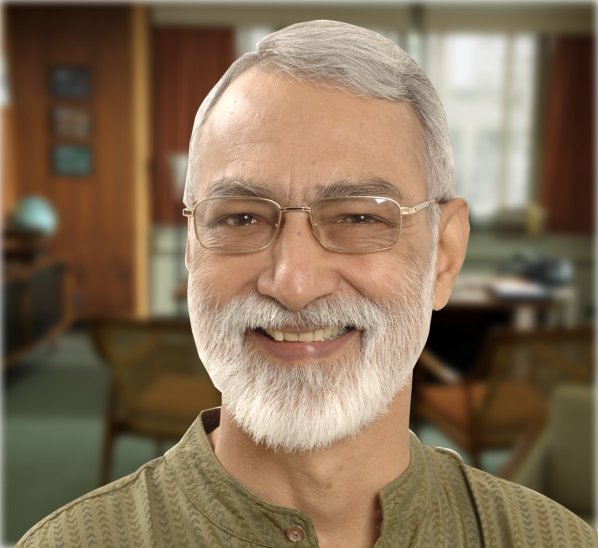
Deep Joshi
Deep Joshi is a social worker, recognised for his role in professionalising development work in India. As a young professional, Deep was inspired by medical doctors Rajanikant and Mabelle Arole, who combined advanced medical training with empathy for the poor, while providing healthcare to marginalised rural communities. Based on the conviction that young graduates—engineers and management professionals—had a role to play in creating transformative change in rural India, he co-founded Professional Assistance for Development Action (PRADAN) in 1983 with Vijay Mahajan. Deep retired from PRADAN in 2007 and today is the CEO of the Rajiv Gandhi Charitable Trust.
Deep was awarded the Ramon Magsaysay Award in 2009, and was also awarded a Padma Shri by the Indian government in 2010.
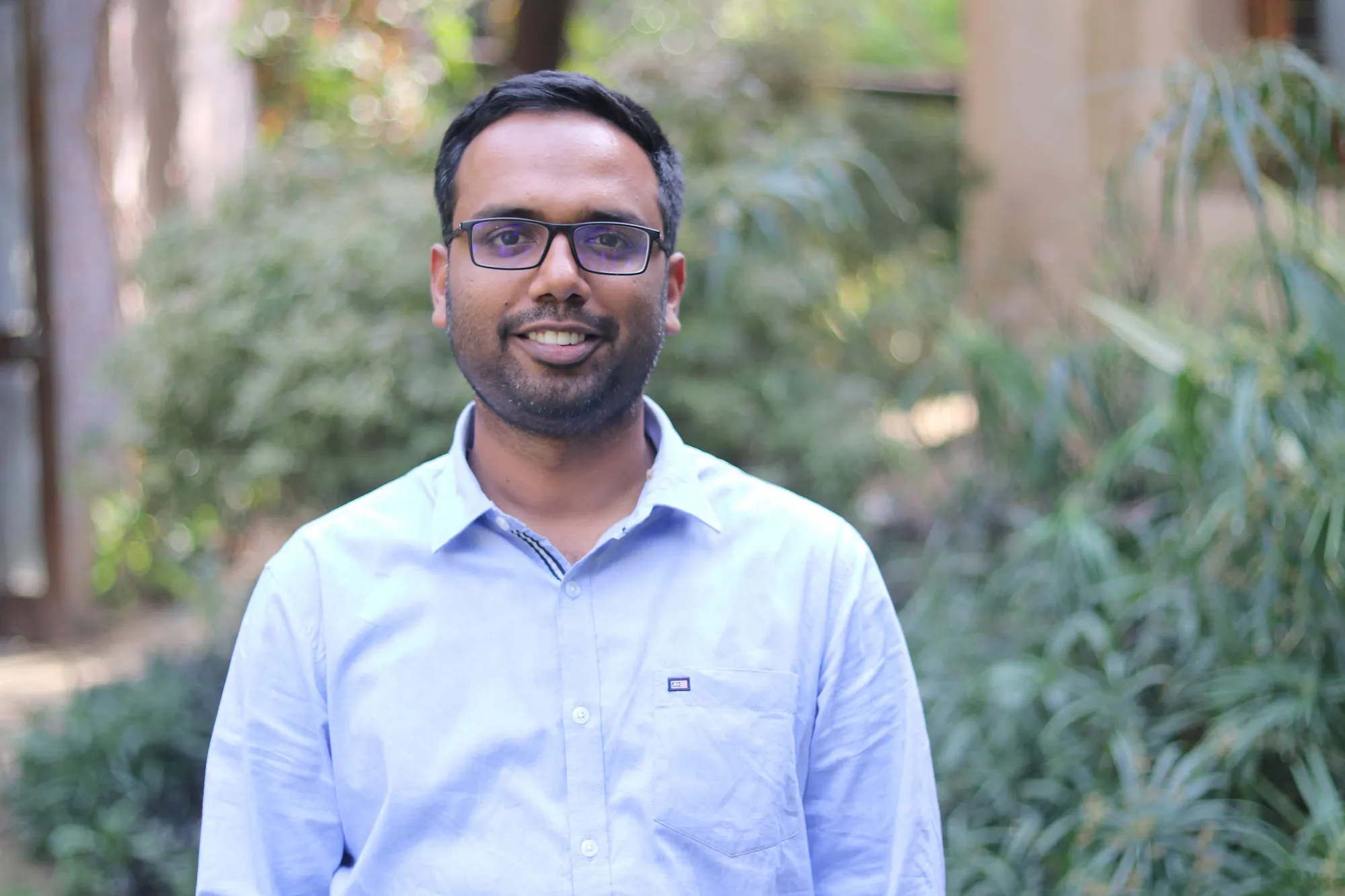
Tarun Cherukuri
Tarun Cherukuri is the Founder CEO at Indus Action, a India-based nonprofit that builds digital public goods and mobilizes communities to enable sustainable access to social protection. Since 2013, they have enabled 2M+ vulnerable families in India access legislated rights, including education, livelihoods, and public services. Tarun is passionate about advancing social justice in India through community organizing, active citizenship, and systems leadership. He is a 2015 HKS Emerging Global Leader, 2017 DRK Social Entrepreneur, 2019 Obama Foundation Fellow, 2021 GLG Social Impact Fellow and 2022 Ashoka Fellow. Tarun holds degrees from Harvard Kennedy School and Birla Institute of Technology and Science.
“You can’t deliver things to people. You have to help them realise themselves. Development begins when people believe: I matter, I can do it, I count.”
Deep Joshi
TRANSCRIPT
Note: This episode is produced for the ear and designed to be heard, not read. Readers are encouraged to listen to the show to get the full experience. The transcripts are meant as support documents and may not include inclusions from the day of recording and may contain errors. The audio version is the final version of the show. Ignore the timestamps mentioned. Ignore grammatical errors.
HOST
Welcome to Grassroots Nation, a podcast from Rohini Nilekani Philanthropies, a show in which we dive deep into the life, work, and guiding philosophies of some of our country’s greatest leaders of social change.
Sometimes, an individual person’s achievements have helped imagine a different role for professionals: not simply to build careers, but to carry knowledge, skills and institutional capacity to communities at the grassroots. Today’s episode is about one such life, Deep Joshi, one of the most influential figures in India’s development sector.
Born in 1947 in Puriyag, a remote village in the Pithoragarh region of the Himalayas, Deep grew up in a farming family. He studied engineering at Motilal Nehru National Institute of Technology in Allahabad before leaving for the United States, initially to complete a PhD in the sciences, but along the way, he earned a master’s in engineering at MIT and later studied management at the MIT Sloan School of Management.
Returning to India, he worked with the Systems Research Institute and the Ford Foundation, where he began to think deeply about poverty, institutions and rural development. In 1983, together with Vijay Mahajan, he helped create PRADAN Professional Assistance for Development Action.
Their idea was radical for its time: that some of India’s best educated young professionals should make grassroots development their vocation living and working alongside poor communities and bringing professional knowledge, technical skills and institutional thinking to the challenges they faced.
Under Deep’s leadership, PRADAN grew into one of India’s most influential development organisations, working on livelihoods, natural resources, agriculture and women’s collectives. His professional journey also connected him with some of the pioneers of Indian social development, including Ravi Matthai, Ela Bhatt and others who were asking how institutions could better serve India’s poorest citizens.
Deep went on to advise the Government of India and serve as Chairman of the Institute of Rural Management Anand. His contribution was recognised with the Harmony Silver Award in 2006, the Ramon Magsaysay Award for Community Leadership in 2009, and the Padma Shri in 2010.
But perhaps his greatest legacy is not any of these awards. It is the idea he embodied: that professional excellence and social commitment need not be opposites; that development must begin by respecting the agency and knowledge of communities; and that talented young Indians can choose to build their careers at the grassroots.
By demonstrating that talented young professionals could build meaningful careers in rural India, it helped create a new vocabulary of grassroots leadership. Fellowships such as the PMRDF, Gandhi Fellowship and SBI Youth for India would go on to bring thousands more young professionals into villages and rural public systems — carrying forward, in different forms, the idea that India’s best talent could be a bridge between institutions, knowledge and communities.
To explore Deep Joshi’s life and legacy, Deep is in conversation with Tarun Cherukuri, Founder and CEO of Indus Action. Tarun is a social entrepreneur working to help vulnerable communities access their rights and public services. A Teach For India alumnus, Obama Foundation Fellow and Ashoka Fellow, he represents a newer generation carrying forward many of the questions that animated Deep Joshi’s work. This is a conversation across generations about institutions, leadership, poverty, and ultimately, what it means to build an India that works for everyone.
The episode was recorded in Delhi, at the Pradan offices.
TARUN CHERUKURI
We discussed broadly five stages and we’ll see how it flows. But early childhood and education, we got started with that last time we didn’t have a chance to talk about. The second is in early internships at Jamken and you know, the first, I guess, pre PRADAN internship that, you know, DEEP had done outside Chandigarh, which is kind of the foundational insight for PRADAN. And then the founding story itself with Vijay Mahajan. Is it true that the conversation happened in Less than an hour? That’s what I found in my research…
DEEP JOSHI
What happened was that, you know, I was working with this philanthropy and was responsible for developing a program to improve, strengthen NGOs working in the rural development sector. And based on my experience with the Aroles and my own work that I did for the same philanthropy near Chandigarh in the Shivalik Hills…
So the engagement with the community that all of us had that in some ways reconfirmed the impressions that I had, you know, built based on my interaction with the Aroles as to what kind of people, what, what, what makes things click in, in the rural communities. So that was the, you know, that was at the, you know, the sort of, the background. And I had, you know, in my mind this thought that we need to find ways of getting professionals to work in the development sector. That was in some ways the sort of imagination that the Aroles were professionals and professionals with a big heart, a lot of empathy for people and all that. So I thought if one could get people like that, not just in health, but in any other field also to work with rural communities, we could tran-, you know, we could transform rural India. We could improve the functioning of NGOs and so on and so forth. So that was the thought in my mind. And I was looking for ways to create a program around that for the donor…
TARUN CHERUKURI
Yeah.
DEEP JOSHI
Where I could then make grants. And so I had, you know, several things lined up in my mind. One of the things was, one of the things that I was doing was giving funds to, you know, somewhat better established NGOs like, you know, MYRADA, Sevamandir, etc. and so that they could recruit professional people to build a team of such people inside their own organizations. But, you know, there was also this thought that if you could actually create a separate intermediary institution which would induct such people, train them if necessary, and then place them in NGOs. So that was kind of the thought. So I was looking for an opportunity to do something of that nature.
So I landed up with ASSEFA in Madurai visiting them for two and a half days to see their work in Bhoodan, developing Bhoodan lands and so on and so forth. And I felt that, you know, these guys were doing such great work but they were working on agriculture, natural resources and so on and so forth. But they didn’t have anybody who had that technical knowledge to complement this community level work that the people were doing. So I spoke with the gentleman who used to run that organization, Mr. Loganathan, passed away recently. Wonderful human being, one of the gurus for me. So I asked him, you know, if we could get professionals to come and work with you, would you be interested in taking them? He said yes, but you know, we can’t pay them and how do we get them this, that and the other? So the idea that you could actually, probably, if one could get people of this nature to come and work in rural communities, there would be opportunities for placing them. Now the donor that I was working with only made grants. It didn’t do things by itself.
I had discussed this with a few senior colleagues and friends who I respected and who were experts in the field of development action as well as theory. Would something of this nature make sense? And they both, two of the people, both of them had strongly supported the idea. Good idea, go ahead. So I said go ahead, it’s all right. But you know, I can’t do it because I am a program officer in a grantee in a donor organization and we don’t do things ourselves, we make grants. So I am looking for somebody who could set up something of this nature. And both of them suggested Mr. Vijay Mahajan. So I and Vijay used to work with one of them in Delhi at that time. And he was traveling somewhere. So I called his office, they said he’s traveling. So I left a message for him to come and meet me. So he came over, I think it was January 21, 1981. And so I discussed with him, you know, I thought it would be a great idea if we could set up an organization which would induct youngsters professionally trained youngsters who have a developmental orientation who have a sense of empathy towards other people. What do you think about it? He said yes, I also agree with you, it’s a great idea.
So would you be interested in doing that? He said yes, I would be interested. And both of us thought that we need to first give it a try.
So the agreement with Vijay was that he would come on board for six months.
So I tried to make a small grant to this NGO in Madurai, ASSEFA and that didn’t work out for various reasons. And so Loganathanji said listen, I can support Vijay for six months. There’s no problem if you can come. So Vijay went and met with Loganathan ji, spent some time there. Vijay became kind of, he set up some sort of a techno managerial unit inside the ASSEFA into which he would then induct. And the idea was that eventually with this experience when you know, we figured it out, once he set up an organization, registered an organization, my donor, the donor that I was working with would make a grant,
And so that’s how PRADAN was set up. So Vijay went there, worked for six months with, you know, I think somewhere from August of 82, not. I met with Vijay in ‘82 of January, not ‘81. So from August ‘82 I think Vijay worked with ASSEFA. And by March, by April, 18th of April, 18th of April is Bhoodan Day. That’s when Vinobha Bhave started the Bhoodan movement. So PRADAN was registered on 18th of April 1983.
So that’s the founding story of how it actually came about.
HOST
In 1977, Deep went to visit Dr. Mabelle Arole and her husband, Dr. Rajanikant Arole, both visionary Indian medical doctors and pioneers of global primary healthcare. In 1970, they founded the Comprehensive Rural Health Project (CRHP) in Jamkhed, Maharashtra. Their revolutionary approach shifted the focus of rural medicine from expensive hospital-based curative treatments to community-driven, preventive, and equitable healthcare.
DEEP JOSHI
When I went to visit the Arole work in 1977, I had no clue about, you know, something called an NGO because my conception was development is done by Sarkar, by the government. So that’s what I’ve seen in the village where I grew up. So this idea that there are. I often say to people that if there was a PRADAN in 1968 when I graduated from my first engineering degree, I would probably have joined them. But I had no clue that there were these alternative mechanisms called NGOs or civil society organizations or whatever they call nowadays which did development work. Whereas Vijay had already had exposure to that kind of part being in Jaipur and Delhi and what have you.
TARUN CHERUKURI
Yeah, it’s like both of you are brewing and the story was almost you know, ripe to make happen. And it was kind of the right direction.
DEEP JOSHI
For example, a visit to ASSEFA was purely, it had nothing to do, it was not concerning PRADAN. It was actually that I had gone there because the same donor where I was working was interested in doing some work in the field of wastelands development.
HOST
ASSEFA (Association for Sarva Seva Farms) and its co-founder Sri S. Loganathan have made monumental contributions to rural development, land reform, and community self-reliance in India. Deeply rooted in Gandhian philosophy, Loganathan dedicated over 50 years to empowering landless families and rural poor, building ASSEFA into one of India’s largest non-governmental organizations.In the 1960s, Loganathan actively joined Vinoba Bhave’s Bhoodan (land-gift) movement, which encouraged wealthy landowners to voluntarily give land to the landless. To ensure that these newly distributed plots of land became economically viable for poor families, Loganathan co-founded ASSEFA in 1969. The organization systematically converted underutilized, gifted land into productive, collectively owned farms.
At the time, Deep was working at SRI, the Systems Research Institute in Pune, a pioneering non-profit research organization and public trust established in 1974. It was set up by Professor Jaswant Krishnayya, a former faculty member of IIM Ahmedabad. SRI is recognized for pioneering the early adoption of informatics, computer-aided decision-making models, and Geographic Information Systems (GIS) in India apart from being a space where socio-economic issues could be studied using an integrated, multidisciplinary approach.
DEEP JOSHI
So my colleagues asked me, can you go and look out or what are these people doing? So that’s how I actually ended up in ASSEFA. Not with the idea of exploring possibilities for PRADAN. It’s just so anyway, that’s just kind of a serendipity. That is the same with visiting Aroles. I was working with this policy research, policy consulting organization in Pune, SRI which was Systems Research Institute, which was focused on working with the public sector, with public companies, government programs and so on and so forth and also NGOs. So I had gone to Aroles to see their work in Jamkhed because they had been a very effective health program.
TARUN CHERUKURI
Yeah.
DEEP JOSHI
So my organization in Pune, SRI, got the contract to do a study on that. And I as a hot shot MBA went and did a recce of this organization. Yeah, case study of this. Spent about two and a half days there. Mabel, Dr. Mabelle Arole. Raj and Mabelle. These are the two doctors who were. Who started the Jamkhed initiative.
TARUN CHERUKURI
Were they already in Jamkhed?
DEEP JOSHI
I think went there in 1973. They actually, they are interesting… You might want to meet with their daughter who runs the program. The project is still there and they do many other things now, other developmental initiatives. But initially it was focused only on community health. Comprehensive Rural Health Project, Jamkhed. That’s what the name used to be, CRHP.
So that’s how the program they started somewhere in 1973 and I visited in 1977 by which time they were working in that taluka called Jamkhed. And the progress was really truly remarkable. Now it was just by chance that I happened to visit Jamkhed because the rest of my work in SRI was focused on, you know, Forest department, the Government of Bihar, Electricity Board and you know, things like that which are basically in the broadly public sector. This was one of these outliers and the opportunity came and my colleague, the boss there, Jaswanth Krishnayya, accepted it and asked me to go and to do the study. So I, I would never have got to know about the work that the Aroles were doing or which in a way kind of since I, you know, grew up in a village myself suddenly this, you know, imagination that you know, here are these doctors, Mabelle, when I went there, Raj was traveling somewhere but Mabelle was at home, I mean was in the project. And she took me around and I met – they had these middle aged, truly middle aged, purposely selected as middle aged village women from the project villages who were called Community Health Volunteers.
TARUN CHERUKURI
Were they called Mithanins at that point?
DEEP JOSHI
No, no, Mithanin. It became only in Chhattisgarh later.
TARUN CHERUKURI
This is the earliest version of Mithanins.
DEEP JOSHI
The original name was Community Health Volunteers and that program actually was in the government tried to expand it during the Janata party regime when Mr. Raj Narain was the health minister. It didn’t work, it didn’t go very far. But subsequently the same thing was tried through this ASHA worker which is now an all India thing that’s been going on for many, many decades now I think three decades ago. So that in Madhya Pradesh it used to be called Mithanin but that’s where it’s, you know, the name. I don’t know whether they still called Mi– in Chhatisgarhs, sorry, not Madhya Pradesh.
I don’t know whether they still call it Mithanin there but elsewhere it is still, it’s called Asha, Asha didi. So, Mabelle Arole, both of them were, you know, had masters in public health from Johns Hopkins University. And so Mabelle is sitting on the floor wearing her white jacket but sitting on the floor with these village women who, you know, the way the old fashioned Maharashtrian women would tuck their sari to the back and what have you, which I also hadn’t seen before. So they would be all sitting around and like as if they were kind of her long lost cousins or friends or something like that. She would be, you know, talking with them, arguing, discussing, because they had a system that these women were there in each village. There was one person in one health volunteer in each village. And her job was to promote health related things like vaccinations, care of the newly born, care of the lactating mother, care of the pregnant woman. You know, these were plus public hygiene, you know, so on and so forth, washing facilities, washing your hands before you eat, all those kinds of stuff. Very simple. 85% Of the, you know, health problems actually are connected with preventive care, preventive practices.
So that’s what these community health volunteers used to do. And once a week they would all meet. They had a small hospital with just one operating theater and two small rooms.
So while they would review the work as to what happened during the week, they would also give additional knowledge and so on and so forth. So in those meetings, you know, Mabelle would be, you know, engaging with them as if, you know, whereas my imagination of a doctor through my life then was – doctor is an authority structure. Yeah. It sits on a chair and asks you to open your mouth and put, so to see a doctor engaging like this and having this kind of conversation that sort of gave me this think that, hey, here is this person who has knowledge, she’s a doctor and a doctor who knew about public health, but she was actually treating these people as their equals, as part of the fraternity.
So this idea that if we had people of this kind in different fields who would engage with rural people in a sort of, in a fraternal way, with a sense of empathy, with a sense of caring, and also use their knowledge to introduce new practices and change old practices and all that. That is the way forward for rural development.
TARUN CHERUKURI
Yeah, I think, you know, last time we spoke, you spoke about being the child in Independent India and you know, some of the serendipity of growing up in a very fraternal village. But though, like, the structure was very designed by caste structures. Could you speak a little bit about it?
DEEP JOSHI
Yeah. I grew up in a village which in a way was very unusual in the sense that my grandfather, maybe about 1904 or somewhere around that time, bought it. He himself came from a village of Joshis near the town of Almora. There is a village called Galli and that’s where he came from. And he was a functionary in the government’s…British government’s revenue department. So he had some cash at his disposal and so he decided that he would buy some land because that village, you know, that village was established in I think, 15th or 16th century. The Joshis, my ancestors, went to Uttarakhand in the 12th century. They were invited by the Kathuri kingdom kings to be their Jyotishis or whatever. That’s how my ancestors landed up there. And then some of them went to this new village called Galli. And that was settled, I think, somewhere during the reign of the Chand kings in the 16th or 15th century. 16th century, anyway, so the village must have grown and land must have become scarce and whatever so my grandfather, since he had some money, decided to buy land somewhere else and migrate from there.
And so he managed to get a piece of land which was an estate. And so we in that village, in a way it was, we were the only family. It had a name and so on and so forth. But other than us, there were only two other families. Both of them were our tenants to whom we had given some land to build a house. And so they used to live there. This was mountain land, so huge amount of land, very low productivity. So but we had enough to eat and we also had some surplus to sell and whatever to buy clothes and shoes and stuff like that. And so we were, you know, I. My family was the only upper caste family there. All other villages nearby were either Dalits or a kind of a local
TARUN CHERUKURI
This is 1946, 47. Right. You were born in 19-
DEEP JOSHI
I was born in 46.
TARUN CHERUKURI
Just a year before.
DEEP JOSHI
Since we had lots of land and since, you know, as a Brahmin family, we didn’t do plowing and what have you. So all the field work in the fields was done by hired workers. And the workers were basically either Dalits, the people from the communities that play drums, communities that make tools and, you know, blacksmiths and plus there is a Bora community there which is kind of a local. I think in some ways they probably are ethnic group and I think now they’ve been given scheduled tribe status.
In those days, you know, the caste, the untouchability was still prevalent. So they were all in some ways not allowed to come inside our house. You know, they could come and work outside, but so. But for us there was no other, you know, so in a way, our community was these people. My community was these people. So some of their kids and I went to the same school, you know, and there was a primary school which used to be up to class five. So a couple of my, in fact, my tenants, our tenants’ children would come and, you know, they live further down the hill, so they would come and we would go together to the school. So, you know, our community, for us there were no Joshis or other Brahmins or whatever. So even though they came from communities which were within court, lower caste, and therefore we were sort of supposed to practice some amount of segregation with them and whatever, that’s how it was. But they were our community, they were my mother’s friends.
So in some ways, for us as children and for my mother, these were the community. For my father to discuss politics or whatever, these were the community. You know, we didn’t have, you know, Joshi’s or Pants or Pandeys, which are the Kumauni Brahmin community, we didn’t have any. Whereas my mother’s village, which is about an hour’s walk from where we lived, was all Pants. Similarly, my grandmother’s village, which is also about the same distance, were all Pants. So their kids all grew among people of the same caste. For us, the people who were our workers in the field were our community.
So that’s the idea of, that, we are all equal. That’s something that in some ways I grew up with,
I think, for example, after doing engineering, all my classmates took jobs into private sector and, and some went into government and what have you, much better jobs, much better paid. I decided that I’ll be a teacher. So I joined my old alma mater as a lecturer because in those days – Associate Lecturer. In those days there were not enough PhDs and MTechs and what have you. So even with a bachelor’s degree, I was, you know, very high… I was the first in the class. So I was recruited as a lecturer and that’s what I chose. In fact, I stayed unemployed for a month because the position hasn’t yet been opened. So now why would you do that? Well, because the idea of making money or having power probably was not so exciting as the idea of engaging with people. And I loved that job.
TARUN CHERUKURI
Yeah. And did the US education happen by accident as well? Was it the Immigration act? And was this your generation going to the US as doctors and engineers?
DEEP JOSHI
See at that time, if somebody, as I was saying earlier, had been a PRADAN, I would have probably joined the PRADAN rather than 68. 68 Rather than becoming a lecturer. But once, you know, since there was no option, was not there. So the options were basically you do teaching or you join the government public works department or electricity board, etc. Or you take up a job in a company like Tatas or Birlas or whatever, that was all a public sector company. These were the options. So I chose teaching as a career, as a vocation. And now I knew that with just a bachelor’s degree, regardless of how well I had done, I wouldn’t go very far as a teacher. So I needed to have a PhD. So that’s why I went to the US to get a PhD in engineering and stayed with that for a while, for almost a year, year and a half. And you know, the trip to the US was very interesting.
TARUN CHERUKURI
It was quite uncommon. Right. Could you speak like not everybody went to the U.S. not everybody went to.
DEEP JOSHI
The U.S. I was at MIT. We had about 120 students. Indian students at MIT because we used to have an association of Indian students called Sangam. And so I know the list of names that was there. So yeah, the population of Indian students in the US was not so large as it is today. But the interesting thing is that the difference between even, you know, big cities like Delhi and American cities, big or small, was much, much greater then than it is today.
For example, you know, going from Delhi airport. Delhi airport in those days, what is now the. I think T1 or something. Yeah, that was both a domestic and international airport. And you know, one side was international, one size was domestic, and what to be a small place. From there you end up in, you know, Kennedy Airport in New York and then you get into a Greyhound bus and you travel through these beautiful roads with almost manicured grounds all around and go to campus like MIT. I mean, you know, MIT used to have four or five libraries in those days. And in one of the libraries, Dewey Library, you could read original papers written 150 years earlier. Things that you had read in your engineering, this scientist, their original papers. You could. So from India to the US was a huge, huge, huge culture shock as the phrase goes, so this is possible that you know, that human life doesn’t have to be as it is in India. It can be like this. So I think one became a little bit more conscious about issues of development.
And so I got interested, I know and I was doing a very fancy research on friction of materials and what have you. And it was very, very sophisticated. It’s too long to elaborate but basically you took the profile of the surface, you rubbed them, then you measured the temperature between them, measured the pressure and then you calculated it through a simulation. I said what am I going to do with all this?
So in some ways other than remaining a teacher, all the work that I was doing of research was going to be of no great use to me in India. That became clear and simultaneously this pull that, hey, is there something that I can do to change the way things are in India so that we could be more developed in and whatever, you know, that thought came and that’s why I actually moved to management because I had already spent about one and a half or two years of my four year scholarship and I knew that I wouldn’t be able to do a PhD in economics so I decided that I’ll go do management which I was told gives you some knowledge of economics and markets and this, that and the other.
TARUN CHERUKURI
Did the politics of the time have an influence on this thinking? I know the US had a civil rights movement going on and you were going through an emergency.
DEEP JOSHI
You were actually. Civil rights passed but you had Vietnam. Yeah, you had Watergate and it was very amazing. You know, it’s very interesting here, this big tamasha going on about the impeachment of a president and one would watch these things, you know. But I remember in the meantime in ‘75 when the Emergency was declared in India so all this was happening in the US it was entertainment. I used to occasionally watch the Senate hearings and what have you and with the kind of curiosity but India, their emergency has been declared. That sort of was kind of a bit of a reality thing. So anyway, so you know that politics I don’t think was really something that had any great import on Sangam and student groups.
TARUN CHERUKURI
What were the discussions like at Sangam?
DEEP JOSHI
Student groups actually were more mostly these, you know, see engineering students, MIT students are mostly focused on their studies. But this was a kind of a cultural exchange, kind of a thing. So we would, you know, this was a. Also a connection to the greater Boston community of Indians. So we used to organize. We used to produce a small magazine. We have some people who write articles and what have you. If some visiting dignitaries came from India. I remember Ambassador Call once came and chatted with us. Remember Maharshi Mahesh Yogi once came and gave a chat to the students. We would organize cultural shows like, I remember we hosted Ravi Shankar the Sitarist several times, because I was the secretary of that club for a while. So. So in that we organized that Ali Akbar Khan used to come to India, and then on his way back, he would travel from the east coast to the west coast, which is where he had his school. So I remember several times organizing his concert. So we would make these sorts of cultural kinds of things more for the greater Boston community of Indian Indians.
TARUN CHERUKURI
Yeah, lovely. Yeah. So I know as Millenials, we have this term called FOMO. Which is called fear of missing out. Was there any sense that, okay, I have to go back to India, like, you know, the action is happening there and I have to be of practical use?
DEEP JOSHI
Not really. I mean, I knew I was going to go. I was very clear I was on a scholarship which required you to come back to India, but for me, coming to India was not compulsion. It was not because of the scholarship that I chose to come back. I was, I mean, while I, you know, was fully enjoying the life there, still, certainly the campus life, certainly the libraries and whatnot. But I was very clear that this is not where I belong.
TARUN CHERUKURI
Yeah, I remember growing up in school and we had to do debates on brain drain. You had to kind of talk for the motion and against the motion. Why is it happening? How would you reverse it? So I could kind of hear many threads. In fact, I was born when PRADAN was born, so in many ways my life seems like a parallel journey to how, you know, PRADAN was built. And my first experience of the development sector was the Teach for India fellowship in, like, 2009.
So in many ways, like, I feel that that goal was there, right? And in many ways that was kind of the advent of many other fellowships as well. Gandhi Fellowship happened. IndyCore happened. I think, post 2007.
I think PRADAN inspired a wave of fellowships which kind of really opened the floodgates for young people like us to come into the sector. Did you always see it, you know, that way, that this is going to kind of inspire many other versions of fellowships like PRADAN or did it happen like happenstance over a period of time?
DEEP JOSHI
Well, it happens because people saw. And I think it wasn’t just PRADAN.
So Pratham was there and CSE was there. So there were lots of such initiatives which were initiated by professional people. As you know, people even before Kishore Bharti and so many others. But they, the one difference in PRADAN was our focus. My concern and I think Vijay was with me on board for that. He unfortunately moved on to do something else after the first seven years. But the idea basically was that how do you create more Aroles in different parts, different dimensions of development. Development, not just health, but also education or this and that. So basically why is it that educated people are not, you know, engaging with rural people? You know, that’s the biggest challenge India has.
TARUN CHERUKURI
Yeah.
DEEP JOSHI
So basically, if educated people, people with knowledge and skills and what have you and a bigger worldview, if they engage with the, you know, less advantaged people, less privileged people to help them realize themselves, you know, you can’t deliver things to them. And one of the things that for example, one of the, in a way quite a successful initiative that has with PRADAN has also been associated. PRADAN was in some ways the inventor of the idea of self help groups. What does this help group do? Here are these women who otherwise probably meet at the well or drink while they collect water or go to forest to collect firewood or whatever. But when they bring them together on a platform and you engage with them in a way that you challenge their timidity, they challenge their… and they at some point begin to, you know, discover that yeah, they can do it. So I am, that sense of agency, the sense of feeling that, you know, you know, I mean, I matter instead of being that I’m insignificant, you know, I can’t do anything, I know nothing. From there, that transformation. Now how does it happen?
So who can do that? Only somebody who’s got some knowledge or some ability to come up with solutions. And that sense of being connected, being part and parcel of the larger community, that fraternity. So I think that’s that to me, PRADAN fundamentally is really about that. I remember that I had a conversation long ago with Mr. Apu who used to be – he was a Bengalurian. He used to be an IAS officer, 1952 batch. He was the Chief Secretary of Bihar during the Janata Party period. And since I was doing consulting work with the government there, he became like my guru, kind of a teacher and also a friend. So I could go to him and talk to him. So I remember once telling him, why, don’t you think that the IAS officer. Because he became the director of the Sastri Academy in Mussoorie.
TARUN CHERUKURI
Yeah.
DEEP JOSHI
So I said, you know, don’t you think that these IAS officers should spend five years in the block as BDOs before they become deputy commissioners and so on and so forth? He said what are you talking about? In my view, they should start their career, spend five years as secretary to the Panchayat, Gram Panchayat, then only they should move up. And see, over a period of time, you know, you’re talking about fellowships. They were actually government initiated, many interesting fellowships. One of them used to be called the Prime Minister’s Development.
TARUN CHERUKURI
PMRDF
DEEP JOSHI
Yeah, PMRDF. That was actually in some ways copy-paste from PRADAN.
TARUN CHERUKURI
Correct. But for Naxal affected distress. No, lovely. I remember reading your interview elsewhere as well, where you said the other three constitute institutional values, you know, by design, in our legal framework, you know, have a lot more chance at being realized, whether it’s justice or liberty or equality, there’s a lot more legal framework which binds the state and drives those values, but fraternity has to be done with a lot more civic intention. Was that always the case at PRADAN? Like, was this kind of the original insight?
DEEP JOSHI
One of the things was that we very consciously decided to induct into the culture and entire functioning of the organization. Of course there were things like that we are a public organization, we really use public resources and so on and so forth. Therefore systems should be pakka. And so that, you know, that’s one area where nobody can raise even a small finger at PRADAN as you know, in terms of its financial probity and so on and so forth. That’s, that’s one part. But internally in terms of culture and that gets also, you know, put that zero tolerance for any hanky panky is very, very, you know, it’s, it’s ingrained from day one.
I’ve been gone for 19 years now, so I presume the same thing is still functioning. But the other main thing which is kind of was about building a culture where we said, yeah, you know, Vijay or I or anybody else in PRADAN, we’re coming here to, you know, as to share a part of our life with the people who might benefit from it. So, so much has been given by society. We should share some of it too with people in the society. That’s why the word is PRADAN – adhan, pradan, adhan is to receive, pradan is to give. So that was the, and therefore the bottom line was that whether it is Mr. Mahajan or Mr. Deep Joshi or anybody else, we’ve all come here with the same motive, same purpose. So I’m not anywhere superior within courts to the youngster who had just recently come. If you’re functioning in a structure which is top down, to expect that you will go out into the community and not be top down is to my mind it’s a fallacy. So internally, the culture, you know, that we try to create is one of collegiality. And in fact, when you look at the PRADAN logo, it says two things. One is first of all, it’s open ended, yeah, it doesn’t close. It’s open. It’s not closed. And we use both English and Hindi. P and PRADAN, P&PR. Because often people used to say PRADAN. Whereas PRADAN is the head.
TARUN CHERUKURI
The head of…
DEEP JOSHI
The meaning we had was PRADAN given reciprocity. So now the idea is these are all connected. So the idea basically was we are, you know, a growing community of people who are sharing their lives with the larger community and we support each other.
TARUN CHERUKURI
Yeah.
DEEP JOSHI
So we are all, you know, so in that sense, of course we have a different, you know, somebody can sign a check in the bank account and somebody cannot. Those. Yeah, those differences will be there.
TARUN CHERUKURI
The functionality, financial controls and levels.
DEEP JOSHI
Yeah, those would be there. But you know, otherwise we are all. That’s something that we inculcated from the very beginning.
TARUN CHERUKURI
We’ve been lucky to recruit PRADAN graduates over the years. And just last week I was interviewing someone and one of the questions we do ask is, you know, what was your proudest professional moment for all like folks who’ve done PRADAN their village, you know, emotional times they say, this recent graduate, you know, she was sharing that there was a baby born in the village. During her village immersion period. The village decided to, you know, name the child after her. And she had been there for like six to nine months and she would say that looking after that, shifting to a city and working a professional office setup has been a reverse culture shock there. There’s so much sense of sisterhood and brotherhood and you know, the day would never end. She would say come into the city and the day would end at 6pm, right. And but you know, growing up in PRADAN in kind of especially in village immersion, right. You were kind of in one village. Like you know, you were in everybody’s lives and businesses for the whole day. And so that day. So yes, it was interesting. Like this is a common reflection I hear from many PRADANs.
DEEP JOSHI
See there is a one year, one year apprenticeship program. What we said from the beginning itself. Well, in the initial stages there used to be a three month associateship idea basically was that, listen, you coming, you know, even if you are a rural person, you would have studied in some town and you know, there are no colleges in villages. So colleges means, you know, you could be either Delhi or Bombay or Allahabad or Lucknow or places like that. So you’ve actually experienced urban, semi urban town kind of culture. And then you suddenly end up in a village where you know, there may not be toilets, there may not be fresh drinking water, you know, all kinds of stuff. Things have changed over a period of time. But you know, I’m talking about the 1980s, early 1980s. Therefore we wanted to always say that you must experience what this work is all about before you make a commitment to say that yes, I want to work. So we used to always say that this is a choice you make based on your own experience and what have you. So it’s a, you know, you’re not just taking a job but you are actually after having immersed in it, after having experienced it, you make an informed choice. The first phrase used was that everybody who joins PRADAN who continues in PRADAN is somebody who makes an informed choice. So there is an apprenticeship program one year and out of that first three months are supposed to be basically making this mental switch. Is this for me or is it not for me? And we were very conscious that for example, women would need additional support. So I remember we introduced a system when this whole thing was being designed.
And so we had this system that if a young woman was recruited by PRADAN, we would offer her parents second class air conditioned fare to travel to the place where she would be working. Because oftentimes parents would be very appreciative. Oh,Gumla, where is Gumla? Ranchi phir bhi log jaante hair, but Gumla, my goodness, where is it? It sounds like some, you know, strange place, so rural areas.
Women as far as possible will be placed in twos, not singly. Most PRADAN people use motorcycles, right? And like purchase on a loan, a soft loan is given, but for women, we used to allow hiding a jeep because traveling in rural areas on a motorcycle may not be safe. So all of these things were introduced. But fundamentally the idea was that for the first three months you don’t have any project responsibility. You are placed in a team and you are assigned a guide. Every apprentice has a guide and the guide has been through four weeks of training, starting with a L group. And then several other things are done. Giving feedback. For example, how do you give feedback? How do you tell somebody that you are, you know, you are not up to much without actually using phrases like this, you know, for example, you could say, you know, you are a fool, You know that there’s a difference in how you convey. So how do you give feedback to people? How do you ask? They’re supposed to ask questions. How do you deal with it? So each apprentice has a field guide. She or he is placed in a team, project team. And for the first three months their job is to just tag along with any of the team members, go to the village where the work is being done, observe it, and ask questions.
So this idea that how do you observe, how do you experience the village, how do you village? All of this is supposed to be done in the course of the first three months, which also includes, I think it is 15 days at one time. It used to be a one month village stay where the PRADAN team will identify a project village or a project village which is near the project village, a village which is near the project village but. But where PRADAN is still not working, identify a household which is relatively poor and make a deal with them, pay them their rent and so on and so forth. And you would be placed there and your team, your field guide would disappear and you’re supposed to stay there for 15 days. And once a while the field guide would come and say, how are things? And all that. And I remember in that same film that I was talking about, I remember one young engineer from Burla College of Engineering in Orissa, he said, you know, he was reflecting on this. The interviewer who was making the film asked him about the military. He said, you know, I was put in this village and I had been told that I have to stay there for 15 days. And as an engineering student I had done many projects. I said, this is one more project. Somehow 15 days will pass.
So he says, first five days I would, you know, I was assigned a little sort of room in the mud house where there was a, you know, cot of some kind, this rope cot. And I would sleep there, read my books and what have you. And the lady of the house would offer me from. And I would eat the food and. And no interaction. I didn’t go to the village, I didn’t meet anybody, nothing. So he says, on the fifth day, somehow suddenly this thought came to me that these people are also like me. So he said, suddenly I flipped. And from that day onwards there’s a photo, you know, there is a, you know, segment of him sitting with the woman of the house chopping vegetables and what have you. So you know, this flip that people make when you are in the village, this, this, you know, flip that you make, that hey, I mean these are also people like me.
So the first three months basically is for you to decide to make an informed choice.
Now you have paid a stipend. You may leave in one month’s time. No obligation to repay the private stipend. Whatever has been spent on you is, you know, is part of the process of developing staff for PRADAN. And you may leave in two months, you may leave in three months or you can at the end of three months the team where you are placed, they will also make judgments. There are some people who show no interest. They don’t seem to be affected by what’s going on around them. Or there are some people who are not very cooperative, not good team members. And so there are criteria of this kind. Using those criteria, the team members will also make a judgment about whether you actually fit or not. Otherwise you would say, listen, you are a great human being but this is not the place for you, please find something else somewhere else. So politely you say, thank you very much, it’s been great having you, but you know, we shouldn’t be staying together. It’s the right, right fit. The same way the person can also say every guide, remember once one young sir wrote to me saying that, you know, you are doing great work. But I know I discovered that this is not for me so I’m leaving. So you know, occasionally one would get messages of that kind. So the first three months is really that. Then the next nine months, the apprenticeship for a one year period. The next nine months are about actually learning the tools and tackle, actually conducting meetings yourselves and whatever is being done by the, you know, in the project, you actually begin to function as a member of the team. Learning by doing is what. And you have a guide who will tell you what mistakes you are making and so you can, you know, question him and whatever. There may be some great guides and they may be not so great guides. So that happens with all teachers. But the guides have been given a proper, you know, training stretch over in know, several phases and whatever. And somebody may leave in month nine or month eleven or … And I remember one batch, for whatever reason it was a small batch, I think 12 people and wonderful human beings. And at the end of one year I, you know, I used to go to their graduation day. I mean to spend the last two and a half days, three days with them to talk about development. It has happened from the 1950s onwards and so on and so forth. And so all of that happened and each one of them was given the appointment letter because that’s when you are given a formal appointment letter as an executive of PRADAN. Then you become an indefinite employee of the organization. And soon I discovered within a month all of them had moved on to do something. No problem. So in the, in a way it’s, you know, it’s a privilege to be able to do that in the sense that PRADAN has been able to mobilize resources whereby you can actually spend that kind of money
TARUN CHERUKURI
to build a bench.
DEEP JOSHI
To build a bench. In a way that is the cost of getting good, you know, desirable human beings into the development sector. Yeah, you know, that’s the part. So in some ways whether after that they stay in PRADAN or not is really irrelevant. I mean it’s relevant but that’s not the main issue. So I think that’s creating an internal culture, having processes which give people both the skills and the knowledge and the experience. That’s the, you know, in some ways the stories of PRADAN.
TARUN CHERUKURI
At the start you said, you know, if PRADAN was present in 1968, you would have joined it then. So curious. Like if you had to start it in 2026 now, you know, how would PRADAN, especially this first year experience…How would it look in our current times where especially young people are growing up on 10 minute deliveries? And would you design a 10 month rural programme?
DEEP JOSHI
You see what it is, whether it is 10 months or six months but it’s not something that you can do in a fly by night way. It requires, requires time, it requires context, that specific engagement. It also requires, you know, supportive investment.
TARUN CHERUKURI
Coaching environment.
DEEP JOSHI
Coaching environment and coach. It requires a supportive team which can do that. So it can be done in six months or one year. It’s not really the issue.
TARUN CHERUKURI
The time is not the.
DEEP JOSHI
We thought of one year based on…because you see in that one year after the three month period they actually are all hours. You know, we put some thought in putting it all together. One of the things that we had, for example, was that at the end of one three month period, everybody must go home for one week at PRADAN’s expense. And the logic was that, you know, your parents may not be convinced that this is what you should be doing. Your friends, classmates, etc., might be doing some very exciting software development or something like that. And you are sitting here with the village women and you know, telling them how to work together and so on and so forth. Because if you made that informed choice and if you find joy in what you’re doing, you need to have the opportunity to express it to your family because their support is important. If they’re always cribbing, kab aoge, kab aoge, kab aoge, then you know you will not have mental peace.
TARUN CHERUKURI
Correct.
DEEP JOSHI
So therefore you must go home for a week, spend time with your family and your other important constituents and convey to them convincingly… They may not be fully convinced. I remember one young lady who spent her entire career in development. She must be retired now, she must be 60 plus, so her entire career in development. But I remember her father would visit me and he would say, listen. So in a way parents, some parents may never be convinced, but many would actually when they see you are happy, you are enjoying, would say, hey, okay, that’s what you want to do, carry on. You know that plus your other community, your friends and your classmates convince them. So this was something that was consciously, it cost a bit of money. So you continue to get your stipend but you are actually going and visiting your family. You know, that was after you’ve done that, then you come back and PRADAN has a small campus in MP. You come there and you spend, I think in those days, I think used to be about three weeks or something like that where we would get people to come and talk about development and you know, we’ve had, you know, economists and various people to come and also NGO wallahs and boot camp.So you’ve done your fieldwork, you’ve got some feelings, experience, you’ve got some questions and now some conceptual stuff and some theories and what have you. And then you go back and another eight months or so you work in the field as part of the team where you are again, the team will again review you, your work. But mostly those who join, who continue after three months, mostly the dropout rates are very, very small, small. And mostly the goodbye rates are also very, very small.
TARUN CHERUKURI
So when does basically most attrition happen?
DEEP JOSHI
The first attrition happens in the first three months. In fact I would say within the first three weeks, four weeks. Most of the attrition happens because it’s the kind of a, what should I say? An existential shock which kind of drives you away. But I would not change anything.
TARUN CHERUKURI
The fundamental design blocks will be the same.
DEEP JOSHI
Yeah. I mean one might work but conceptually the framework would remain the same because fundamentally the idea really is to get people to engage themselves after having experienced what the world that you know, why should I be doing this? So I think that that should remain the way it is and the whole process of selection etc should be the same. I remember one of the gentlemen who taught us how to do an interview…You know, with PRADAN the selection process has I think four steps. First is that you look at the grades. If you are an engineer you should have at least first class first or first class degree. If you are a social sciences student and what have you, you may be second high, second class or something like that. So there is an academic cut off that anybody below that kind of a cutoff would not be accepted. We’ve entered the application. So this recruitment team goes to the campus, makes an announcement in advance, goes to the campus, and gives a talk.
Which is one of the reasons why we made the first film to show it to the people as to what PRADAN does. And then group discussions are done where you again try to, you know, assess the people sitting in the group and assess each other as to who is most suitable for this work. So they do an internal group group assessment plus the two recruiters also do an assessment and the group discussion is. The management schools also do group discussion. Their focus is very different. PRADAN’s focus is very different. We’re not looking for somebody who comes with a quick answer or whatever. We are more concerned with people who are cooperative.
Who are willing to yield to somebody else. You know, suppose there you and I are, have this point to make and you start something and I also stop I and I would say no, no, you go ahead. No, that’s a rare, I mean but that’s a needed capacity that, that you to be able to seed, you know, seed space to somebody else.
So after the group discussion once people are selected through the group discussion then there is an interview. And the gentleman who taught us this, who was part of developing this recruitment process, it’s a very sophisticated, elaborate process. He would say that you must give everybody 45 minutes. Even though by the time you’ve done the group discussion you figured out that these three are no good, they don’t fit here. They may be great people but they are not good for us. You’ve decided it, but you must still interview them for 45 minutes. And he would also say that, you can’t use the interview as a way of finding out their knowledge. He said it’s a very poor tool. What you can figure out from the interview is what kind of person he is. So you don’t say ask technical questions, you know, three into four is 12 and that kind of stuff. No, you have questions which are, oh yeah, there is also, I think as part of the, there is a mental capacity test which is somebody’s PhD thesis, psychology PhD thesis which we bought the rights, Poland bought the rights. And it’s a non quantitative, non verbal culture neutral, they call it a test where you are looking at patterns, things like that.
So he used to be very clear that you must respect the person who’s come to seek employment in your place. So you must therefore you can’t dismiss them in 10 minutes simply because you think you’re not going to be taking them, you must give them that amount of time and whatever. So I mean there’s a lot of such stuff of this kind which goes into the detail of how it, how this creature [the interview] functions.
So all of this was done with a lot of support from outside as I keep saying that. We drew a lot on somebody like Deepankar Roy. He’s a behavioral scientist. So he worked very extensively with PRADAN. He was almost like a part of PRADAN. There was Jain sahib. Dr. N.R. Jain passed away many years ago. A very interesting person. He used to be a psychologist. He and his wife. So it is his wife’s doctoral thesis from the 1950s at Delhi University which we use for making this culture neutral aptitude test.
Both of them used to work with DRDO, the Defense Research and Development Organization.
So Jain sahib came and helped us design the recruitment program. So we had a whole constellation of people who helped us develop these systems and we were in some ways lucky to have donors who were willing to support us because investing in yourself is not really easily available. Money is available to, to sort of save some souls. But not available to develop your own soul. That is the tragedy of development funding. That money is available for doing good out there, but to build your own capability to do that good… people don’t give funding for that even in fact, it’s becoming worse now with CSR because there are parameters, deliverables and what have you.
TARUN CHERUKURI
Yeah, very tightly focused program. I think I’d like to go back to 2007 and you know, this must have been kind of in almost two and a half decades of building PRADAN and building this talent academy. Could you talk through kind of…I know you mentioned that it was in the leadership philosophy to build the next line to enable kind of leadership succession. Was it kind of, something that was thought through for a long time?
DEEP JOSHI
From day one, Right. Yeah, Vijay. In fact, it’s very interesting, Vijay was the first chief executive. Because I continued to work with the donor which gave grants to IRMA, to PRADAN
TARUN CHERUKURI
How many years down the road did you come on board?
DEEP JOSHI
I came in 86.
TARUN CHERUKURI
86.
DEEP JOSHI
So two years and two months later after PRADAN was settled, I came on board but I knew from day one that either I will join PRADAN or I’ll join ASSEFA. So I was, I remember my donor at that time, which was an international donor, had a position outside India. So they wanted to find somebody to head that office. And I was offered that. I said, I’m not interested. I will be working here either in PRADAN or in ASSEFA. And so Vijay said that from the beginning itself we decided that we will have a rotational headship. The chief executive will serve a five year term and then step down and somebody else will then become the CEO and so on and so forth. So that was so in fact, Vijay counted his time from the day he joined ASSEFA and he left. He stepped down even before he completed five years. He said, listen, I started working from that time. So I said anyway, so I became the second chief executive.
Then in 92 I stepped down because I had completed my five years. And then in 97 somebody else came. And then again in 2002 I was asked to head again, by the board because PRADAN was going through some financial difficulty. And so I then did.
So this idea that this CEO will be a rotational position and people will – senior people, people who have had lots of experience will do various integration functions. Like after stepping down, when I joined I was responsible for, you know, reviewing, supervising some projects. Then I became the CEO and when I stepped down I became the head of HR – Human Resource Development which is where all these designs of apprenticeship, etc. that was done when I was the HR. I had a colleague, Nivedita, who used to help me with that and later on she became the head of the HR. Then for a while I looked after finance and then I became a CEO again in 2000, 2002. So this idea that people will rotate was from the beginning and partly, I mean as I was saying earlier that the idea basically being that we are in some ways, you know, we are all here to do the same thing, to develop people. I mean your motivation for coming in PRADAN is no more than my motivation for coming in PRADAN. So in that sense we are all equal. Therefore we all have the equal possibility of heading the organization and doing various functions in the organization. People move around in different roles over a period of time.
Now the idea, one of the things that I would have liked to do in 2007, seven if I could. And we tried, actually PRADAN tried it. It didn’t work. It didn’t work out because of the way the higher education system functions in India, we were very keen to set up a development practice Master’s degree. My sort of dream, if I was born again and God said, what would I do? One of the things I would do is to set up a five year education program which educates people to become development practitioners. Just as there is a five year program for law. Yeah, there should be a five year program for after you’ve done your plus two, you should then partly by learning, partly by doing a combination of these two, you should become a Master. You should gain a Masters in Development practice. Yeah, we tried that program. It wasn’t five years, it was two years.
And it was actually not MA, but it was MPhil. The reason being that MA requires UGC approval. And we worked with the Ambedkar University of Delhi. And we tried with IRMA, we tried with the IEG and eventually Ambedkar University of Delhi, which was at that time newly set up, they agreed to give a try to this.
So the problem with the thing is that we were very clear that a Master’s in Development Practice should be 50% classroom, 50% field. And UGC would simply not allow a master’s program where one semester is out of, let’s say four semesters, two are spent in the field, two are spent in the classroom. They wouldn’t allow that. So what we tried, what we therefore did was we said, let’s do an MPhil. And the problem with MPhil is we did, I think, four or five batches. It was also supported by the Tata Trusts. And the problem with MPhil is that partly, of course, when the VC changed there, the new VC wasn’t really excited about it, so they didn’t continue with it. Partly is that, you know, MPHIL requires that you come with a Master’s degree already.
Whereas what we were interested in was even if it is only a MA, not a composite MA, but a simple two year MA, it should be with BA plus MA. So you come with a BA degree or BSc degree and then you do an MA. Whereas because of the regulatory framework, there was no way we could do an MA, which was a combination of fieldwork and classroom. So MPhil was what was decided in which MPhil apparently has a lot of flexibility. So the students who did the MPhil there were I think five or six batches of 12 or so, there would be one week orientation and then they would be recruited in the same process that PRADAN follows for recruiting its own people. They would have a field orientation for one week and then they would have a one semester on campus. Next semester they would go to the field. At that time only PRADAN was hosting them. Our hope was that at some stage, if the program continued, other NGOs may also come on board. And you know, because PRADAN had limited, you know, nature of work, focuses only on livelihoods, whereas one would have liked to have – if somebody wants to work in education, they could have worked with Pratham or somebody else and somebody’s working in health, could have worked with some health programs and joined and so forth. So that could have been a macro design. But unfortunately it didn’t really take off very much.
But the idea, you know, this, I mean, remember, PRADAN periodically goes through an internal churning of what is the purpose, what is our mission? This, that and the other. I remember the second one that we did. We said that PRADAN’s mission is to build people. So people are the community. So to develop human resources. People who would go and build the capabilities, the sense of agency of the community in the countryside, in the villages. Because that’s what the starting point for development is when you have faith in yourself, when your sense of agency is aroused, that’s when development begins. Because I can’t do things for you. You have to do things for yourself. But for that you need to be able to say, yes, I matter, I can do it, I count. So that is what is. That was kind of the mission that we started over a period of time that further has been. I think they’ve changed it a little bit. But building people is still part of the mission.
TARUN CHERUKURI
So one almost last question I had was what would your advice be to Gen Z, who has a lot of angst for the current education system. And I guess they’re also embedded in a moment where there’s a lot of anxiety about not just domestic, but national affairs as well. So especially on this mission statement to build people, if they have the ethos to build kind of the capacities of the most vulnerable Indians, how do they build themselves in the current time where I think there’s a lot of angst with where to head, what to do, how to cope with the current moment for the latest generation? So any advice you have, having seen many generations navigate the same developmental question? How can Gen Z partake in the developmental story of India in the next coming decades?
DEEP JOSHI
It’s very difficult to… who am I to give advice? But I think, you know, see in some ways, you know there’s this old proverb, the so-called Chinese proverb, go to the people, live with them, learn with them, etc. And when it is, when people are changed, when people have improved their lives, they will say we did it ourselves. So this idea that you need to engage with people, learn from them and in a way, sort of allow yourself to be, you know, to be, you know, give yourself the freedom to be, to be taught by others. So yield to others. Yield to others in terms of that maybe this other person has something to offer me. Maybe I don’t have all the solutions they can come up with. So I think the most important part really is to be able to engage with people. And the problem today is of multiple kinds. I mean you know there’s financial issues are also there in some ways the 80s and maybe to an extent 90s decade were the golden periods pre liberalization era.
TARUN CHERUKURI
The choices were simpler.
DEEP JOSHI
The choices were simpler. But also at that time India was still considered a place which needed development finances. So with a lot of international philanthropic support, PRADAN wouldn’t have been able to do what it has done but for the financial support that we got from various donors, international foundations, as well as Indian, the Tata Trust for example, gave us a lot of support. Of course lately the Azim Premji, they have given a lot of money and whatever. So today PRADAN is very well endowed. But you know I remember in the very first, I think it was 1987 we went to this, our the donor who gave us the first grant where I had also worked and we, Vijay and I, went there and we said we need a corpus. Corpuses and endowments are not given in the first three years, four years. Only when you sort of mature, then people say okay now maybe to multiply, to carry forward, here is a, it’s kind of a golden handshake. You’ve given some money and do what you want to do with it, that kind of thing.
So the person who headed the organization and he of course knew both of us. So we said, we need a corpus. He said what do you need a corpus for? Well, we need to start a rural university. We want PRADAN to become a rural university. He said, ah, what is a rural university? So who is the faculty? Now this gentleman himself had been a professor. So Vijay and I said, well, you’re looking at the two of us. So they said, well, we can’t give you a corpus. No, they actually gave us a corpus. They said, well, we’ll give you a corpus, but you have to be able to match it one to one. So we actually managed to match it from Indian donors. This was, I think 75 lakh rupees is what we got in 1987, which was a lot of money in those days.
And we managed to get 50 lakh from the constellation of Indian financial institutions, IDBI, ICICI and IFCI. They together pulled together 50 lakhs of rupees and then 25 or 27 lakh that remained, that was a Dutch foundation that was able to raise that kind of money. See, I must also say that we also had some privileges in the sense that, you know, both Vijay and I had had fancy education which was widely recognized. And, you know, people would say, you’re from IIM, IIT, you are MIT Sloan School. Wow! So this was kind of, I think, helped a lot. Sure. But if we were not, if we were floundering, this alone wouldn’t have taken us very far. But we were also, I think, somewhere along the line. I think partly in my case, the definite experience of visiting the Aroles, and my own experience of working in the projects near Chandigarh in the Sukhumadri project, which was a very interesting watershed project where I had a gentleman who was head of that – It was a project done by the ICAR, the Council Agriculture Research. And there was a small center in Chandigarh. The gentleman who was the head of that center, Mishraji. Pr Mishra. So the Aroles, Loganathanji, and Mishraji, these are my gurus. These are the people from whom I learned what this is all about. But Mishraji said what was, what were the arrears\ last year? The arrears last year were less than the arrears this year. Which means last year actually more bills became arrears rather than…So I said, but you know, he said, well what can you do? I mean you have to make a plan. So these are outstanding. So if I don’t show that I’m going to recover it, the planning commission will, you know, hammer me. So I have to say I am going to recover this money. And so this kind of stuff that the jiggery-pokery that used to go on inside the government. The first hand insight into these things was fascinating. It was a fascinating experience. So I wouldn’t trade anything that I have done in my life.
The only thing that I wish I had done, I mean the thing that I couldn’t really do is to have this education program that… So next life is the Master in Development Practice. I’ll start earlier. I will not do teaching and all that. I’ll go straight away, start a PRADAN and say, okay, let’s start a Master’s in Development Practice.
TARUN CHERUKURI
And the last bit reminded me of the Robert Frost poem Two roads diverged into the woods and you kind of took the one less traveled.
DEEP JOSHI
Yes.
TARUN CHERUKURI
And like you said, it’s made all the difference for you.
Thank you Deep for this conversation. I think it’s difficult to condense many decades of you know, rich life experience and wisdom into a couple of hours. But it was my pleasure to listen to your life in decades and especially the moments that mattered. So thank you for sharing with such generosity and with such detailing, texture.
02:41:00 Deep Joshi
Thank you. Thank you very much.