
E-25
Gagan Sethi: Bravery is Contagious
For over three decades, Gagan Sethi has been at the forefront of India’s civil society movement, building institutions, mentoring grassroots leaders, and advocating for the rights of marginalized communities.
A co-founder of Janvikas, his work has spanned minority rights, Dalit empowerment, gender justice, and community-led governance. Along the way, he has helped shape and nurture several important civil society initiatives, including the Centre for Social Justice, Kutch Mahila Vikas Sangathan, Sahjeevan, Drishti, and the HID Forum.
In this episode, Sethi sits down with his long-time colleague and friend Sushma Iyengar, founder of Kutch Mahila Vikas Sangathan. In a reflective conversation, they revisit his early life as the child of a family shaped by Partition, his formative years working with rural communities, and the moments that shaped his lifelong commitment to justice and equity.
Subscribe to Grassroots Nation: Spotify and Apple Podcasts.
Speakers
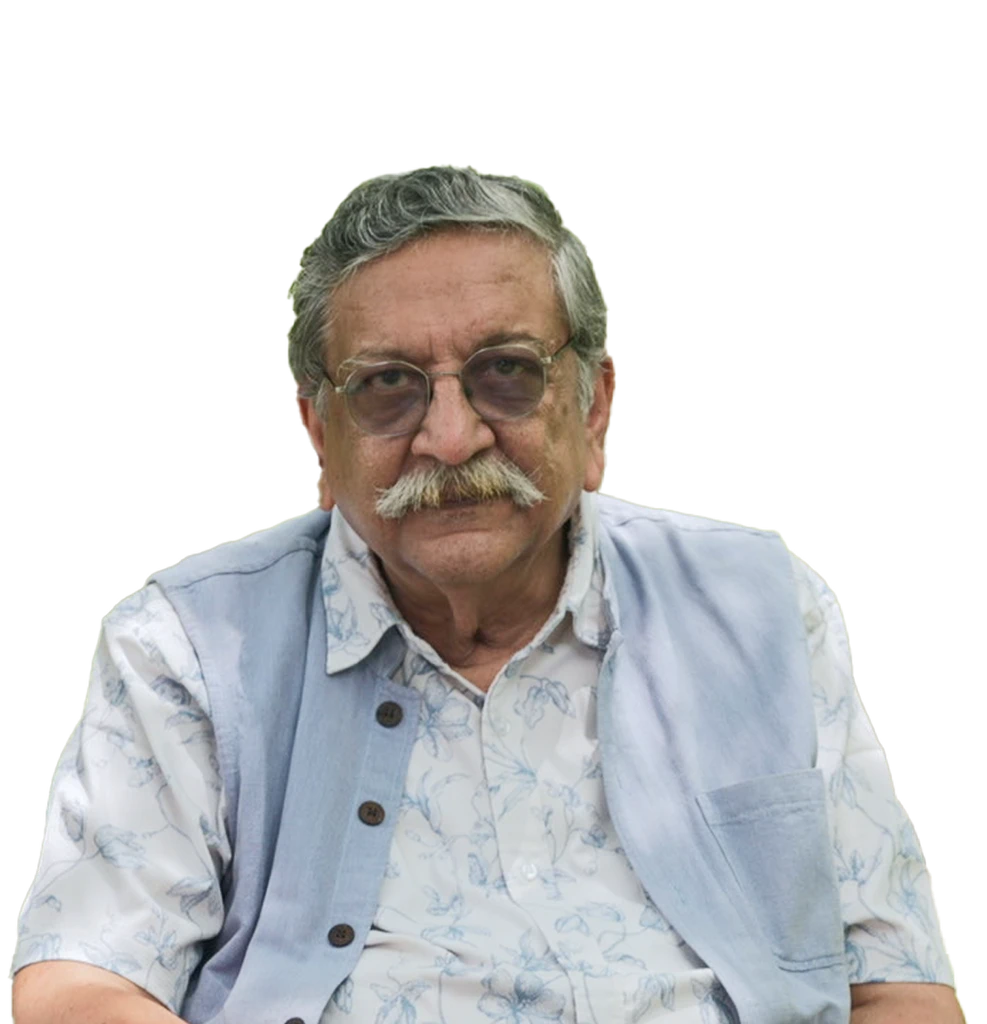
Gagan Sethi
Gagan Sethi is a development leader, institution-builder, and social justice advocate with over three decades of experience. He founded Janvikas, a development support and training institute, and the Centre for Social Justice (CSJ), which advances human rights and access to justice across South Asia. Gagan has worked at the intersections of organizational development, legal empowerment, and gender equity, pioneering reforms in legal aid, training paralegals, and supporting communities in the aftermath of violence. He has also contributed to policy frameworks such as the Nyaya Panchayat Act and mentored civil society leaders across India.
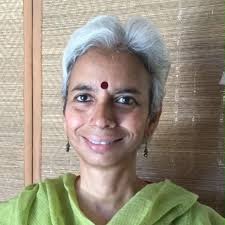
Sushma Iyengar
Sushma Iyengar founded the Kutch Mahila Vikas Sangathan, and has led transformative action for the last three decades. She works with marginalised communities in the areas of gender justice, indigenous cultures, traditional livelihoods, local governance, and disaster rehabilitation. She also co-founded the Kutch Nav Nirman Abhiyan—a district network of civil society organisations. She has pioneered many grassroots initiatives, and has authored a book ‘Picture This! Painting the Women’s Movement’ and is associated with the Centre for Heritage Management at Ahmedabad University. Sushma has a Masters in Literature from MS University, Baroda, and a Masters in Development Communication from Cornell University.
If you listen, then you are forced to say I made a mistake and I think that person has a better way of doing things. And then can I start saying I follow you? I mean, why do leaders always have to lead? Can't you be a leader of listening?
Gagan Sethi
TRANSRIPT:
Note: This episode is produced for the ear and designed to be heard, not read. Readers are encouraged to listen to the show to get the full experience. The transcripts are meant as support documents and may not include inclusions from the day of recording and may contain errors. The audio version is the final version of the show. Ignore the timestamps mentioned. Ignore grammatical errors.
HOST
A development leader, institution builder and a social justice advocate, Gagan Sethi has championed the rights of the marginalized throughout his career. With early roots volunteering at the Behavioural Science Centre at St Xavier’s College in Ahmedabad, Gagan Sethi has spent over three decades advancing social justice and working for a more inclusive society. He has led cooperatives, fought alongside the marginalized, worked with rural women, learnt and then led organizational development across many institutions, and catalyzed innumerable other ideas and work in the social sector.
Over the years, he has worked extensively on issues of minority rights, Dalit empowerment, gender justice, and community-led governance. Known for his expertise in organisational development and capacity building, Gagan Sethi has mentored numerous civil society initiatives across India and South Asia, helping build sustainable institutions rooted in democratic values and community participation.He is one of the founders of Jan Vikas and has played a key role in establishing several strategic civil society initiatives, such as the Centre for Social Justice, Kutch Mahila Vikas Sangathan, Sahjeevan, Drishti, and HID Forum.
Known for his wry sense of humour and commanding personality, Gagan Sethi is a social sector leader and mentor to many people. Today, he is in conversation with his long-time colleague and friend, Sushma Iyengar, the founder of Kutch Mahila Vikas Sanghatan. Gagan and Sushma reflect on his early life as a child shaped by the legacy of Partition, his formative years working with rural communities, and the experiences that profoundly shaped his life’s mission.
This conversation was recorded in Ahmedabad.
—
SUSHMA
Hi Gagan, thank you for allowing us to hold you captive in a quiet place. I’m quite delighted to after 37 years catching you in this quiet moment and journeying your whatever, 50 years of your life in the social sector.
GAGAN
Well, you’ve been part of it so many times. So I’m an open book to you.
SUSHMA
So Gagan, where does one begin? For someone who has shaped numerous organizations in the landscape, institutions, all kinds, let’s begin with listening to you about your first organization. Your family, your parents. Surely something got scripted right there?
GAGAN
Interesting, Sushma.I do speak about this when I’m opening up with groups because I expect them to be honest and open up too. You know, both my parents are post partition refugees in Delhi. My father’s father was in Rawalpindi in what is now Pakistan. He was a station master and he was about to retire and he had built this huge mansion with tennis courts and things like that.
My mother’s father was a penury lawyer in Lahore. When the partition happened, my mother’s father was having a holiday in Mussoorie. But my father’s father, my grandfather whom I never met – had to leave in an army truck, lock, stock and barrel with nothing. Just huddled and brought to Delhi, stayed in refugee camps. And my father had another four brothers, two sisters. One of his sister’s husbands was killed because he said I’ll come a little later, I’ll set up my, you know, close my business. He was killed.
My mother’s father shifted to Delhi because the whole family was holidaying and they managed to sell, get their stuff there. Why I’m saying this is because there’s a huge contradiction which my mother and father lived with, which is in me. My father’s father lost everything in a refugee colony. And I think the trauma killed him. He died. My father, the youngest, looked after the widow, sister, their two children and they then got a refugee plot. He built a house in that refugee colony in Kalkaji. My mother’s father came and stayed with their relatives from Mussoorie. You know, they stayed for some time and then he was looking for a house and every night he would go around looking for a house and he found a huge mansion, unoccupied, there were no lights. Some Muslim family had fled. Fled. And smart guy he was – one night he broke open and captured it.
So here my father’s father, who had a huge mansion, became a pauper. My mother’s father, who was a small time, you know, staying on rent, came and occupied this huge mansion. You know, what it did to my father in terms of being so insecure and seeing that kind of trauma. And for my mother it was abundance. And I carry that deep sense of insecurity in me.
SUSHMA
This is the first time I’m hearing you say this, to see how their stories are sitting in you in this way.
GAGAN
But you know, therefore I grew up my first eleven years in Delhi and later on we got a government accommodation near the airport. And I have a brother, you know, my brother is a world champion and all that.
We used to go to school. And once my mother gave me 50 paisa aath anna that time. And the thing was there was 40 paisa where we used for the bus and I had 10 paisa to buy a Coke. And when I asked for the ticket and the conductor told me, this is khota. It was a khota sikka. And I panicked, what it will do to me? Anyway, he allowed us and we used it to go to school. On the way back, I said, now I know it’s khota. How do I come back? I didn’t have the courage to give the khota sikka. Knowing that it was khota, I carried Geet on my back and traveled three and a half kilometers back.
SUSHMA
My gosh. How old were you?
GAGAN
I would have been I think, eleven.
SUSHMA
And maybe a lot of people in this generation have probably not heard the name Geet Sethi because it’s been 40 years since he became a champion. But Geet was India’s first world billiard champion and has shaped the game and sports for years in India.
GAGAN
But again, you know, he learnt his billiards in Ahmedabad. By that time my mother was teaching, and my father was doing well. So I always joke that my father was a poor man, my brother’s father was a rich man. And you know, that has shaped us so differently. But yet we are such…we are so deep in our relationship.
SUSHMA
As you were older but as you probably were 20 or 18 or 19 when Geet started becoming famous.
GAGAN
More 24, 25. And I remember he was in St. Xavier’s College. I had started working in the St. Xavier’s College with Father A Pai in the Behavioral Science Center. But he was also Vice Principal. And Geet went to ask permission, his prelims were there – can he be exempted from prelims? He can go for his nationals. And this fellow became the Vice Principal and said, no, no, you cannot miss the prelim. And I remember intervening and said, now I’m wearing a brother’s cap. If you don’t allow him, I’ll make a big deal out of it because you don’t know the potential. And what’s more important, he’s giving one exam or he’s going for the nationals? And we were dear friends, but I said, now no friendship. You know this role of when you are a friend and when you are another role and sometimes they come in contradiction, in conflict. I remember that incident very well. And then he said, okay, I’ll discuss this with the principal. Next day he came, no, no, he can go.
HOST
Gagan Sethi joined St Xavier’s College in Ahmedabad, where he first encountered the Behavioral Science Centre. His time at the centre would deeply shape the course of his life. It was set up by a group of professors, two of whom were Father J Heredero, and Pheroz Contractor, affectionately known as Phillybhai.
SUSHMA
You have been a big brother to many people. So you just mentioned BSC, right? The Behavioral Science Center. I know that organization has shaped you. Why don’t you take us into BSC? What is Behavioral Science? What did it do to you? Who were those people who really touched you and in a sense pushed you and gifted you to this society?
GAGAN
So I think I was in St. Xavier School and there was a father there, a priest there called Father Herevity [sic], I mean, who really nurtured me in a very different way. And he used to run the social service league. I would volunteer there, but it was more out of that fun, you know, having Anand mela and having fun and contributing. Then when I came to St. Xavier’s College to do my bachelors, that’s when I came and took admission in the arts College in St. Xaviers. And there were these four professors who were running this part time center called the Behavioral Science Center.
There were two tasks. One, work with students of the college and take them out for these, you know, five day, six day laboratories, camps, leadership. And they were working, testing out the McClelland theory of motivation in nearby villages. The idea was if you motivate them, they could increase their agriculture production. Da da da.
So I was part of that student thing where I used to go to these Mount Abu camps with them. So there were these two who stood out. Father Heredero and Professor Contractor. Professor Contractor later on became my life partner, you know, in sense of, in the organization building. Heredero was a person who really wanted precision, discipline, but amazing empathy and ability to convert what you’re almost sensing, what you’re feeling and be able to get back to you. This is what’s happening to you. It was in these camps that I sort of, I think they ignited this idea that beyond your own identities there is a Nation that was brought by Philly – Feroze. He was, you know a strong nationalist. He would see a cricket match or a hockey match and he would start literally reverberating on the chair when wanting India to win. I think he, that’s what I got from him. But with Heredero it was this deep compassion with which he dealt with you and helped you look at yourself, understand your history. I think behavioral science is nothing but somebody who can ask you questions which can then help you reflect on yourself. And then there’s the psychology of it.
SUSHMA
And are there some particular moments or stories that you can recall from that time which you know moments when things hit your belly, you know and you, you can now when you look back you feel oh, that was a moment which shook me?
GAGAN
You know my leadership started building and I started entering student politics and I stood for election then I won and I became the Assistant General Secretary in Xaviers.
SUSHMA
So this was in which year?
GAGAN
‘72 to ‘75.
SUSHMA
When you were a student was also when the world outside was in turmoil. In Gujarat there was a movement, there was the anti price rise movement that had hit. The war had just got over in ‘71 and then we slowly went and 75 was the emergency. How was it, how political were you?
GAGAN
Not very. Not very. You know I was staying in the cantonment and that has its own frame and boundaries and boundaries. So therefore the emergency didn’t hit me so hard. But the riots used to hit me a lot.
SUSHMA
So Gagan, you know this, the whole partition history and what your dad and your families went through as millions of other families especially from Punjab went through. How much did your dad speak about this to you?
GAGAN
Clamped up, totally clamped.
SUSHMA
So you really didn’t know this part of?
GAGAN
No, but my grandfather from the maternal side, he was a big influence on me in my growing years. Yoga, tremendous sense of privilege, clubs, all that. But he gave me a good idea of what really happened and was very dispassionate. He was not. Well my father I’m sure held some degree of hate or this thing again because he lost it impacted him very negatively. But my grandfather, he was politically very aware so he gave me a very different perspective. So my understanding of the partition as what the Britishers did and Jinnah was not a villain in his explanation but he eulogized Nehru a lot.
I think I also saw the ‘71 war and I was at the airport when we were digging trenches and there was this sabre and gnat aircraft having a, what they call a dog fight in the air and the sirens going and we jumping into the bench, sorry. ‘65 in Delhi, ‘71 in Ahmedabad in because you were in the cantonment. So this. This thing of war, what it does, this India, Pakistan, myths that have been constructed…
SUSHMA.
And also this deep culture of silence that surrounded those who went through it, who did not speak about it. And as a society, as a country, we have not really spoken about this. We have not resolved it within us to this day,
GAGAN
There was no healing. There was no healing.
SUSHMA
There was no healing. And do you feel that somewhere also sits within you?
GAGAN
The need for healing, and maybe when we talk of 2002, I jumped into it almost, I don’t know what made me jump. You know, most of the organizations just withdrew. I mean, there was so much fear. I don’t know, I jumped. I jumped. And then we did all what we did, relief, rehabilitation, and we learned relief rehab a year earlier with you in Kutch. That’s the first time I actually came into public space. Otherwise, I was very back seat. Martin was the public face in my work. He was always the face and I was always at the back.
SUSHMA
From 70s you came to 2002, which was a very disturbing moment for many people, but I know particularly also for you, because you were in the thick of it. But I just want to go back a little. And, you know, we all in life go through moments of transitions and transformations, right? Some are those where we come to a juncture where you have to take a choice. And sometimes here, you don’t have time to take choice. You’re just swept. And that changes you. So sometimes your transitions are partly by design, if one can say that. And sometimes there is no space for choice and design. You’re really swept. So what have these moments been in your life?
GAGAN
You know, I’ve been thinking. You told me this question, and yeah, there are some very clear ones. For example, ‘86 Golana was a clear one. And I can speak about it, but let me go before that, I living in a cantonment, you are totally sanitized from the issue of caste. And I remember I was in St. Xavier’s and they would be doing these little surveys in the villages, especially with the Dalit community. And contractor would take me to do the survey.
SUSHMA
This is when you were a student?
GAGAN
When I was still a student. And I remember I had already started smoking at that time. So when we were going for that. So I used to make friends with the young people. And then I was short of cigarettes. I said, take me to a cigarette shop. I want to buy.
SUSHMA
This is in and around Ahmebabad, near Kheda… Cambay.
GAGAN
I said, what happened? Take me to a cigarette shop, I want to buy. So 2, 3 came with me and then very apologetically told the shopkeeper, you know, he’s from outside, he wants some cigarettes. And I say, what? Going to shop, buying cigarettes, what’s the big deal about it? And making it into some. So that fellow looked up and said, okay. So I said, he had the money. He said, do that. So I put the money out there. He wouldn’t take it. I didn’t realize. And then he threw the cigarette. I lost it. Fellow! I mean, throwing a cigarette! That’s when they told me, said, look, you may be whoever, but you’re coming with us. And we are Dalits, first of all, how dare we buy cigarettes? We can buy tobacco or we can buy beedies, but we have no right to buy cigarettes. I mean, discriminatory practices of this type, one heard about untouchability and all that. But these really fine discriminatory practices, you know, started troubling me when I was in college.
To say that it’s a transformatory moment. Yes. So this discovering that caste is an identity happened so late for me. But once it hit me, my antennas went up to look at that.
SUSHMA
So because we have all gone through this moment of confronting, you know, the other identities and our own. So when you say that, I then very actively chose to associate myself much more with the oppressed, with the Dalits. Were you hit by guilt of your own privilege? Were you wanting to actually now with your privilege, stand with those who are less privileged? Now when you look back, what was it that was playing in your mind.
GAGAN
None of that, Sushma. It was. And I’ll be honest, it was me being thrashed by both my mother and bullied because I was diminutive by my schoolmates. Bullying. And somewhere I identified that bullying with this bullying. I was really diminutive, small. Today, you know, I’m big. And that bullying had a deep sense of hurt with me. I somehow connected to that bullying very strongly. So it’s none of all that other stuff. It just
SUSHMA
The fact that you felt oppressed too and you found someone who allied.
GAGAN
So it was, it was this. And for me, the world is bullying. You know, how we bully people.
SUSHMA
How did you in those days negotiate with the fact that because you’re associated with the Dalits, as we all experienced, then you immediately get rejected by the upper castes. Right. So how did you navigate that?
GAGAN
So I used to fight. Because at the other level I was, you know, I had the voice and the arguments. So I fought with my home, especially my uncles. So anybody who threw this privileged thing, I would fight. I had read Paulo Freire by then. I would be intellectual about it, all sorts of things. The good argumentative Indian who would put his neck into the thing and fight. And I think I was fighting bullying, the whole Dalit identity became just that I understood it from a structural sense.
SUSHMA
But you internalized it, which was a very personal response. It was not a political, intellectual, structural response at all.
GAGAN
Never, never. And I think I made deep friendship. And that is why Golana hit me very hard.
SUSHMA
Tell us about that.
GAGAN
You know, when I started working, I was just. We were Monday to Fridays, I had to live in the village, no question. There was no zooming in and zooming out. You took your bag and if you. If you were, when you started working, you had to go by bus. Then you graduated to a motorcycle, then you graduated to driving a jeep. It was seven years. But you know, going by bus, staying the night… stories and seeing just stories of…I can never forget and before I come to… And it’s linked, you know. I was staying in Vargam, a village where we first started a cooperative. And I’m already working now in the Behavioral Science Centre. And I used to stay in neeche was a church and there was a room upstairs and we were part of the church, this thing. I was staying up just opposite me there was a house where a very good looking woman was there. And I saw in the evening the husband would move around and not go home. But I would see two chappals outside the house, big, those chappals, not really of Dalits, but of the Darbar. So I went slowly, what’s happening? She said, no, they are bonded labour. And the darbar once in a while comes and visits the house and when his chappals are outside, nobody goes inside.
I can give you many of these instances and nobody could do anything. I’m telling you this because I don’t know whether I’ve told you when Golana happened because that was another cooperative in another village, about 15 km there also we were building young people, animators, Paul, Peter. And then it was a land issue. We managed to get the land from the revenue department to build the house. Your friend Pandyan was the DDO at that time that he came fresh. So he said, you know, let’s have a chat, what you’re doing, how you’re doing. I said, you know, you don’t even understand. Why don’t you come in my jeep and I will take you for a meeting. But you don’t have to say you’re a DDO. And I took him to Golana, Avargan [sic] three villages. And we just had meetings and they tell him – and he was from Tamil Nadu and he was a Dalit – I think he understood and therefore land became an issue. And then he passed orders for the land. The collector was Ravi Saxena. And we got the land. But that hurt the Darbar a lot because they had occupied that land. And then one fine day when I was away, they came on horseback and killed a couple of my animator young friends who were working in organizing the cooperatives. And then we fought the case and RK Shah came into my life and we got a conviction. These were learnings and insights. And that’s why I decided to start. Philly and I both came out and then Martin and we started Janvikas a couple of years later. You have been part of the journey. Sandy- Sandeep came in. I still have his book where he designed the houses of Golana. So I think that’s another one. But I can go on and on. But there have been several. But these two, I would say from a professional point of view in making who I am and what my life’s mission would be. So all this OD-pho-D and all that, you talk, to me at the pivot of it is justice. I mean, we are here essentially for the three constitutional values. I mean, liberty, equality, fraternity, they are big words. But at the bottom of it is, I mean, basic human dignity and freedom of expression and the support of a system to be able to actualize yourselves. I think people make it complicated, unnecessary.
In the Behavioral Science Centre, initially we were only doing these workshops which were five days based on Freire, awareness raising, etc. With the Dalit community and five days we were taking them to an agriculture institute and how they could increase productivity. So there was the economic idea and there was the social. And how do they come together form the whole idea of Sangatans in that primordial form we were working on. And the backup was that they would when they came for those workshops. Then after that we would stay in the villages with them in making them formulate their cooperative. And then we went into social forestry. And then we started applying for land which is government land, largely what is called Kharaba land, you know, wasteland. And then we brought this Prosopis juliflora and hundreds of acres in saline land and actually driving tractors and staying in plantations…
SUSHMA
Planting Prosopis?
GAGAN
Yeah, because nothing else would grow there. And in the process the communities were getting organized, started demanding for their land rights.
Then food for work was introduced. So their dependency on bonded labor started. And there was huge bonded labor in that area. Money lending reduced in the better plots of land, agriculture, all on cooperative basis. I’m talking about the period ‘77 to ‘85. I was the secretary of all the cooperatives. So if you asked me my OD, I learned by actually running cooperatives of those. So there was a chairperson, everything was from the community. And I had to every month go with the accounts door to door every month in a cyclostyled thing and saying to this month’s expenses there’s this, you know, transparency, dadada. Cooperatives were also building local leadership. And therefore in Golana they said their houses are getting constructed, families are growing. Why don’t we apply for government land to build houses? But most of these government lands were occupied illegally by the upper caste. They are very interesting. You know, even land issues which I understood, for example, in every village in that area. I don’t know about Kutch, you may know better. There are land which are public land the Panchayats have and they are called Kutralu Jameen which means that they are land sharecropped to some Dalit. But the produce of that was the part sharecrop that was to go to feed the dogs of the village. So we had applied for this land and there were hearings and we would go and I would take …Golana, we got the order for the housing land and. But how dare you occupy that land? We occupied. So then the older and the young listening older said leave, let it be. The younger said what nonsense ! We take the land – back and forth until the younger generation prevailed. So they sent a message that we want them, you know, you to clear, we’ve got the land, we’ve got the order, everything. And the Darbar said, nonsense ! You can be, you know, nobody is going to touch that land. So one night, one morning, I think they all decided that they will take over the land as given to us. We went to the government, you know, the land river inspector. He said main to aake aapko dedunga, then it’s up to you. So he came and measured it and gave it on paper, but nothing on reality.
These people went there, you know, dug up the place and said now this is our land. I think that got the Darbar that you know already these people are started to assert wage rates had started. So a number of factors in 20 villages which started changing the power relation.In the end, we won. By that time, the organization I was working with was a Christian organization. They wanted peace because they have so many institutions to take care of. They have institutions all over the country, all over the state. So they said, why don’t you compromise? And that got us Martin, Philly, my colleague and I said, compromise, go to hell.
SUSHMA
Philly is Pheroz contractor.
00:43:52 GAGAN
Go to hell. We are not going to compromise. We will fight it. We want justice. Da, da, da. But the internal dissent within the organization was clear. Those with the economic thing and all they said, take care, we will work on economic empowerment. But we were saying, sorry, no justice, no economic empowerment. That was the point when the organizations were splitting. I decided that I will wait. Philly said, I’m leaving. I said I would leave the day the case judgment is there. Martin. We said, please stay on because there’s too much at stake. I went to hear the judgment, won and came back and I wept, actually, I wept. People said congratulations. And I said, what have I done? What have we done? We won a case. But the feeling I got is that I think the seeds of CSJ was shown there. Lesson learned that unless you have at the grassroots, at the village level, at the community level, people who understand the law and know how to navigate the law, whether it’s land, whether it’s atrocity act, whatever, you can’t just have, you can’t expect that institution to be present.
SUSHMA
But CSJ was given birth to almost 10 years later.
GAGAN
Yeah.
SUSHMA
So you actually
GAGAN
six years later. But we decided to step out and start Janvikas.
SUSHMA
So. Yes. So if that was the start of Janvikas, what were you thinking then? What would you do with Janvikas?
GAGAN
I’ll tell you simply. So the major conflict was between Firoz and Heredero. And I was, you can imagine, you know, Heredero was in a sense my, my artist guru of how to work, what are the groups how to do training… Philly was my, my guru in terms of political justice and that issue. Both said so Philly of course my, my listing was with Philly. So I said I will also leave. And, I remember Heredero calling me and he made a big mistake. And those words I can never forget. He said, you know who will support you? I said father, I will set up at least 10 organizations as beautiful and powerful as the Behavioral Science Center. That was for me why Janvikas was started. Fortunately Adi Miserio they all sort of knew Philly more than they knew me. They said we will support you. You become the training and capacity building organization for Western Zone. And we had this program called Atma – Awareness Training, Motivation for Action. And we were supposed to go all over training young development organizations.. We started the Smile Fellowship program. A number of us -Minar [Pimple] Anita was there. So there was this training capacity building role and then the fellowships which are two types of fellowships. Rural fellowships and urban young people fellowship. Young people are change makers. Remember civil society was very few and far between. There was Rajesh Tandon…
SUSHMA
The process of beginning with young people and, and providing fellowships and enabling them to move was that now when you look back it was that more like an interim intervention that now you’ve set up an organization and you have to begin with something and this is something that you had all got trained in and you started. Or was it by design that you felt this was in response to the times that you had outside?
GAGAN
I remember civic space at that time there were a lot of young people looking for alternate spaces which today is a very different thing.
SUSHMA
So speak a little on this.
GAGAN
I think we are talking of the
SUSHMA
80s, the youth then and the youth now.
GAGAN
The 80s was a dissatisfaction with I think the political system. Both young, young people from middle upper middle class finding meaning in not just becoming cogs in the wheel. I think that search for a meaning was quite a bit. I was a product of those workshops in college. So one knew how to animate young people, give them space but it was just not the workshop. We said we will have two to give them space to try and if they later on they don’t want to. It’s all Right. But give them that space to innovate, try another way of living another meaningful life, and if it doesn’t make sense, they can go back to mainstream. That was the moving idea behind the Smile Fellow program. So it was not forcing that If. Which is what is happening today. You know, you do a fellowship means you have to work for, fellowships are meant to be spaces to explore. I mean, you should be honest, to explore, honest with yourself. That’s it. It was not that you have to work for development. I think that shift has come now. When we give fellowship, it’s more extractive. I want you to do what I think you should do, which is very sad. Very, very sad.
SUSHMA
In a sense, your adrenaline would really actually come into full flow by when, you know, something would start growing and building. And would you say that there has always been this interest in. Yeah, not this complete amorphous, you know, let the youth do what they want to do, but enabling it to become far more strategic, far more focused, far more organized.
GAGAN
Yeah, sure. Because I learnt that in the BSC. I mean, Herodero was an amazing organizer of a system – open, but, you know, accountable. For me, this open and accountable polarity is an interesting area too, which is, I think, what is needed in nascent systems. And I learned that a lot. Remember, I also formed and formulated cooperatives and difficult running, getting rural Dalit cooperatives to organize themselves. So organizing came very naturally to me. And therefore, without impinging and enforcing, how do you almost predict growth and just walk with that to happen? And at the right time, of course, formalize. There should be an informal and formal all the time. When you formalize too much, you kill. But if you keep it informal, then it can just be the whims and fancies of a few people. Do you actually ultimately, and I still ask this question, we use public money, and when you use public money, you can experiment, but in the end, do you impact lives? Are you impacting? And getting groups and individuals to be reflective, if they are, and they decide, for whatever reasons that this is not the path. I still respect them. So I have a lot of friends who all moved out and are not doing the work. It’s okay.
SUSHMA
So you, you have, I mean, the whole Golana process, which kind of birthed. You birthed your activism. So there has been this activist streak and then there was secretary of Cooperatives and the birth of the organizer, the organization builder, the organization developer. And then there has been all these training and nurturing youth. And there has been that educator also. All intermingling with each other. Sometimes activists, sometimes organizer, sometimes educator. What do you identify most with today?
GAGAN
I think I would still look at my role as an educator as the first role now, because also I think I’ve read a lot, I’ve studied now, but earlier was very intuitive for me. The conceptual understanding now is becoming very important. What I do, why I do, how I do. Is there a conceptual underpinning to it, which earlier was intuitive? This role of educator and now in the last five, seven years is far more pronounced than earlier. My facilitator, nurturer, championing causes, activists, they’re all there.
SUSHMA
And did these ever create tensions of playing all these three?
GAGAN
Yeah, it does. It causes a lot of tension. No, in a sense. When does your educator role come in contradiction with the organizer role? When you almost predict nonsense happening and you still have to hold back and not intervene because if you intervene, you don’t allow things to pan out. And then very easily people put the responsibility on you then. In which case I would have to then become the leader of that system. An educator as a leader is interesting. You have to sometimes go out to war when needed, but most of the time you hold back. And I always used to say, even now that my job is sugar in tea. When you’re just too much, they say sugar is too much. When you say the sugar is less, they say less sugar. But when it’s right, they say the tea is good. And that balance, sometime your own ego comes. I was not recognized for the contribution I made to that system. It comes, it hurts. Then you have to say, but what’s happening to you? Ask that question to yourself. Are you going to, you know, all this thing that my name should come…
SUSHMA
Anyway, but I’m going to take you back now to… You had started talking about the moments, those cataclysmic moments of transition, transformation which changed your life. And you came to Golana and I would like you to go beyond that.
GAGAN
When we were fighting the case we trained a lot of witnesses and a lot of time the men packed off, they were scared, they fumbled. If we won the Golana case, it was because of two women who got up there, stood there and they actually went and held those convicts and abused them in court. And that’s when I realized our total time spent with women was far less than we spent building women leaders.
SUSHMA
Pretty absent probably.
GAGAN
Yeah. But we did work a little bit on health and you know, this kind of stuff, but not that in, you know, movement leadership. We didn’t work. So when we started Janvikas, I had somewhere in my mind that I need to work on that mental barrier, I don’t understand. And the first project we got was this UNICEF and Swachh, the Naru [unclear] product in Rajasthan where we were supposed to create these women animators. So we had to reimagine the training system, then the Mahila Samakhya and then KMBA. So about seven, 10 years of my life in that phase was only women and women’s organizations. And then there was a time when I went into OD, I don’t know if there’s a single women’s organization whose OD I didn’t do in the country. But I would again link it to that change moment that actually women are more powerful than men. If you can just unleash and somewhere the bottled up thing, if you just give it a little release, then they are far more powerful. That realization came very deeply to me and then of course people like you changed it more. All of you, You are saying this way, but it’s important. You have a big impact on my life.
SUSHMA
But what was the other, what was the moment like? Golana, you did, you did speak briefly about 2002 earlier. How did 2002 change you? Did it? What changed?
GAGAN
Difficult, Sushma, to talk about it even now for me at a more level I realized that one had missed out this community totally in terms of vulnerability. And one had not picked up the hate, the, the exclusion that was happening in the system. One was not picking it up and one was so consumed with women’s rights and Dalit rights and little bit of tribal rights that one missed out that very systematically there was planned violence and exclusion going on. And when this happened, there is an innate distinction of the whole Janvikas culture that whenever there is a crisis there is, we jump, we jump in. Then we don’t even, there’s no great conceptual thing. Should we, should we not the thing, we just jump in. We were quite tired from the earthquake. I mean the whole system was huge, very tired. But we went into relief work and that’s the time I started working with the Muslim institutions because all these secular organizations, so called secular organizations ran away. They’re scared. So the only ones available to work with were the Muslim religious groups. Jamati, Ulayma, Hind, Sarva Janik, all these. Working with them then gives you entry into the system. The trust they build you get. But also an understanding that within their system there is a much bigger layer of privilege and non privilege. I never, I mean I understood a little bit of the Christian religion, this thing, but Hindu I never knew. But to understand that politics of what Muslim women go through and the vulnerability of the Muslim men which came out during 2002 was quite revealing for me.
When you start seeing the big picture and then you realize it’s so much of intersectionality. Each section you look at their vulnerability is of a different kind. And how do you all put it together? The big challenge and then what took away the time was the legal cases. I was appointed by the Human Rights Commission at the time of the earthquake, but then continued to monitor. You had access to data, you have access to what police are doing, you have access to what the judiciary is doing, you have a center for social justice with a hundred lawyers. And yet you are into relief rehab, you are into education. It became a kaleidoscope of work and to start initiatives almost quickly. So many interventions and yet how to keep it as a larger whole and not be careful not to get caught in making it a minority-minority.
Because I learnt this the hard way with the Dalit reality. You know, when you push too much of one identity and not allow multiple identities to grow, you’re actually doing a disservice. Carefully crafting. Then one also matures, no Sushma? So then it’s craftsmanship that comes. You know, you are not necessarily only working with Muslim leaders. You have Muslims, you have non Muslim working together, designing that. It’s politics then, but it’s crafting. So I think it was in terms of my intervention, active leadership, I think that was the best space where I crafted very interesting interventions.
SUSHMA
How do you, given these times and given all of this that you have just described, how do you keep your hope tank full when everything around kind of keeps insisting on emptying it? What is it that is keeping you going?
GAGAN
You know, I get these two-two-liners from my lawyers in Chhattisgarh, from Amreli…Gaganbhai Aaj we did this today! And sometimes what they have done is far more brave than what I have ever done. And I’m not…I’m also brave. I’ve taken risks, but they take much more. You realize that, you know, inspiring people and you know, bravery is contagious.
SUSHMA
Yeah.
GAGAN
Similarly fear is contagious.
SUSHMA
So I’m going to ask you that again. This – what is OD? Because this is actually a bulk of what you have actually done the last, let’s say 10, 15 years…you understand it almost like a management principle, right? And yet you have poured in a lot of soul and spirit into that. So if you were to explain in a, you know, in the most simple ways, what is OD?,
GAGAN
it is nothing but putting your spinal cord back. All organizations who are relevant start because there is a sensation. And it’s not the brain, it’s the spinal cord which takes the sensation in the whole body. So the brain can easily fool you and fool everybody by writing good reports and all that. But it’s the spinal cord function. If you work on that in an organization, it needs systems, it needs structures, it needs processes, but all to nurture. Massage surgeon, all the medical terms you use in that space and giving it space for revival. If people are willing to go through that, then for me, it’s od. But you need at the top some willingness to recognize that my spinal cord is weak.
SUSHMA
So even now, today, when organizations come to you, what state do they come to you in normally? What is it? What’s that common ailment? If I was to say that brings them to you, what is it? Is it that they have drifted from their mission? Is it vision fatigue? Is it organizations get burnt out, leadership gets burnt out, they’re fumbling with their transitions. What is the common ailment that you’re finding not only in civil society? Because you are actually enabling and supporting the private sector. With OD, it’s gone beyond civil society You are helping corporates, you are helping government institutions. So is there some common ailment that they’re all coming to you with?
GAGAN
One is, I would say the delusion of power. Organizations in civil society have not understood the need for power to empower. If they just do empowerment work, you can’t do it if you are not powerful. But the chances that when you become powerful, you forget empowerment within your own system. The other is this whole thing. First the resources and then the mission. Rather than first the mission, then the resources. This switching it over is another thing. The other is, I think the generation intergenerationally problems. It’s huge. Especially some of the top leaders who make a cave on top of their organization. And the matha, what I call the mathadeeshes. They let nothing grow. Nothing grows under a banyan tree.
01:18:34 SUSHMA
But has that over the years, all these years, has that changed? Has it really changed? Let me put it the other way around. What are the shifts you have seen? What are the concerns and questions that organizations are bringing to you today, which are different from the ones that they brought earlier?
GAGAN
I think young people are losing faith in institutions because they also lost faith in their personal institutions. The other thing is the hollowness of leadership in terms of values, spoken values or and lived values. The moment you dig hard, you realize people will talk, but do something else. This coherence of value. Sushma, even in Janvikas, sometimes I get angry. What should be the lowest and highest salary, for example? If you are a change organization, let’s talk simple. Why complicate matters? In our time, it used to be that inequality could be 1 is to 5, 7, 8, 10. Now 1 is 2. I mean, we are a replica of the outside world. How can we be a change organization? I can understand one is to 10, one is to 12, one is to 15. But you pay your worker 6,000 and call him part time. And you give all sorts of mental. This thing. And the. And the CEO is earning 22 and a half, 3 lakhs, 4 lakhs. How do you justify it?
SUSHMA
Let’s again step out of the sector and come back to you. Because through all these shifts and changes that’s happening all over the world and society and organizations, the sector, you have to. You have also been reinventing yourself at every juncture. What do you feel you are leaving behind?
GAGAN
I think it’s. It’s reworking one’s ego. How important I am or how can I influence some values which are universal. I think one gets trapped in one’s idea of what development is. Then we are. We not only lock ourselves, we are locking the institution. No, for me to adapt. If you listen, then you are forced to say I made a mistake and I think that person has a better way of doing things. And then can I start saying I follow you? I mean, why do leaders always have to lead? Can’t you be a leader of listening?
SUSHMA
What is it that you actually have celebrated in a joyful way? As a way in which reports don’t capture? Kis yaad se masti aati hai?
GAGAN
You know, if in one year at least I have two opportunities to work with rural women and have a conversation with them, it gives me enough energy to deal with the world. You get so much having a conversation with them. I think on another note, you. You do in workshops get these individual transformation moments of people. You know it, it’s happened and let them go. You don’t have to do anything else. It’s amazing the joy that gets in that. It’s such an amazing feeling. Feeling keeps you going.
SUSHMA
And if you had not found yourself in this space, okay, what would you be doing?
01:25:17 GAGAN
I would have had a… I told you, I would have had a chain of omelette stores across the country. I used to think about it when I was told this. What other skill do you have? And I think my mother taught me to cook.
SUSHMA
So this is a tucked away passion.
GAGAN
Yeah. I would love to start a chain of omelette…
SUSHMA
You can still do that Basera. A lot of people can help set it up.
GAGAN
You know, there are now omelette stores which list 200 types of omelettes. What creativity!
SUSHMA
They just took it away from you. And if you had to. If you had to really write a one line manifesto for all the future, the youth, people, civil society, one line manifesto for the future. What would that be?
GAGAN
What would that one line manifesto be? To just enjoy yourself. Just be yourself. Yeah. And don’t try to become someone else. But have your agency.
SUSHMA
Thank you. You have bared yourself. Like even I have not heard before.
GAGAN
Thank you.
HOST
Thank you for listening. Reach out to us at www dot rohininilekaniphilanthropies dot org or join the conversation on social media at rnp_foundation. Subscribe to never miss an episode.