E - 29
Dr G N Devy: The Languages We Live By | Part 2
Since the 2000s, the Adivasi Academy, founded by Dr. GN Devy, has become far more than a centre for research. Its approach to documenting and preserving tribal culture is exemplary for the way in which it centres positive values and social transformation.
This is part two of the conversation between Dr GN Devy – a scholar, linguist, institution builder, and one of India’s foremost advocates for linguistic diversity and Dr Madan Meena.
In this episode, GN Devy describes the process of carrying out the People’s Linguistic Survey of India. As a person who has always been both an activist and an academic, thinker and writer, he has spent many years working with institutions like the Rashtriya Seva Dal and has been affiliated with literary organizations like PEN International, which he famously directed in 2018 – India’s first time hosting the landmark event.
GN Devy continues his conversation with Dr. Madan Meena. Dr. Madan Meena and Dr. G.N. Devy share a close professional, collaborative, and institutional relationship. Dr Meena is also a trustee of the Bhasha Research and Publication Centre.
This conversation was recorded in Delhi. Grassroots Nation is a podcast from Rohini Nilekani Philanthropies. For more information, go to www.rohininilekaniphilanthropies.org or join the conversation on social media @RNP_foundation.
Speakers
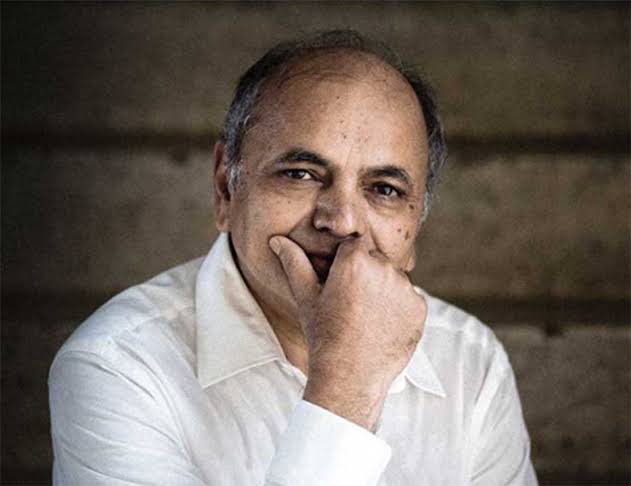
Dr G N Devy
G. N. Devy is one of India’s foremost scholars of literature, culture, and languages. Over the past four decades, he has authored or edited more than a hundred volumes across literary criticism, linguistics, anthropology, education, and history. His writings, widely translated into major Indian languages, include After Amnesia (1992), Of Many Heroes (1997), Nomad Called Thief (2007), The Question of Silence (2016), Mahabharata: The Nation and the Epic (2012), and India as a Linguistic Civilization (2024). Devy founded the Bhasha Research Centre in Baroda (1996) and the Adivasi Academy at Tejgadh (1999), and conceived the landmark People’s Linguistic Survey of India, which mapped 780 living languages in 50 multilingual volumes. He has held senior professorships at leading institutions including MS University of Baroda, NCBS–TIFR, and Somaiya Vidyavihar University. Recipient of the Padma Shri, Sahitya Akademi Award, Prince Claus Award, SAARC Foundation Award, and Linguapax Award, he is also Senior Honorary Fellow of the Asiatic Society of Mumbai.
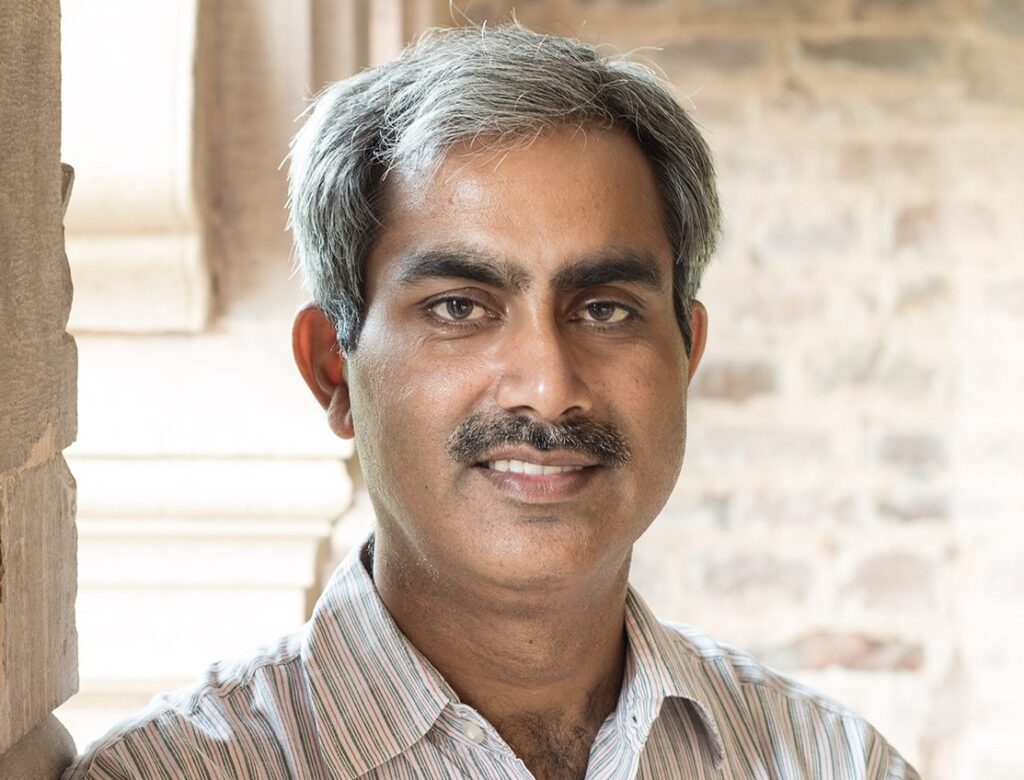
Dr Madan Meena
Dr Madan Meena has proposed the project and locally managed the resources at the study locale. He is a visual artist and researcher and focuses on rural, nomadic and tribal communities. His doctoral thesis explores the ‘Art of the Meena tribe’, particularly showcasing Meena women’s wall paintings. Two published books, Joy of Creativity (self-published, 2007) and Nurturing Walls (Tara Books, 2009), document and exhibit his findings. As a curator, he designed a broom exhibition for the Arna Jharna: The Desert Museum of Rajasthan. He received grants from the University of Cambridge and the Ministry of Culture for this project. A Sahapedia–UNESCO fellow, he studied folklore among the Jogi community. As a trustee of Bhasha Research, he contributes to preserving languishing craft traditions and teaches the subject at design institutes. Currently, he serves as the honorary director of the Adivasi Academy in Gujarat.
“Action without knowledge can become a tiring habit—sterile. And knowledge without action becomes stagnant and stings. So both together they are a beautiful combination.”
Dr G N Devy
Note: This episode is produced for the ear and designed to be heard, not read. Readers are encouraged to listen to the show to get the full experience. The transcripts are meant as support documents and may not include inclusions from the day of recording and may contain errors. The audio version is the final version of the show. Ignore the timestamps mentioned. Ignore grammatical errors.
HOST
Welcome to Grassroots Nation, a podcast from Rohini Nilekani Philanthropies, a show in which we dive deep into the life, work, and guiding philosophies of some of our country’s greatest leaders of social change.
This is part two of the conversation between G N Devy and Dr. Madan Meena. If you have not yet heard Part one, please do so.
By the early 2000s, the Adivasi Academy that was founded by Dr. G N Devy, had become far more than a centre for research. It was a space where tribal communities documented their own histories, preserved oral traditions, developed educational programmes, and trained a new generation of community leaders and researchers. For Devy, it marked the culmination of a profound shift from studying language and literature within the university to working alongside the people whose knowledge had long been overlooked by mainstream institutions. But the Academy also revealed the scale of a much larger challenge. As community members shared their stories, Devy encountered language after language that had never been systematically documented and, in many cases, was at risk of disappearing altogether. It was clear that preserving culture required first understanding the extraordinary linguistic diversity that existed across India. That realisation would lead him to embark on the most ambitious project of his career: an attempt to document every living language in the country.
In this episode, G N Devy describes what this process entailed. You will also hear about his other extraordinary contributions through engagements with institutions, politics and activism, as well as his continued dedication to scholarship.
G N Devy continues his conversation with Dr. Madan Meena. Dr. Madan Meena and Dr. G.N. Devy share a close professional, collaborative, and institutional relationship. Dr Meena is also a trustee of the Bhasha research and publication centre.
Madan Meena
Coming back to Academy, I believe that PLSA was a great project. It is a great project. But Academy served as a lab for solving the issues of the language. The problems of the language. And that’s how I see this Vasantshala school coming up so well. The kids studying and expressing themselves in their own languages. That model is very unique. Government is trying to do similar thing, but the intention is different. Recently, like RA, also the Supreme Court has ordered that Rajasthani should be taught in schools. But then there’s issues problems of Rajasthan itself, because what is Rajasthani, you know, Rajasthani is no language at all.
We published 30 but we listed 50 languages
G N Devy
Also. Your Adivasi Academy understands language in many ways.
Madan Meena
Yes
G N Devy
There’s the language, the visual language, the music. I mean, they have collected range of Adivasi musical instruments. All voluntarily gifted there. And one of them, you know, probably went round the country recording and rendering even in the writing Adivasi music, the way trees are planted is a kind of a language. So it. It has. It understands language in such a rounded way. Not three dimension is not enough wordage. It understands language very, very differently. And the tree speaking languages, I mean, we created that Basha one where every tree speaks a different language to show that languages are not going to a graveyard, but they are actually growing and celebrating diversity. So it’s very unique. The best part of the Adivas academies, it did not depend on any great amount of government support. It was a people’s movement, but it was not a people’s movement against something. It was a people’s movement for their own statement. I think that was the unique thing.
Madan Meena
Even the museum, also the concept of the museum, museum without walls, you cannot imagine any museum having no walls
G N Devy
Yes.
Madan Meena
Curating that museum, instead of pulling up some professional curator to do this museum, they themselves created the museum. So this is also very unique.
G N Devy
Initially, I had not mentioned the word museum to them at all. I said, how will you tell about yourself to the world? And then they gave many ideas. Then I said, what kind of museum? If a building is necessary, what would it be? So they done diagrams. I took those diagrams to current grower who constructed the building. And so in the initial years, we decided that there won’t be window shutters and there will be no doors. The museum has not a single door. It never closes. So people had asked me, but what if some snakes come in, thieves come in? I said, if thieves come and take something away, it will be a great spread of Adivasi culture. They will take cultural objects, but nobody will come and steal here because for them, this is sacred place. So my Adivasi friends said we will put honey bees near the, you know, bee boxes near the window so nobody can stop on them and step on them and come inside. However, because of the winds and the rains, I noticed that it was necessary to give window panes. They said, let every door be painted differently. It’s a building. When no single door, door has identical color, is painted very differently. And there. So, yeah. And you know, the textile that you brought in there… pottery… is amazing. It’s really amazing. I mean, it’s. Among the many things I had done in life, this was the most satisfying to be part of the creation of that tribal academy leading to the completion of the People’s Linguistics Survey. It had 94 books. And I wouldn’t really believe at that time that I’ll be able to go to the very last. But we come to the end of all the 30 states in Hindi, in English they publish now. It is very satisfying.
Madan Meena
As big as a museum is a Library now having 40,000 title. This is. No one can imagine such a library in a remote village.
G N Devy
That is true. It shocks people.
Madan Meena
It shocks people.
G N Devy
It’s surprising, yes.
Madan Meena
And those rare publications that it has,.
G N Devy
That is true, that’s people it attracts, is officers come and visit. But most of all, it has actually impacted the lives of the people around by creating a different set of aspirations. I mean, I know at least two or three of the Adivasi boys who went on in life to do PhD with either literature or linguistics. Which earlier they wouldn’t have done.
Madan Meena
How this collection happened? I always get surprised how this big collection came here?
G N Devy
The library?
Madan Meena
Yes
G N Devy
Well, I had books. And in ‘98, when we started the first, you know, in that Panchayat office, first library there are only newspapers. Because I didn’t want to frighten anybody. But as soon as we started building the building, I thought it should have a good collection. So I transferred about 15 or thousand books from which I had to that place. And in the funds collection for the Academy and Bhasha. I insisted, so long as I was President, Chairman of that trust, Managing Trustee. I insisted that at least one tenth of the fund should be kept for library. So we ordered books. And actually very recent books are also there. So slowly it started piling up. Because most of the NGOs that work put in money in fieldwork and things like that. I thought knowledge and action must go together. Action without knowledge can become a tiring habit– sterile. And knowledge without action can become. Becomes stagnant and stings. So both together they are a beautiful combination. And I don’t. I never believe that the villagers have no right to have to know about the very latest that appears in the world. Nor have I ever believed that people who live in, you know, rich people in cities can live without doing physical work. Both go together.
Madan Meena
Now a little bit about the biggest project that Bhasha has done. People’s linguistic survey of India. Involving 3500 people doing 780 languages. This was very challenging. Kabhi Kabhi to heartbreak bhi hua.
G N Devy
See, when the government wanted to do a linguistic survey of India. Grierson had done that in the 19th century. Government of India wanted to do a new linguistic survey. I was also part of their committee. But that work was given to CIL in Mysore, Uday Narayan Singh was the Director at that time. And they wanted some 1000 linguists for 20 years or 2000 linguists for 10 years. But India does not have such large number of linguists. And the Ministry of Education, HRD, and Home Ministry. They both look after language as a subject in the country. Home Ministry because we are linguistic states, and HRD because we have universities under that ministry. So there was a tussle as to who would take credit for this. If the survey is completed and language survey is not like marketing survey, like one page report. It is actually writing about languages, giving samples. So they are of encyclopedia scale. So that idea fell through. The government had money, 600 crores were committed, but the money could not be used. When I learned that this was not moving ahead, I brought together people from denotified tribes because I had been working with denotified tribes and the new. Practically every community in the country, nomadic people and so on. I knew Adivasi communities so I brought them together. Together with scholars. And when that meeting happened, it was called Bhasha Sangam in Baroda.
Bhasha Sangam was the public face. And in that it was decided we’ll do this survey. But seven years before that and before the Government of India started the plans with Professor Lakshman Khupchandani, I used to hold an yearly discussion on, if India were ever to do a linguistic survey, what would be the framework? Because we have a large say, the kind of descriptive frame that you use for Sanskrit or Pali cannot be used for the language of the Hakki Pikis or Waddars. The parameters will have to be different. Or what you use for German, let’s say and Yoruba in… the grammars are different. But here with Tulu and, and Kannada the grammars are sit back to back actually. So you need a very refined sense of how to capture all these languages as independent languages. That work has started, but only intellectually.
In 2003-4-5-6, when we held the meetings, I had no plan of actually plunging into doing a linguistic survey. It was in 2010, Bhasha Sangam that we decided it was announced that linguistic survey would be done. People decided, declared, you know, they felt very brave. It appeared in newspapers. Then they went home. And then I was at the… at the end of the. That evening I was sitting at home and saying ye kisi ko to karna padega, kaun karega.
So I started holding these statewide workshops. There was no funding. So I used to, for whatever lecture invitation I used to go… First ee held in Himachal Himalayan states at 11,000ft altitude, Kelong for Uttarakhand and Himachal Pradesh. It was very positive. Then I went to Hyderabad for Southern states where very great scholars had come but they all discouraged me. They said, ye aapke bas ka kaam nahin hai, do you think you are greater than Grierson. So I said nahin ye humko mistake karenge, you might commit blunders but let’s do!
There were some states which were easy to handle, some were difficult. The North, I could not easily find anybody from Northeast immediately. I remember having gone to Guwahati. Standing at the guest house of the Guwahati University where professors said to me nobody here will take interest in what you are doing because you Indians, you know there was great tension between. But I pleaded with them and when they learned that I was sincere they joined. And I must say that the team PLSI, People’s Linguistics Survey of India team from Assam was the best team, most dedicated.
So there were initially there was resistance there, there were questions, there was opposition, there were difficulties. But slowly things started falling in place. In three years time we finished doing the manuscripts. First rough cut which you know, you may remember we brought to Delhi where you know Mahatma Gandhi’s memorial Tees January Marg which most Delhi people don’t know where Teesh January but that’s the place where he was killed. So we took those manuscripts there, we placed them on the ground as dedication to the nation. And that news waned around the world. Everybody was very surprised that 700 plus languages are being described in these bulky 30 volumes.
Then publishers started chasing me. So we decided to pick up a publisher who is not a foreign publisher but will remain in India so that the text will be available for all time in future. And so the production process started which is going on since 2013, now last 13, 14 years, every day of the day I worked for six to eight, eight hours on this project. This is not funded. It’s voluntary work is done for our country. Just as I wanted India to know who Adivasis are. Just as I knew wanted India to know what is the the past is like in After Amnesia the reality of the immediate past of last thousand years. I wanted to know India who Adivasis are then I wanted to know India who are the nomadic communities, what they rights are. Then I wanted to know India. I wanted India to know what India’s languages are. And much later, more recently I turned to history to talk about 12,000 years of history of India. Everything I done is to describe India as much as explore India, find it for myself, be part of it and describe it for the people. That’s a single project.
HOST
During British rule in India several communities were classified to be “criminal”–the Criminal Offenders Act of 1871, was the first to describe certain tribes and communities, many itinerant, and nomadic, as thieves, thugs, vagabonds and criminals. The act was amended several times and repealed after Independence at which point the tribes listed were “denotified”. However the act was replaced with the similarly named Habitual Offenders Act and lists of tribes were recorded under it within State governments. The fight to address the long legacy of this classification and criminalisation of these communities is an issue that G N Devy has worked on for years.
Hundreds of tribes and communities were forced into settlements or jailed, surveilled, and their free movement restricted since the colonial period and across the country they continue to be stigmatised and marginalised. Millions of people have experienced the impact of categorisation and still deal with its consequences today suffering with chronic poverty and exclusion. As Dr. Devy explains that the treatment of denotified tribes is a psychological wound on our nation.
Madan Meena
Same project comes to work on DNT communities also, when the PLSI is running at the same time the DNT movement is also going on.
G N Devy
The DNT movement started slightly differently when Mahasweta Devi came for Verrier Elwin Memorial Lecture I mentioned Verrier Elwin earlier. 1996, We set up the Verrier Elvin Memorial Lecture. The first lecture was given by the KG Subramanyam, the great artist. The second lecture was given by Ramchandra Guha, Romila Thapar, Gulam Ahmad Sheikh Mahasweta Devi came for the lecture. And she spoke about a community which was branded as criminal during the British times. For the audience it was a new subject. But in my childhood and in Sureka’s own place in Karnatak, she had seen such people. And in Maharashtra there are some writers who had produced autobiographies in nineteen early eighties, nineteen eighties, Lakshman Mane, Lakshman Gaikwad. So Lakshman Gaikwad was also present there. From Maharashtra, in Gujarat when the Mahashwaita Devi gave the lecture. I have a wonderful Gujarati friend, poet friend called Kanji Patel. He knew something about these communities, but he did not know their history.
So we all came together and we set up an All India Forum for Denotified and Nomadic tribes. That is not Adivasis. These are communities branded as criminals and actually kept in some kind of soft jail settlements till independence. Well after independence they got denotified. 1871, Lord Mayo created the first Criminal Tribes Act. 1950-71. Years later they were denotified. And since then nobody paid any attention to them. So the first Indian All India Forum was created in Baroda by Mahashweta Devi, Lakshman, Gaikwad and me and Kanji Patel. And we held a series of meetings and we traveled to their localities in different states. We listed these communities, we dug up their documents. We approached the National Human Rights Commission. We filed a case. We got a judgment saying that the Habitual Offenders act should be removed. Because. Because after this first act was removed, the government had slapped Habitual Offenders act on them. That was also taken back thanks to this NHRC intervention in 2003.
Then month after month, week after weeks, I was also running a magazine called Budhan. Because Budhan was killed in Purulia district, as you know. And we’d filed a case in Bengal for compensation to his wife which was granted by Justice Ruma Pal. So in his memory we had created a Budhan magazine. And in that I printed the judgment about Budhan’s murder and compensation. So our friends in Ahmedabad belonging to Chara community, they enacted. Out of that was born Bhudan Theater. Which in itself became an independent movement very first. And that out of that moment came plays, films, videos, technicians. So many of them went to National School of Drama. I managed to send Dakshin to study theatre at Leeds. He has now become a very successful film producer. So that was the DNT’s story.
In 2008 the government appointed a commission. I mean as asked by the Prime Minister who should be there and we created that group. We prepared a report. Renke Commission came up, Renke Commission completed its report and by then it was all over the place in the country. Various groups had come up. Many thought that this was an interesting subject. They also set up NGOs to kind of know because many NGOs come when there is a problem. So a problem sometimes is very good for NGOs but some of them are genuine, not others are not. So there are good NGOs, not good NGOs. All, all of that as it happens with everything else. So DNT issue was different. They are still fighting to get full citizenship. I mean just now the census is going on. I had filed a case, I mean, not me directly, but with the help of some DNTs with very good lawyers in the Supreme Court. The Chief justice of India said, are you trying to encourage casteism? Without realizing that these people have waited for justice for the last now hundred and thirty years, forty years, 150 years really. Because their suffering is of a very different. It’s not about poverty, it is not about being marginalized. It’s actually torture. They’re hounded in the villages, mob lynch. And there is a stigma attached to many, many of those communities. It is sad. I mean it’s actually India has not just a reason, but even compulsion. India should feel, feel compelled to feel ashamed that India is watching a section of the society called DNTS without any empathy. More than more than 12 to 13 crore citizens of the country leave that condition. It’s a shame, national shame for us.
Madan Meena
And even during both the governments Congress and BJP two commissions came up. But nothing happened to the recommendations done by them.
G N Devy
Yeah, the Renke Commission came up. Renke decided to take much longer than expected. So the technical advisory group was appointed. The government changed. Then in the NDA government see Renke Commission recommended that a census has to be carried out. Because in the first place the government of India does not know which Communities exactly are DNTs because they were notified during the British times in different states at different dates. We had not just the British, you know, areas like Calcutta Presidency, Bengal Presidency or Bombay Presidency, Central India. There were small states who had proactively, in order to please the British masters, notified some communities locally. A small state of, let’s say 100km length and 20km width has notified a community which is local community without any national presence. The government of India does not know that such communities were notified. So as the. As the. When the movement started, our initial list had only 160 names. But today in 2026 I gather that more than 400 communities are now in that, you know, have come forward saying that we were listed as criminal tribes or areas restriction was imposed on us. Our movement was limited under law.
Nothing… All commissions have recommended that a proper census be carried out. Is a government decision. UPA government decision. NDA government decision. It should be actually obligatory on the census authorities to carry out census. But when we checked, the answer is that they will not count the DNTs. They will do caste census. But which of the castes is a denotified community will not come out through that kind of census. It is like, you know, supposing you have headache and you count there are 10 persons. You. You will know 10 persons are there. But how many among those have that headache? You will know there are 10 heads. But which of the 10 heads have headache will not be known. The DNTs will have to be asked. I mean people have to be asked, do you belong to SC ST or DNT or any other that the government is not willing to do either this or that government. And that really reflects our age old attitude to Dalits. This is really every moment, every time there is even the slightest chance our Indian society falls back on the Varana habits. The moment there is a chance, they immediately return to the Varna mindset.
G N Devy
See this… it’s a great irony of history that the man who brought in the criminal Tribes Act 1871 was Lord Mayo… was the same man who started census in the country. That census from 1871 in the first year of a decade, regularly without fail till 2011. It is always 61, 71, 81, 91, 2011. This time the census ought to have taken place in 2021. It did not because the government said there is coronavirus. But we’re a signatory to an international understanding. You by United Nations. That understanding is called the Norms and Principles of Census. United Nations Norms and Principles of Census are all other countries which have not been able to carry out census in 2021. Completed it in 2023 without any exception except India. We postpone it to 2026.
Madan Meena
Coming to this question of institutions again like you founded Bhasha, Adivasi Academy. But then I also see like after going to Dharwad, you found it another organization Dakshinayan, which was like more of a protest for the murder of Kalburgi. And then another kind of a work that we took up over there which was more of an activism. And from there onwards I also see the political activism joining Rashtra Sevadal. And speaking of speaking about regarding the political systems.
G N Devy
I am like a butterfly which has two wings. One is intellectual and academic, other is activist. A butterfly without words. One wing is no butterfly. Both wings must be there. So I’ve been an activist from mid-80s. Even Adivasi Academy was. But this was this 2014. In 2013, in Pune, Dabolkar was killed. He was a rationalist and I felt bad about it. I knew him. I had heard his lectures. Then in 2015, early 15, Comrade Govind Pansare was killed. He was in Kolhapur. I had studied in Kolhapur. And in my student days I knew about Govind Pansare who from being just a simple worker, trained himself to be a lawyer and then became an activist. I had seen his graph and I felt really shocked. Soon after that I had gone to Dharwad for a lecture. A memorial lecture. It was VK Gokak memorial lecture. When I went, this was in August, first week Kalburgi was. Dr. Kalburgi was in Dharwad on that day when I was lecturing, he was there. A month later he was killed. Not a month, just less than a month. On the Last day of August 30th, August he was killed. So. And I knew that he had a Saiti Academy award. So I was really shell shocked. Then I kept waiting for Saithya Academy to express condolence that one of our awardees is killed.
And he was killed because he was reinterpreting Basweshwar and the Vachanas. Because there Veera, Shaiva and Lingayat they brought together in Karnataka in such a way that the original identities of both seem to be transmuted. It’s like genetic mix up. He was killed for ideas. So I felt very bad. But I was waiting hoping that Sahitya Academy would next month. A few weeks later I was in Nagpur to attend a Sahitya Academy seminar. I was chairing the inaugural session. I was presiding over the inaugural session. Nobody from Sahitya Academy said anything there about Kalburgi’s death. And so when I spoke, I asked the audience to stand. I said stand. You know, know stand. Stand up for one minute. Silence. Because Kalburgi was one of us. He was part of the Sahiitya Academy. Sahitya Academy is an independent body of writers. It’s created an autonomous body of writers. It’s not a government agency. Saithya Academi gets government funds. But it is completely autonomous.
I wrote to the Sahitya Academy saying that look, as Dr. Kalburgi was killed you haven’t shown the, you know, courtesy to say that you feel shocked or sad. And therefore you have given my book 30 years back an award for. After Amnesia had got the award, I’m returning it here with. So here is the cheque. They had given me some money at that time. So I sent a cheque and big trophy back to Delhi. I thought I had done the right thing without knowing that many others would be doing likewise. This was not a coordinated thing. This had happened fairly spontaneously. Though we knew each other. But we did not, we were not calling every writer saying, you please return your award. You please return your award. It was because everybody felt the same way. Like when an earthquake happens, everybody runs out of their houses. Not after telephoning each other because everybody feels that the earth, there’s some seismic change has happened. So we felt that there was a seismic cultural change in the country.
But after this happened, then it came on tv, debates, newspapers, different views on that. Some of us were called traitors, you know, etc, etc. But that’s okay. I mean, I felt that this is not enough just to return an award. It is necessary, morally necessary to go and see what has happened to the widow of Dabolkar family of Kalburgi family of Pansare. So I requested writers from Gujarat to come together and accompany me. So a small group of Gujarati writers, we went to first Bombay by train and from there by road to Pune. So Bombay writers joined. Some Bombay writers joined, joined us in Pune. There was a meeting and the former Times of India editor Dilipad Gaokar presided over it. And then we went to Kolhapur. So all these Gujarat writers, Bombay writers, Pune writers went with me to Kolhapur uninvited. I was not saying coursing them. In any case, I didn’t have money or way vehicles. They all voluntarily joined. People from Kokan came. And from Kokan, people in Goa learned that when we go to Dharwad, writers from Goa, Tamil Nadu, Telangana, Karnatak, Maharashtra, Gujarat had come together. They all said that we need to invent new ways of protest. One lady in that gathering said, chalo Dandi. I don’t know why, she said, but I was from Gujarat. So all of them came to Dandi. 800 Writers and then people from Punjab, Bengal, they had also joined. The. Dandi meeting was a turning point in my life.
So Dandi. I was thinking of Mahatma Gandhi’s march to Dandi when he left Sabarmati and went to Dandi, decided not to go back to Sabarmati Ashram. So I was thinking if after the Dandi protest meeting, which Is the greatest symbol of sight of protest in this country. Because that protest changed the history of India. So after Dandi, I was thinking if I should go back to Baroda. So I asked Surekha the same question. She said Dabolkar had his organization to take care Andersrada Nirmulan to take care of his court case. Pansare had his party, which is the Communist party. Because he was a comrade Pansar, a member of Communist party, cpm, cpi. Sorry. But Kalburgi family had no support. So she said, why don’t we go to Dharwad? When she said that in our life we taken decisions like that. The next morning we drove from Baroda to. We started from Baroda driving to Dharwad. There we checked if any houses rented houses would be available. We found a house and we started staying there. Trying to help as much as possible. The Kalburgi family, the court case and so on.
HOST
In 2018, Dr. Devy lead and served as the host the 84th PEN International Congress held in Pune– it was the first time the prestigious event was held in India. Over 400 writers from over 80 countries attended the event that champions free speech and linguistic pluralism, and connects writers around the world.
G N Devy
This Pen International conference which is 100 year old. So it was spread all over. It was courageous. It required courage to hold it in Maharashtra at that time. Without any unlikely support from the government. But in Balgandhar or Rangamandir, on the stage there are 14 chairs. And the writers had come from 88 countries. More than 180 writers. 12 Of the chairs were occupied by 12 writers from 12 different countries. Each one of them was put into jail by their own governments for more than a year. But they had come out and two chairs were empty. Because those in jail had died in jail. So there are 14 imprisoned writers sitting there. And then I invited to the stage Dabolkar’s son, Pansare’s daughter in law, Kalburgi’s son. They all these are martyrs. Very strangely, when we started this Dakshinayan movement like going south. And because at one time I had here held a demonstration with 10,000 students protesting in Dharwad. To mark the first anniversary. I mean first anniversary of Dr. Kalburgi’s murder. Many writers had come and the list had reached an organization which decided to attack them. The Maharashtra government had given. Given them protection. So there are 14 such writers who were present. Each one of them with a police protection policeman. So I called them also. And because it was the duty of the police to be with them. The policemen also came to the stage. So we had where these, you know, 14 prisoners. Then the four children of the martyrs. Then these 14 Marathi writers and Kokni Marathi and Kannad writers. And their 14 policemen. That photograph I still have with me. So it actually speaks for the spirit of the times. 2019. You were there? Yes. You remember Balgandhar. It was jam packed. And it was. This was unintended that the policemen would also come there. Yeah.
So I done things, Madan, when time permits. What I like to do. I have no regrets and no unfulfilled desires. Happy man. But I’m not so happy about what my generation has left for this country. My generation should have left this country in a better shape than where it is today. But it will change.
Madan Meena
And then soon after that, Rashtra Seva Dal happened– there I see more of a political activism now.
G N Devy
Rashtra Seva Dal was created, you see in 1940s, in 1930, in. In 1920s, after Russia, USSR became USSR in 1924, New Economic Policy, etc. It had impact in India. I mean, people like Nehru also wrote on socialism. And there was a small wing within the congress which became socialist in 1942. Movement, the socialist wing group within Congress decided to set up a unit called Rashtra Sevadal which is different from rss rss Rashtriya Svanasevaksang, that is, that has a different idea for what is Rashtra for them. This Rashtra Seva Dal was a socialist organization. And it had decided to stay away from power and work with children and work with villages to spread ideas like nationalism of their kind, equality, social equality and gender equality. So Rashtra Sevadal had both men and women.
RSS never had women. Rashtra Sevadal was about going beyond a particular religion. So this looked at, this was created by an idealist teacher. Was also a writer called Sane Guruji who later ended his life rather sad. Soon after independence. He was a Gandhian. So he combined Gandhi and Marx in his thinking. That organization has remained in existence from 1942 till today. So in 2019 I was asked by this Sevadal people,
if I would be willing to head it, be its national president. It was a compliment because these people have a tradition of great character, sacrifice, dedication and yet open minded progressive thinking. I mean, Seva Delin Maharashtra created so many intercaste marriages. You won’t believe. And when I became. When I was asked, I thought it was a great compliment to my moral character, moral caliber. I accepted it happily.
So I was there for three years. I decided I tried to extend it to different states in the country. Some efforts were successful, some were not so successful. For instance, the branch in Bengal and Maharashtra and Gujarat they still functioning well. But their tenure of the Rashtra Seva Dil president is three years. Many other presidents before me have been very eminent people like. I mean people like S.M. Joshi and in Naga Gore. And they were Madhulimay. They were members of Rashtra Sevadal.
In Rashtra Seva Vadel. I thought three years is. If I cannot do anything in those three years, then I will not be able to do anything in 30 years. So I believe in Tagore Ekla Chalore. This is not about Ekla, but Chalo. One must keep going ahead.
So once having gone to Dharvad, I found that there was a community of activists interested in doing something. I also noticed that the right wing politics is moving southward with a great gusto. And it needs to be stopped. So being in the south meant. Was meaningful. And I generally like Dharwad very much because it has forests nearby. It’s a quiet place. One can sit down and write. And after having moved to Dharwad, I have been able to write a lot more. I wrote my Mahabharata book, my book on India as a linguistic civilization. History of Sanskrit and so on. And also this new series of, you know, 10 volumes on civilizations of the world which work is going on. So my journey started in a small village in Maharashtra. I am now in a small town in Karnatak. That was India. This is India. That was another time when independence had just come. This is a time when we need to bring in a new kind of independence in this country. Federalism is shaking. Freedom of expression is becoming rare now. Yeah.
Madan Meena
What is the total corpus of the publication?
G N Devy
I am ashamed to say that edited books and the books I written in Marathi, Gujarati, English. They are about 150 and 50 of my books and 50 translations in other languages of some of my books have come out. I feel ashamed because every book is in essence a fallen tree. Paper is made out of tree pulp. And when I produce a book, I know that sadly some tree has to be chopped for my book to be printed. So I am that much guilty of deforestation. The very last book which will appear next year, is a study of the idea of democracy and its evolution. And at the end of that book I argue that when in future we have form of democracy in which representation of all forms of life, not only humans, all forms of life becomes possible, then democracy can be recovered. Not till then. It’s already 10 to 6. Thank you.
Madan Meena
Last question. Your work has been like missions. What I see you accomplished most of those missions. But suppose this interview tomorrow. A youth listen to this interview. What kind of mission you will set for them?
G N Devy
I reduce my needs in life. I can be happy with very limited. I can be happy when there’s plenty. And I realized that my happiness does not depend on things outside me. So for the youth, I mean, I’ll say one is neither an elephant or a peacock nor a cockroach inside one’s mind. So be the master of your mind. Then you’ll be the master of the world. There is. I’m saying, I’m still thinking of the young people. There is a great writer, German writer, Austrian German, called Franz Kafka. Who has a young hero in a novel called Metamorphosis. He wakes up one day and finds that he has become like a cockroach. I would want young people to have hope. Till hope creates the thing it contemplates. As William Blake said. Because to have young people who lost hope is to have ended the world for future. But their sense of fun, their sense of irony is something they should not lose. In the process of trying to be some kind of deshbogs like Chaplain or like Mark Twain. The best way to become sad is to laugh at it. Thank you.
Madan Meena
Thank you.