E-28
Dr G N Devy: The Languages We Live By | Part 1
What does it mean to lose a language? And what do we lose with it?
In the season premiere of Grassroots Nation, Dr GN Devy – a scholar, linguist, institution builder and one of India’s foremost advocates for linguistic diversity joins Dr Madan Meena for a deeply personal conversation about language, identity and belonging.
From his childhood in rural Maharashtra to a celebrated academic career, and from leaving the university classroom to working alongside Adivasi, Denotified and Nomadic communities, Dr Devy reflects on the experiences that shaped his life’s work. He shares the stories behind the Bhasha Research and Publication Centre, the Adivasi Academy and the People’s Linguistic Survey of India, an unprecedented effort to document more than 700 living languages across the country.
Speaking with his longtime collaborator Dr Madan Meena, the conversation goes beyond language as a subject of study to explore language as memory, culture, history and a way of seeing the world. Together, they discuss why preserving linguistic diversity is inseparable from preserving people, and what India’s many voices can teach us about building a more inclusive future.
This conversation was recorded in Delhi. Grassroots Nation is a podcast from Rohini Nilekani Philanthropies. For more information go to www.rohininilekaniphilanthropies.org or join the conversation on social media @RNP_foundation.
Speakers
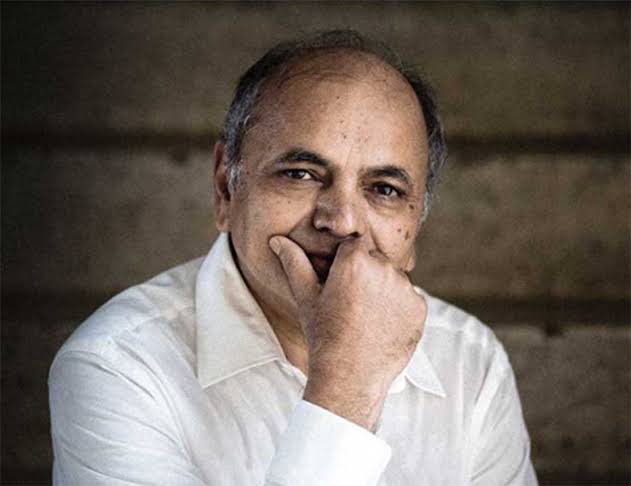
Dr G N Devy
G. N. Devy is one of India’s foremost scholars of literature, culture, and languages. Over the past four decades, he has authored or edited more than a hundred volumes across literary criticism, linguistics, anthropology, education, and history. His writings, widely translated into major Indian languages, include After Amnesia (1992), Of Many Heroes (1997), Nomad Called Thief (2007), The Question of Silence (2016), Mahabharata: The Nation and the Epic (2012), and India as a Linguistic Civilization (2024). Devy founded the Bhasha Research Centre in Baroda (1996) and the Adivasi Academy at Tejgadh (1999), and conceived the landmark People’s Linguistic Survey of India, which mapped 780 living languages in 50 multilingual volumes. He has held senior professorships at leading institutions including MS University of Baroda, NCBS–TIFR, and Somaiya Vidyavihar University. Recipient of the Padma Shri, Sahitya Akademi Award, Prince Claus Award, SAARC Foundation Award, and Linguapax Award, he is also Senior Honorary Fellow of the Asiatic Society of Mumbai.
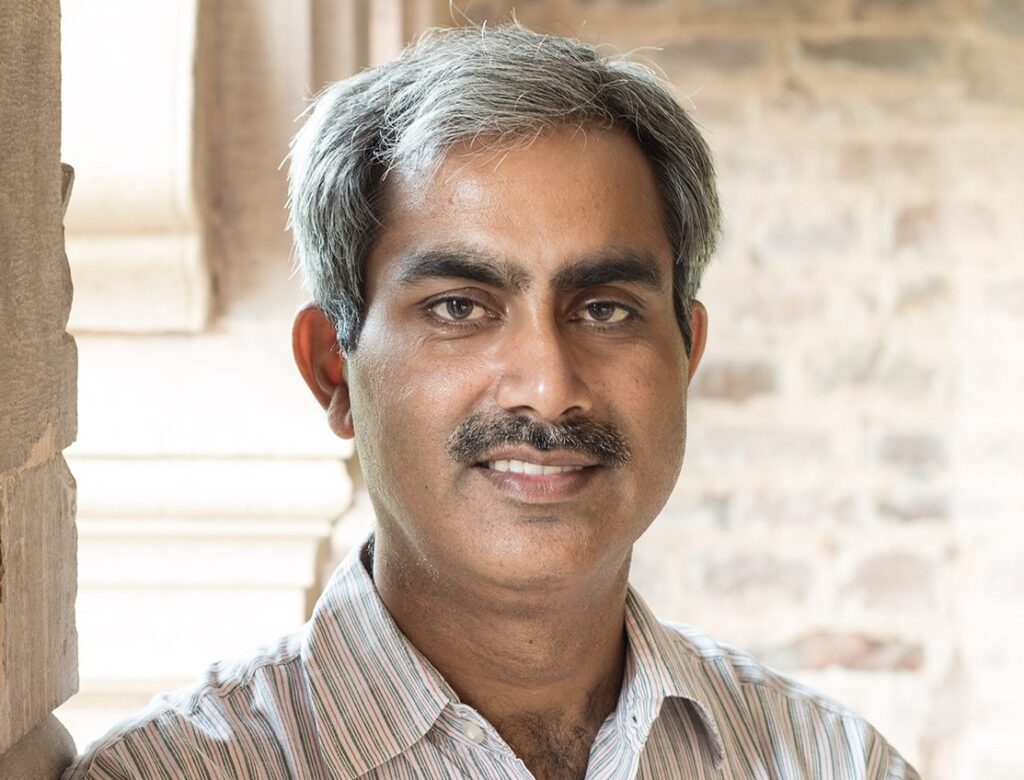
Dr Madan Meena
Dr Madan Meena has proposed the project and locally managed the resources at the study locale. He is a visual artist and researcher and focuses on rural, nomadic and tribal communities. His doctoral thesis explores the ‘Art of the Meena tribe’, particularly showcasing Meena women’s wall paintings. Two published books, Joy of Creativity (self-published, 2007) and Nurturing Walls (Tara Books, 2009), document and exhibit his findings. As a curator, he designed a broom exhibition for the Arna Jharna: The Desert Museum of Rajasthan. He received grants from the University of Cambridge and the Ministry of Culture for this project. A Sahapedia–UNESCO fellow, he studied folklore among the Jogi community. As a trustee of Bhasha Research, he contributes to preserving languishing craft traditions and teaches the subject at design institutes. Currently, he serves as the honorary director of the Adivasi Academy in Gujarat.
"One without, the other is incomplete. Only material dialectics doesn't satisfy me. Only spiritual reflection leaves me completely bored. I need both. I need aesthetics and I need social conflict. I continue to write books throughout life. But I never cease to be an activist. If I only write books, I will find my life boring. If I am only an activist, I will feel my life meaningless."
Dr G N Devy
TRANSCRIPT
Note: This episode is produced for the ear and designed to be heard, not read. Readers are encouraged to listen to the show to get the full experience. The transcripts are meant as support documents and may not include inclusions from the day of recording and may contain errors. The audio version is the final version of the show. Ignore the timestamps mentioned. Ignore grammatical errors.
HOST
Welcome to Grassroots Nation, a podcast from Rohini Nilekani Philanthropies, a show in which we dive deep into the life, work, and guiding philosophies of some of our country’s greatest leaders of social change.
We begin this new season with Dr G N Devy. A scholar, linguist, and tireless advocate for India’s linguistic diversity, Dr G N Devy has dedicated his life to ensuring that the voices of marginalized communities are not lost to time.
Before he became one of India’s foremost linguists and cultural thinkers, Ganesh Narayandas Devy was a young boy growing up in Bhor, a small town in Maharashtra, where hardship shaped his curiosity. Growing up in a family that had financial difficulties, he was forced to support himself from an early age, taking on manual jobs while pursuing his education.Devy went on to study English literature at Shivaji University in Kolhapur, where he completed both his Master’s degree and PhD, before continuing his academic journey at the University of Leeds in the United Kingdom.
From 1980 to 1996, he served as Professor of English at the Maharaja Sayajirao University of Baroda. His groundbreaking book After Amnesia challenged the dominance of Western literary frameworks in the study of Indian literature and earned him the Sahitya Akademi Award, establishing him as one of India’s leading literary critics.
Yet, at the height of a successful academic career, Devy made an extraordinary decision. In 1996, he left the security of university life to work alongside India’s Denotified and Nomadic Tribes and Adivasi communities. Rather than simply studying language, he chose to help protect the people who speak it. He founded the Bhasha Research and Publication Centre, established the Adivasi Academy at Tejgadh, and later launched the People’s Linguistic Survey of India, the largest survey of languages ever undertaken in the country’s history, documenting more than 700 living languages with the support of thousands of volunteers.
Today, G. N. Devy is recognised not only as a linguist, but as an institution builder, public intellectual, and tireless advocate for India’s linguistic and cultural diversity. His work reminds us that languages are more than words: they are living archives of memory, identity, and knowledge. When a language disappears, a unique way of understanding the world disappears with it. Through his life’s work, Devy has challenged us to see that preserving languages is ultimately about preserving people, their histories, and the many ways they make sense of the world.
Professor G N Devy is in conversation with Dr Madan Meena, an Indian visual artist, researcher who has worked extensively with rural, nomadic and tribal communities. He is an honorary director of the Adivasi Academy in Tejgadh, Gujarat. Dr. Madan Meena and Dr. G.N. Devy share a close professional, collaborative, and institutional relationship. Dr Meena is also a trustee of the Bhasha research and publication centre.
Madan Meena
So after having witnessed and seen many of your works, after having attended so many of your events and after also working at the RDS Academy, meeting many people with whom you have worked, my first question would be what is in your DNA? Because DNA is something that we inherit from our parents, from our forefathers, from our ancestors. And that becomes our character also. That becomes our nature also. That becomes our skin also, features also.
G N Devy
DNA question is difficult to answer, but I can say that it is not only what you inherit, but where you are contextualized. I was born in the year when India became a republic, 1950. And I feel mightily proud of arriving at that time. Gandhi was still in the air when he was no more, but very much in the air. And there were many people who had worked with him, seen him, heard him, and you could meet them everywhere. As a child I did so many of my school teachers, primary school teachers had heard him speak. Nehru was extremely popular. He was so hugely loved by people we cannot imagine. I mean, Ambedkar was still around. When Dr. Ambedkar died in my small village in Pune district, in my village, people had taken out a procession. It was a kind of a morning Yatra procession in which people from all localities had joined. I was only seven years old, but in a small village, you know everybody, everybody knows almost everybody in every house. So I knew that there were people from different communities and castes. They were together. And though I wouldn’t have understood at the age of seven the meaning of the constitution, I heard people say, I still remember people saying that he is the man who wrote India. In Marathi they said, Bharat yani lela. It is a very awkward sentence, but I think it was pregnant with a lot of meaning. So Nehru, Patel, Ambedkar Gandhi, they were very much in the air when I grew up. And I think that has left a very deep impression on my mind. My parents had moved from Gujarat to Maharashtra. My ancestors have moved from Gujarat to Maharashtra. And perhaps their ancestors might have moved all the way from Central Asia to Gujarat. Perhaps they might be speaking a remote branch of Indo Aryan language called Tochrian, which did not land in India but went to China. So there may have been multiple migrations all the way from China to Rajasthan. So I am very happy that my ancestors and their ancestors accumulated eclectically many genes rather than a single genetic stock. And I absolutely celebrate the diversity of my ancestry just as I celebrate diversity in the society in India today. And all my life I worked on diversities. But a very simple answer to your question is, my father ran various small businesses. And at one time in his life, when he got fed up with the material world, he moved to a life of deep spirituality. And my mother was very artistic in her instincts. She was a reasonably good singer. But apart from music, she had a terribly great aesthetic sense. So we are a family of five children. My elder brother joined the Indian Air Force and then worked as a fighter pilot. And that’s the background.
Madan Meena
So in your initial period you chose literary work as your career
G N Devy
Yes, literature chose me. I did not choose literature. I’ll tell you, I feel ashamed when I share this. But in my high school, and I completed my high school studies at the age of 14, I matriculated when I was 14, I was extremely good in maths and sciences. And my ambition was to study mathematics for the rest of my life and work in that area. But when I entered college, which was in Pune, and I studied in Marathi medium, I already had language overload. Because my parents spoke Gujarati. People outside spoke Marathi. I had picked up some Hindi. I found that one thing is the science teachers in college were very uninspiring. And secondly, I had great difficulty in understanding their English. I had joined a college in Pune where only Parsis and Anglo Indians students or children of military officers went there. And so after a year, I decided to drop out of studies.
Then I went to Goa and started working as a manual menial labourer for a while. But there, in the small, very small village in Goa where I was, there was a library. Just one single shelf library. And I came across… there may be perhaps a couple of hundred books there. Among those books, there was one by a writer who’s by now very almost forgotten, but at that time, she was very important, seen as a very important writer. Her name is Pearl S. Buck, who got the Nobel for literature. And she had a wonderful novel about agriculture and China. It’s called the Good Earth. I picked up that book and I started reading it. And I found that I could actually read an entire English book, and understand it with the help of a pocket dictionary.
Madan Meena
So this shift from mathematics to literature, this was through this accident. It was because you got interested in literature.
So I thought to myself that though I love maths, I didn’t know that there is a discipline called literature. My parents were not educated. They had hardly gone to school. They had done about three, four years of primary schooling. That was all. So I wasn’t aware that there is a field called literature, though I was aware there are books in the world. And I read plenty of Marathi books or in Marathi translation. So I thought I would like to pursue this.
And then I decided to go to another college in southern Maharashtra at a place called Sangli, Willingdon College. I met some teachers there and they said, there is a field called literature. Would you like to study it? So I said I might give it a try. And then once down that stream, I did a BA then an MA then a PhD without realizing that I was just going on and on and on. By the time I finished that, I had read almost everything that one could have read of European literature, English literature, ancient Indian literature and so on. But I still felt a little uneasy. I thought I had not done enough. Enough because I was keen on reading literary works of at least one country other than India, which was a colony of Britain. And the nearest possible for me, easiest possible for me was to go for Irish literature. So I went to England to do an MA in Anglo Irish Literature. I had wonderfully well trained teachers from Oxford and good British universities who I noticed did not like the Irish people and didn’t have very kind words about Irish writers. But I had read very great writers like James Joyce, Samuel Beckett, of course, but he went to France, and WB Yeats who till this day remains my all time favorite as a poet. So that was this, you know, a little story of my accidental education. But along the way I had met Surekha and she was doing chemistry. We saw each other instantly, decided to stay together and marry. And so life had taken a new turn.
Madan Meena
Then about your PhD that you. The subject that you chose for your PhD and why, how that subject also helped you further because you mentioned Gandhi, you mentioned Nehru, Ambedkar.
G N Devy
I noticed that among the national heroes we had Subhash Bose and India has loved Tagore like India has not loved anybody else really. So Subhash Chandra Bose, Tagore, Gandhi, Nehru, Patel, all of them were in discussion. But I was always curious as to why this man, Sri Aurobindo, while being an intellectual giant, was not discussed so much. Now I was aware, I mean, in my early 20s I started research, PhD research when I was 22 or 23. But I decided to make an attempt to understand how history treats thinkers. Why some thinkers shine at a certain time? I mean, around the same time, and so I decided, I was in Kolhapur. I just finished my MA Examination…last paper I must have…I even didn’t wait to finish all three hours of the examination because I knew that I would be passing with very good grades. I went to the railway station in Kolhapur, took a train to Bangalore. At Bangalore there is a place called Kalasipalayam from where buses go to Pondicherry. So I traveled overnight. Strange. That was the first time I was passing through Tamil Nadu. I had not traveled in the south. My parents couldn’t afford the luxury of taking their children to different states and all I had to explore India all by myself. So I landed in Pondicherry. Somebody pointed me to a guest house, an ashram guest house. Then I went to the library. They used to have a publishing section called Shabda. So I went there and collected each and every paper possible. I brought it back, I read it and decided my opinion about him. What his intellectual connection was with the British Romantic period, the French Romantic poets. What his intellectual connection was with the Virgil of Latin and the Homer of Greek. Because he wrote epics. He was extremely keen on writing and he wrote some epics as a trial. There is an epic called Ilion as a trial epic. Then he finally wrote his final epic called Savitri. Exactly like Milton’s Paradise Lost. I mean that size kind of… So I made my own judgment and I wrote my thesis without much guidance. But that helped me to develop myself as an independent minded literary critic. A scholar of student of literature. So that completes my education. I learned much later, nearly 15, 20 years later that all that I’d studied from the age of five when I joined the second standard school till my PhD was of no use at all. Only when I went to Tejgarh and started working with the Adivasis, it was a different kind of education.
Madan Meena
So the work on Aurobindo that never became part of your publication?
G N Devy
I never thought it fit to publish. Because a PhD thesis is a PhD is a kind of an examination. So you defend your thesis. My first English book was published in 1992. That’s fourteen years later. And that book got the Sahitya Academy Award.
Madan Meena
But before that I’m coming to how do you arrive at Baroda then and take up this job with….
G N Devy
This going to Baroda after Surekha whom I’d married and she also did a Ph.D. and two MScs and we were in England. We decided that we’ll return to India and work. There was never any desire to settle in another country. I love India despite all its problems. I just love this country. So having come back from England, this is in the 1970s, late 70s. It was very easy for a person to pick up a job. There were no queues, no long queues. Universities were willing to invite you to come and settle there. There were very few, the number of universities was not large. Every state had about three or four, maybe five Universities. Not more than that. I mean Karnataka had in those days Mysore, Bangalore and Karnatak Universities – Dharwad and Gulbarga.
Aurobindo used to teach in Baroda after he returned from Cambridge. His parents had sent him off to Cambridge at a very young age with instructions to his mentors in England that he shall not utter any word of even any word of any Indian language. He must speak only English. This is in the 1880s. But Aurobindo came back to India after finishing his Cambridge degree and refusing to join the Civil Services in 1893. And started working with the Maharaja of Baroda, Sayajirao Gaekwad. Though he was very outspoken and used to criticize the…you know, sometimes opposed the Maharaja. Maharaja was extremely fond of him and valued his learning. So the Maharaja said this don’t work in my office but go and teach in the newly started Baroda College. So Aurobindo started teaching in Baroda College. And he taught there till 1909 – nearly 16 years he was in Baroda. So I thought if I had to teach somewhere. Why don’t I go to the place where Aurobindo taught?
And Baroda was always known in India’s middle class folklore as a hugely civilized place. So between the two of us we thought either we go to Mysore or to. Because going to Karnataka was a great attraction for us. We were in Maharashtra, or we go to Baroda. So Baroda University learned about this and they offered both of us jobs there. So I went there, became a lecturer after in those days there used to be lecturers, readers, professors. So after five years we became readers. After five years we became professors and we’re wonderfully happy. The university used to be a very, very progressive university. There are people from all parts of the country. M.N. Srinivas the sociologist was in 50s, 1958. In fact he has a very celebrated essay called My Baroda Days. He was in Baroda. There were good philosophers. There are A.K. Ramanujan, the poet. He used to teach in the English department for a short while. So Baroda had very, very good scholars. Good scholars of Sanskrit, of English, of literature. Scientists. In fact, this Indian scientist, Venki Ramakrishnan, his father was our colleague in Baroda.
And I like the place very much. Besides, it was a composite university. It didn’t have Colleges. It had college and post graduation and research too. So students used to stay on the campus for eight to ten years. And that created a very different kind of bond between students and teachers. The students I taught there beginning 1980, now 45 years later are still in touch with me.
So Aurobindo took me to Baroda. Sayajirao Gaekwad who was. Who kind of presaged the constitution of India through his progressive policies. So I mean my problem was I like my Marx. But I also like my Immanuel Kant and Spinoza. One without, the other is incomplete. Only material dialectics doesn’t satisfy me. Only spiritual reflection leaves me completely bored. I need both. I need aesthetics and I need social conflict. I continue to write books throughout life. But I never cease to be an activist. If I only write books, I will find my life boring. If I am only an activist, I will feel my life meaningless.
HOST
Ganesh N. Devy’s After Amnesia: Tradition and Change in Indian Literary Criticism (1992) is considered a landmark work in postcolonial literary studies and Indian literary criticism. The title refers to what Devy calls India’s “cultural amnesia”—the loss of confidence in, and memory of, its own literary and intellectual traditions as a result of colonialism. It received the prestigious Sahitya Akademi Award in 1993 and helped establish G. N. Devy as one of India’s leading literary critics.
Madan Meena
So now coming to this After Amnesia work you at are a university teaching at Baroda. And then this work. Before that, few other literary works also evolved. Some collection of essays that you edited. But This After Amnesia was the first important work that has come out and that’s how the subject of Bhasha has also evolved.
G N Devy
See, after. After going to Baroda, I realized that if I have to spend time in Gujarat, I must brush up my Gujarati. My parents used to speak Gujarati at home back in Maharashtra. But it was a different register of Gujarati. So I went to see a very famous Gujarati writer called Suresh Joshi. He was quite a legendary writer, and asked him if he would teach me Gujarati. That was on day one when I joined the university. He agreed. And so we started meeting every day. Out of. Out of those meetings, two things happened. He introduced me to the Sanskrit language. He read out the Mahabharata. And much later, during Corona time. I decided to sit down and write a little book on the Mahabharata. But the seeds were sown there. In 1980s, early 80s. The second thing is we decided to set up a magazine called Setu- a bridge.. And that was a bilingual magazine. One issue came out in Gujarati, another quarter. The next issue was in English. Where we collected literature from all Indian languages, main languages. And translated into English and Gujarat. So now that exposure to many other Indian languages, other than Marathi and Gujarati, which I knew, and English and Hindi, I could read. But others like Assamiya, Malayalam, Tamil, I was exposed to Odiya and Sanskrit. And Baroda had a fantastic library collection on Sanskrit. And our librarian was very generous. And I could read as many books, draw them out of the library and tag them out of the library and study them. So I became aware that there are far too many languages in the country. And in many of those languages, the things have happened almost similarly, but not in an exactly identical way. So when the question of thinking about literary theory came up, and this was the time when it was fascinating, I mean, I had books of most of the European New Theory people, all the Derridas of the world, Foucault, Derrida, all those books started coming to India in 1980s. And every time I went outside India, I would collect other books, bring them avidly, read all those, try to see where the world was moving. So when the question came up as to what kind of criticism, what kind of literary theory there should be for India, I thought that such a theory cannot emerge from any single language. It must emerge from several languages together.
Also there was this other question, and that was, can it be inherited from the colonial sources, that is, the European sources? Obviously, the answer was no, but the answer was not “no, we cannot, we must go back to ancient India”. That I rejected, because I thought going away from the west does not mean you go towards the past. It has to be contemporary. And so I decided to extend the definition of the contemporary and said to myself that this entire era, from the 11th century down to our times… down to my times, what people call the Bhakti period, is actually the resource for formulating any new meaningful social theory. Fortunately for me, this was about the time when Romila Thapar had started, you know, shaping a new historiography for India. Ashish Nandi started asking fresh questions about colonialism. The psychoanalyst Kakkar, he had started discussing the Indian psyche: how do Indian women think? How do Indians relate to festivals and fairs and things like that? So it was that time I was writing, and I thought that the best thing to say is that colonialism introduces in the minds of those who are colonized a kind of loss of memory. But in the case of India, this loss of memory makes us believe that we can meaningfully connect with ancient India, which we cannot. So we have forgotten. I was not saying we have forgotten who we are. We are Indians.
So I said that we have forgotten that actually something great happened in medieval times. And what was the greatest thing? The. The greatest thing was that India gave birth to many modern languages like Odia, Bangla, Marathi. Marathi has older history, Kannada has older history. But the written works started coming out in those languages from about 8-9th century, mainly from the 11th century. And that period is the most exciting period! The British came here, made us forget that time. And Sir William Jones said that he will not think about times after the 11th century, but only before the 11th century. And he said that he will take us back to the emergence of a language which connects with Greek, Latin, Iranian and so on.
So I said if we have to have any social theory or literary theory, a theory about history, it must emerge out of our native context extending from the 11th century to the 20th century.
And then I thought I will write an essay. So I did a part of the essay. I did not think it was worth much, so I’d set it aside. I had no intention of publishing it as a book. So I had kept those typed pages, Olivetti typewriter I use. Then a time came when I was protesting against the university’s Vice Chancellor for some case of injustice. Many of us had gone on hunger strike, and then out of that came a court case and I was required to go to the district court there. Outside the court, lots of people, typists were there. And suddenly their hammering on the typewriters made me itch for going back to my typewriter. And so I wrote another essay. I realized that what I had written earlier and set aside and what I wrote then, they had a great organic link. So I sent these type pages to a friend in Hyderabad and he said, asking if it was worth anything. He said he won’t express any opinion unless I agree to give that manuscript to that publishing house which is Orient Longman in those days. Now it is called Orient Black Swan. So I said, I mean, this is more than I was asking for. So the Book was published. When it was published in the month of August it came out. I was in America. I was holding a Fulbright fellowship at Yale University. So I was there. So I got a copy. Then I returned home after some months and I noticed that many reviews had appeared.
Many reviews had appeared and it was greatly welcomed in many disciplines. And that year in January when the Sahitya Akademi Awards are announced, I learned that that book had got the Sahitya Akademi award. So I was very fortunate. Without doing much work, a book was published. It was my first book. It got an award. And I don’t think it was any brilliant book. It was honest book. Thank you.
HOST
When G. N. Devy walked away from academia in 1996, India was in the midst of profound transformation. The country was embracing the economic liberalisation that had begun earlier in the decade, with rapid growth, globalisation, and urban expansion reshaping national priorities. Yet the benefits of this new India were far from evenly shared. For many Adivasi, Denotified, and Nomadic communities, the 1990s brought increasing displacement through large infrastructure projects, mining, and industrial development, while their languages, cultures, and traditional knowledge systems remained largely invisible within mainstream policy and scholarship. Devy came to believe that universities could analyse these problems, but they were ill-equipped to address them. Leaving behind a distinguished career as Professor of English at Maharaja Sayajirao University of Baroda, he chose instead to work directly with the communities whose voices were disappearing from the national conversation.
This was a remarkable decision, not simply to study India’s linguistic diversity, but to stand alongside the people who embodied it. Through the Bhasha Research and Publication Centre and later the Adivasi Academy at Tejgadh, Devy transformed scholarship into action, arguing that the survival of languages is inseparable from the survival, dignity, and rights of the communities that speak them.
Madan Meena
So after that you’re leaving the university. This job of professor came out of your disagreement with the academics or because of your work with Adivasis? Doing work with Adivasis?
G N Devy
No, it was out of a different reason. In 1986, 87, 88. Gujarat was hit by a very severe drought. And both of us along with many of our students used to go to nearby villages. We decided we would go to nearby villages and on weekends on our scooters, go there and help people with medicine, food grains and fodder for animals. I was leading that. And there were about 120 students who had joined this group. We put up plays – I had created a theater group there. So we put on plays and collected pasti, sold it and all that. But while I was doing that work I was deeply unhappy with the way we were doing it. Because I thought I was doing charity. I did not think I was doing any work for the villages. When I say charity, I mean I realized that by doing that work I was pleasing my ego that I am doing it for them. Therefore, we decided to stop that work. Fortunately it rained and the work was no longer necessary.
So both of us – Surekha and me – we were always together. We decided that we’ll first learn from them what they want. If they want anything at all, understand them. And so we started going on our scooter to, you know, near Baroda, to the entire tribal belt of Gujarat. Nine districts. So every Saturday, Sunday, Friday, Monday, we used to go listen to people, meet people and try and not be charitable, egoistically charitable.
So it struck me that there is a mismatch between what they think is their culture and what I think is my city culture. And so I realized that I need to surrender to their sense of culture, their sense of society, their sense of what is needed and what is not needed before I do anything. So this was one. The second thing was in the 1970s I had come across a very strange fact. Data. The census statistics had appeared. Language census and in the 1971 Census, the Census had listed 109 languages. 108 were language names. The 109th item was all others. So which are these ‘all others’? In order to check that, I went back to the 1961 Census that had 1652 mother tongues. So the Census authorities had decided to take out or wipe out close to 1500, more than 1500 names. So I had become very curious in the ‘70s itself about these other languages. And in my village I had heard some of those. Also, when we went to these tribal villages on a scooter, I said every week we used to go and stay in some village. I had heard some other languages and I knew in my heart that they exist, but the government does not take them into account.
Also, as Dr. Meena, I mentioned that I started this Setu magazine and through that I was getting interested in many other languages. So all these things came together. And since I was working on after Amnesia, I had thought deeply about what is colonialism? And I realized, I understood that it is not only the question of British coming here and ruling us, there are many, many other things. I mean, almost a cosmic change in mental transactions. All this came together, a coalesced kind of thing and by about 1992 I had decided that if I had to, already I had become a professor, that Sahitya Akademi award came and I asked Surekha if we can live in less money than we used to get. And our answer came that yes, we can, if I reduce my needs. Then I realized that I can actually spend time with Adivasis.
In 1996, I left the Baroda University when I was forty-six year old, knowing that I had burnt my bridges, that I won’t return to that university life, which was very beautiful, very, very enjoyable. So just before I left the university, I was working as an intellectual. I had taken on a big task, that is to list all the translations in the country, from every language to every other language. From ancient times to modern times. From Indian languages to European or other languages. And I used to write the entries on cards. There are nearly 70,000 cards. My university office did not have enough space to keep all those cards. So I decided to rent a house close to where we had our own small house we had built by then a simple house close to that. I rented a house there. Those cards were kept and I used to go and work there after the university hours or before the university hours. When I left the university, I continued to work from there. However, not all friends appreciated my decision. There was a Kannada writer called UR Ananthamurthy. He was extremely unhappy that I was leaving my good job. And he said, don’t leave, university professorship is not easy. I said, no, I am decided. So he said, okay, in that case, can you set up a project for the Sahitya Akademi? Come to Delhi. I said, I don’t want to go to Delhi. I want to go to a village. So he said, all right, wherever you are, you work and we will send you some money every month. Similarly, some friends in Chennai heard that I was leaving. And so The Hindu said, whether you want to write or don’t write, we’ll send you some money.
And so I started work from that office. And I decided to set up an organization which will look at the question of language diversity in the country. So the simplest name for that was Bhasha Centre. So I called it Bhasha. And once it started, it blossomed beyond my expectations. Because from the very first years, Romila Thapar came and lectured, Ramchandra Guha came the next year. Mahasweta Devi started coming there. She got involved and she felt she became very attached to our work. And she also brought with her the question of denotified tribes. When a lady started observing Adivasis, the district authorities heard that I had left the university. So the Collector said, if you want to work in a tribal village, we’ll give you land. So land was given and we created the Adivasi Academy, which you headed. So it came in an organic way. I did not go to any big foundation of funding. I did not have the last mile already determined like a management chart or something. It blossomed like as naturally as John Keats would have said, as leaves come to a tree, that naturally. But the search was for diversity for describing India. And later, when the Bhasha centre developed, the Adivasi Academy came up, the ultimate result was the People’s Linguistic Survey of India, the DNT work, tribal land rights work and so on. That brought me closer to the policy issues in the country. Earlier I had only intellectual debates in my head. Like whether a particular philosophical position is right or not. Whether Roy was right or Aurobindo was right, Gandhi was right or Ambedkar was right. But then I came close to the policy questions and creating institutions and stuff like that.
Madan Meena
So the work would have happened at the Bhasha centre in Baroda. But why Adivasi Academy?
G N Devy
I never liked the idea of us working for them. I thought we should be a bridge. But they have to work for themselves and rather than, you know, because there are many organizations and I’m not critical of them, but they work from cities and they work with the neglected India, marginal India, poor India. The perspective does not become fully realistic because most of their projects collapse as soon as the funding is withdrawn. Nothing continues beyond that point. In my decades, as I was observing through the ‘70s, I mean, the terminology changed. They were called development agencies then, they were called voluntary agencies then they were called by some other name social, social sector agencies, organizations and non government organizations. The work collapsed. And so people became beneficiaries. Even today when the government says we got 80 crore beneficiaries of diagnosis, direct transfer, I think that that’s a huge mistake. That those 80 crores actually should be empowered so that their number goes down.
So I thought one must work from.., because Adivasi’s look at the world differently. Their sense of time is very different from the sense of time that people like me have. Their sense of space is different. I mean, look at the paintings on the Pithora painting on the wall. The scale, the space, the sequence, differently structured. And so people from Baroda School of Fine Arts may appreciate those as ethnic work, but not as ‘work’. In fact, it is not even work for Adivasis. It is a kind of a mode of living, a mode of being.
So I thought it’s good to go there. Once I was at Tejgadh, which is 90 km from Baroda on the border of Madhya Pradesh and Gujarat, I decided not to use even one single English word and just use their language, simple language… pick up their languages. And so we started, collectively, I mean these were either school pass outs or halfway through their college – those people came around this idea. Then whatever ideas came from them and ideas that I had together we formed a kind of a prospectus for the future. And out of those efforts came the Adivasi Academy. So it is rather when I look back on this entire Adivasi Academy project I myself feel quite amazed. Not because it…I’m not talking of scale. There are many other projects which have a 100 times larger scale. But the process through which it came up was very unique. One thing the area it had chosen was not about poverty and denial. It was not about making somebody an enemy. This language and culture was without having to make anybody your enemy, as such though we did fight for tribal land rights. But when you study language or culture nobody is your enemy, everybody is…and I think any politics which is enemy based is a short lived politics.
It has to come out organically out of who you are in relation to all others surrounding you. So Elwin, before my time had done that. Verrier Elwin was a really wonderful person though most Indians do not know about him.
So Elwin had done this work but the government had forgotten Elvin’s work. Nehru adopted that, adapted his principles, made the Panchashil as the government policy towards Adivasis, particularly the Northeast. But then after that the government stopped asking Adivasis what they want. One the Congress government, Nehru and Post Nehru, while very fond of Adivasis decided to leave them alone. Then came the NDA government of Bajpayee in 1999 and they set up the first time the ministry for Tribal Development was set up during Bajpayee’s times. They wanted to make them like you. Nobody asked them what they wanted, whether they wanted to stay alone or be like city people. So I thought I should go there and this was precisely the time when I started the work and asked them what they want, articulated their desires. Many of them might be foolish, many of what they think might sound non-productive but still they have the right to be heard. So I always went to them with a lot of respect without taking my own measure of things, my own values and habits. I changed myself completely. I mean I changed my dietary – I stopped taking lunch once going to Tejgarh because those people were not able to take lunch. The way I speak Gujarati changed. The way I touch the ground, touch things…those changes. And most of all we lost any sense of property. Earlier we wanted to build a house for ourselves. And we did actually buy a small house and then move to a larger house. But after going to Tejgarh and starting the Adivasi academy work we did not have any desire to hang on to material position. Even when we went to Dharwad we didn’t carry much with us. And we live in a rented house and we don’t feel bad about it.
Madan Meena
So Academy as I see it is just not an institute, it is a body of ideas. If I see for example there’s a museum and the museum represents the voice of the Adivasis. The school. The school represents the multilinguality of the Adivasis. Like four to five languages are taught and they can speak in more than that languages also. Then we have a Bhasha one where tree represents a language. So these are all ideas. Basically it’s just not a tangible institution which is just built like what people see institutes as buildings. But that’s a very unique, unique idea. So this question of language – Was it dealt here at the Adivasi and which gave rise to the PLSA or PLSA works separately and the academy works separately?
G N Devy
We started the Domain magazine which appeared in eleven languages. Eleven Adivasi languages. So the first time the question of creating scripts for those languages came up. We had to face that challenge. We did. Then Dole ran and it became a great mobilizing force among nearly Adivasis of southern Rajasthan, Madhya Pradesh, Gujarat and Maharashtra. Because those eleven languages were spread over that area. Then when the riots started, I was worried about very young Adivasi children. I was worried as to what would happen to their minds. Will they grow up with a lot of hatred about this or that part of the community? And so we started the Bol magazine, their own magazine which also went to nearly six or seven thousand schools. Which is very large circulation for a small magazine. By the way Madan, for none of the magazines I ever ran, I depended on any support, advertisements, or sponsorship. They were self supporting. That is they were responsible, responding to a genuine need. Even in Adivasi areas. I mean I remember when Chowdhury Dole came out it was released on top of some hill in Surat district, Vyara district. And I had taken 700 printed copies and kept a basket there for whoever wants to pay. They’d actually put money in the basket. All the copies had gone. And I counted after going back to Baroda that night and I saw all the currency notes that had dropped in the basket were soiled like, you know, when you put them in a knot in a dhoti. I cried that night and I said if I have to spend the entire life working for these languages, I must. That was a big turning point in my life. This was in ‘99, 1999. Yeah. The Adivasi Academy blossomed. The only thing I can say is the idea at the heart of that Academy is that it is theirs, they do it, it is in their habitat. It is not artificial, it’s not planted. And I think that is what the complete unity, the resonance between what is and how it is. I think that organic unity is what strikes people. Otherwise there are of course wonderful institutions everywhere in the world. But it is unique. And of all the things it is aesthetically so, so attractive. The structure, the activities, the people, the rhythm of their movement. So all of that. The language survey came out of that. But it came out of it not as an infant child, but as a giant leap forward. Because the linguistic survey had to cope with more than seven hundred languages. And here in Adivasi Academy you are dealing with a dozen languages or fifteen languages. The Adivasi Academy became a starting point. The linguistic survey required people from all states, urban as well as rural scholars as well as villagers. So it was a different, it was a different mix that came up and it became possible because it was collective work. I have believed in collective work. No individual can produce great work. Individuals can do great work if there is a collective framework, not otherwise. I There is no genius in the world, but there’s a genuine desire to work. So when people come together. I’ve done so many things like this other history book which I did. Indians – histories of a civilization. It has got more than, it has got a hundred scholars involved in that. The government wanted to produce history in a certain way. We thought we must produce an alternate. They all came together and we produced it single handed is not possible.
HOST
This brings us to the end of the first episode of Dr G N Devy’s early life and career. The story of G.N. Devy begins with a lifelong habit of listening—to people, to languages, and to the histories they carry. Those early experiences laid the foundation for a journey that would move far beyond academia, transforming scholarship into action. Stay tuned for our next episode , featuring the next chapter of his life that follows that transformation, tracing the path that led to his activism and the creation of the People’s Linguistic Survey of India.
This is the end of the first part of this episode.