
E-33
Bittu Sahgal: Anyone Who’s Walked the Forest Can’t Have An Ego
What does it take to turn a love for wildlife into a movement? In this episode we sit down with Bittu Sahgal, founder of Sanctuary Nature Foundation and founding editor of Sanctuary Asia, to trace a life shaped by forests, tigers, and an unshakeable conviction that India’s wild places are worth fighting for.
Born in Shimla and trained as a chartered accountant, Bittu spent his early career in advertising in Mumbai. But regular visits to India’s sanctuaries and national parks slowly changed the course of his life. A conversation with legendary conservationist Fateh Singh Rathore at Ranthambhore led to the birth of Sanctuary Asia, a magazine that for over four decades has combined science-based storytelling and striking imagery to tell the story of the nation’s increasingly precarious habitats.
His work has since then grown into a wider conservation movement: Sanctuary Cub for young readers, Kids for Tigers in schools, Muddy Boots to support grassroots conservationists, and the Sanctuary Wildlife Awards and Wildlife Photography Awards, which celebrate the unsung heroes of conservation. He has also served on bodies such as the National Board for Wildlife, the Animal Welfare Board and the IUCN, bringing a citizen’s voice to the table where policy is made.
Bittu is in conversation with Bijal Vachharajani, award-winning children’s author and climate-fiction writer whose work explores the natural world and our changing relationship with our planet. Together, Bijal and Bittu reflect on the guiding philosophies behind his work, the power of stories to change hearts and policy, and what it means to nurture the next generation of conservation leaders. This episode was recorded in Mumbai.
Tune in to this episode of Grassroots Nation, a podcast from Rohini Nilekani Philanthropies, where we dive deep into the lives, work, and ideas of some of our country’s greatest leaders of social change. For more information, find us at www.rohininilekaniphilanthropies.org
Speakers
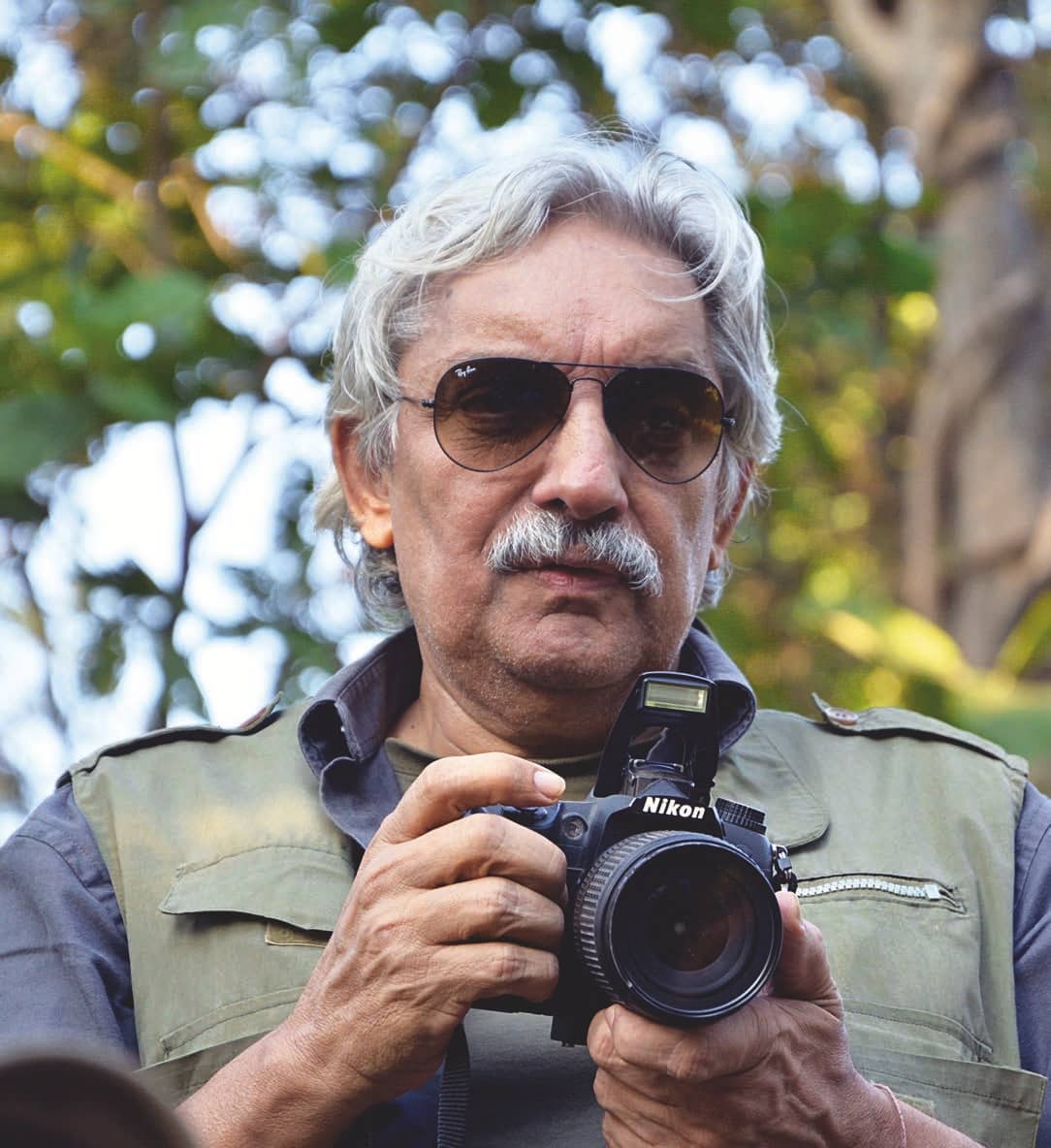
Bittu Sahgal
Bittu Sahgal is an environmental activist, writer, and the founder of Sanctuary Nature Foundation, an Indian nonprofit conservation organization that works on environmental policy, advocacy, science, on-ground support and habitat management. He is also the founding editor of Sanctuary Asia, a wildlife and ecology magazine.
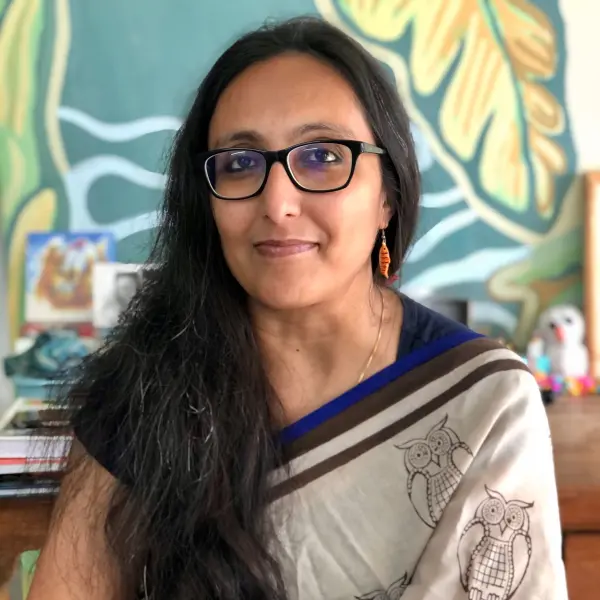
Bijal Vachharajani
When Bijal Vachharajani is not reading a children’s book, she’s writing or editing one. She’s the author of multiple planet-friendly, award-winning books including A Cloud Called Bhura, Savi and the Memory Keeper and When Fairyland Lost Its Magic.
Her most recent book is A Revolution in the Valley. Her writing has been published in India, the US, the UK, the Czech Republic, and Brazil.
"I didn't create this world. I just fell in love with it. And I'm working to one pixel, one tiny pixel of this universe, of this world I'm looking to protect. And that's given me purpose in life."
Bittu Sahgal
Note: This episode is produced for the ear and designed to be heard, not read. Readers are encouraged to listen to the show to get the full experience. The transcripts are meant as support documents and may not include inclusions from the day of recording and may contain errors. The audio version is the final version of the show. Ignore the timestamps mentioned. Ignore grammatical errors.
THEME MUSIC
HOST
Welcome to Grassroots Nation, a podcast from Rohini Nilekani Philanthropies, a show in which we dive deep into the life, work, and guiding philosophies of some of our country’s greatest leaders of social change.
Bittu Sahgal is the founder of Sanctuary Nature Foundation, an Indian nonprofit conservation organization that works on environmental policy, advocacy, science, on-ground support and habitat management. He is also the founding editor of Sanctuary Asia, a wildlife and ecology magazine.
Born in Shimla, where he attended Bishop Cotton School, Bittu graduated from St Xavier’s College, Kolkata with a degree in commerce. After a brief stint as a chartered accountant he moved to Mumbai, where he joined the advertising industry.
His deep and abiding love for nature and wildlife grew over the years, through regular visits to India’s wildlife sanctuaries and national parks. It was on one of these trips, that a conversation with renowned conservationist Fateh Singh Rathore, the former field director at Ranthambhore Tiger Reserve led to Bittu starting Sanctuary Asia. For over four decades the magazine has used a mix of science-based storytelling and imagery to inform its readers about the state of the environment, and the nation’s increasingly precarious natural habitats.
Since then, Bittu has founded and steered a range of initiatives like Sanctuary Cub, a magazine for young readers, Kids for Tigers, an environmental education programme for schools, Muddy Boots to empower grassroots conservationists in India. , the Sanctuary Wildlife Awards that recognised the work of the unsung heroes of the conservation sector and the Sanctuary Wildlife Photography Awards, established to promote wildlife conservation through photography.
Bittu has served on a number of government and non-government bodies, including the National Board for Wildlife, Animal Welfare Board, State Wildlife Board of Maharashtra, the IUCN (World Conservation Union), The Wild Foundation (U.S.A) and the Expert Appraisal Committee for Infrastructure, Ministry of Environment and Forests, Government of India.
In this episode, Bittu is in conversation with author, editor and colleague, BIJAL Vachharajani. The conversation was recorded in Mumbai.
MUSIC
BIJAL
Hi Bittu.
BITTU
Hi Bijal. How are you doing?
BIJAL
I am very good and I’m feeling very nostalgic because we are in Nariman Point which is where Sanctuary Asia has been headquartered for so many years.
BITTU
Absolutely. And what good times we’ve had, huh? How time has flown.
BIJAL
Bittu you were all set to crunch numbers, then you suddenly changed course, then you went to advertising and then you decided you’re going to become in many ways the the spokesperson for conservation.
BITTU
Well, it’s John Lennon’s fault, you know, he said that life happens to you. You know, what happens to you is while you’re making other plans, then life happens. You know, some words to that effect. But actually I was meant to be a cricketer. I was in school, picked up to play a wicket keeper opening bat. And that’s all I wanted to do in my life until my father said that Punjabi [paaar khe dekhe jahenga] which is “All your life. You’re going to only play games.” He plunked me straight into a chartered accountant’s office where I almost suffocated inside of six weeks. And I left to sell 220 liter plastic buckets to the chemical industry. I was doing morning college and I had to have pocket money. I got a lot of pocket money. I’m a salesman, essentially. Still. I was selling chemicals to the chemical industry. Now I’m selling nature to the world.
BIJAL
This was in Calcutta.
BITTU
This was in Calcutta.
BIJAL
And before that you did your schooling in Shimla?
BITTU
I was in Bishop Cotton School, Shimla. I was born in Shimla, in fact.
BIJAL
So you were born in the mountains?
BITTU
I was just about born in the mountains because we were in Lahore and everybody was leaving Lahore. And I was there in my mom’s, you know, stomach and barely made it to Shimla. And there I was. In fact, I’ll tell you something nobody really knows. I was kissed by Lady Mountbatten. That’s how old I am. I was one day old and my dad reached two days later and got a shouting from the nurse. You men are all the same. You know what a tough time your wife had. He had come, barely. He sent everybody back safely to Amritsar and then up to Shimla. And he came in the hay wagon of the Maharani of Jind. If my family tells me right, with bayonets, being stuck here and there to see – it was a bad time. But we are all here. Not my dad now.
BIJAL
But still you do miss him. He was such a big, big influence in everything you did.
BITTU
My father was an influence in my life. Not so much in what he wanted me to do, but he was an influence in my life in that he fed me with values. I couldn’t deviate from that. That was, I think, his greatest gift to me. It’s still surviving.
BIJAL
So let’s step back in time a little bit. You moved from what was then Calcutta to what was then Bombay. You worked in advertising and then you set up a wildlife magazine in 1980s. How did that happen?
BITTU
I came back from school, Shimla to Calcutta, I fell in love with this 15 year old girl. She was 15 going on 55 and I was 17 going on 7. And her family quite correctly said, I’m not getting, we’re not getting our daughter married to a salesman, you know, go and get a profession or something like that. So I landed up in Bombay, became an advertising guy working for Mass Communication and Marketing. One of the first hot shops that there was.
BITTU
But the fact is that I always loved wildlife. But I only saw it in movies and in books and things like this. And when we got married, all our holidays we took in some wilderness or the other. There were two really, Ranthambore was one. There were no tourists, there were no tigers, next to no tigers. And the other was Dachigam up in Kashmir. So we would leave our clothes in both places, you know, our bags and things like this. And then we’d keep on bouncing up and down from Bombay. There, two daughters in tow, two years apart. The elder one was five or six years old or something like that. And I have lived a blessed life. When I fell in love with nature and I met this man called Fateh Singh Rathore
NARRATOR
Fateh Singh Rathore, was a renowned tiger conservationist and the former field director at Ranthambhore Tiger Reserve. He served as a key foundational member of the Indian Government’s Project Tiger initiative which was launched in 1973 to protect the Bengal Tiger from extinction. He worked for over 50 years in wildlife conservation. He is credited with playing a crucial role in converting the heavily grazed, denuded former royal hunting grounds of Ranthambore into a thriving world-class tiger reserve and pioneering the challenging 1973–75 relocation of local villages from inside the park core to allow vegetation and prey populations to recover.
BITTU
I asked him that. Fateh, I don’t want to come here as a tourist. I want to do something. So he says, you go back to Bombay, have a party once a month. I thought he was asking me to raise funds and then next year come back and ask. And then Fateh said, in Fateh’s way, Fateh, what can I do to save the tiger? How can I help you? You Bombay guys are worth nothing. You’ll just go there. You’ll say the same thing when you come here and you’ll forget. And then I made this rash under a banyan tree in the middle of the night campfire promise – I will never ever come back unless you tell me what I can really do to help you. So he got a little serious and he said that Bombay has, India has, so many sports magazines, too many to count. Double that number of film magazines, possibly 10 times that number if you take newspapers, political magazines, not one wildlife magazine. So I said, I’ll start a wildlife magazine. Fine. And he thought I was joking, but I was very serious. And before I left I said, what should I call it? So he said, Habitat. So I got it registered as Habitat and then discovered that Habitat was a furniture store somewhere in the world. I don’t know where. So I called him. I said, Fateh, what do we do now? This, he said, Sanctuary. That’s how Sanctuary got named. As simple as that. The government wouldn’t give me the permission to just have Sanctuary, so it became Sanctuary Asia, and Sanctuary, by the way, wasn’t the first magazine. The Bombay Natural History Society was the one that produced the most useful publication. It was the journal of the Bombay Natural History Society.
First of all, when we started Sanctuary, I mean, I had never edited anything in my life. My father used to write to the principal of Bishop Cotton School and said, look, you told me that my student, my son will write to me every week, but he hasn’t written for a month and a half. So I never used to write letters. I never used to. So I was not a writer, I was not an editor. I was nothing. So when I started Sanctuary magazine at that point, I was so much in love with wildlife. I was already on the Bombay Natural History Society’s executive committee. You know, And I learned on the job. And the people who taught me how to edit were people like Dr. Salim Ali. And he started after the first issue emerged. And when I handed him the first issue, he said, congratulations. And I started about in my chair at the executive committee meeting, expecting to hear something wonderful. And in his beautiful singsong voice, he said, you have just invented two new species. I had misspelled the scientific names. So he gave me that first lesson that, yes, I know you’re trying to reach people who are not scientists, but take your cue from science and double check and triple check.
And the other person who really, really helped me to turn into the equivalent of an enthusiastic guy and turn into an editor, I mean, this was Hawk – RE Hawkins. He was Jim Corbett’s editor for 20 or 30 years, and he was on the executive committee of the BNHS. So he got the first issue, and the first thing that he did was there was a sentence which was about nine or ten words long. So he put a blue pencil through it and said, “If you can say it in six words, why are you using nine words unless it’s particularly important for you to say that?” So he taught me what brevity meant. He taught me what clarity meant…because I was part of the Bombay Natural History Society, because I saw so much being written, such valuable things being written and read by 10 people, 20 people, 30 people. My job was to go and reach 200 people, 2,000 people, 2 lakh people. Now, I’m not going to be able to reach a housewife who is not scientifically oriented or a young student who has not yet reached that age. So I had to tell stories in order to get the message across. So in the story that I would say, you can’t save the tiger if you don’t save the forest. If you save the forest, you save the ant and the termite. And in the process of doing this, when it rains, it soaks up all the rain and it feeds the aquifers. And when the rain stops, those aquifers feed the rivers. And those rivers and the wells that they feed are the ones that the water is used from the farms and they come back to feed us because our food comes from there. Now, this is not told the way I’m telling it to you now. This is told by way of stories that this is what had happened. This person had gone over there, this person had done this, or this is how elephants came to be.
You know, that’s all we have to do. We have to tell stories. We have to tell stories. And that’s the best way to even get to the scientists. I made it. I was telling a scientist a story once and I said, arrey, I’m so sorry. You know, you’re a scientist and I’m trying to talk to you like a child. So he said, look, I only know wolves, but you’re telling me a story about tigers. I don’t know tigers as well. So that story resonates with me. This is a scientist who told me this, you know, so it doesn’t matter who you are, it doesn’t matter how old you are, it doesn’t matter what your profession or your likes are. The moment somebody tells you a story, you get more involved than if somebody is giving you a lecture.
BIJAL
Tell me what that first issue was like. What was the cover of that issue?
BITTU
The first issue was a cover of a tiger’s face. And it was my fascination. I love tigers. So it turned into something that people talked about. When I had that magazine, I was in the advertising world. So Arun Nanda and Mohammed Khan and Ravi Gupta and all these people, MCM and I, it was a different world then. I called them all. And David Attenborough, I think his films had come out, Life on Earth or something. So I got them all to see Life on Earth, and they were all very moved by it. And I said, okay, that’s there. Now, I want each of you to give 10 subscriptions to your friends. There were about 30 people in that room. So I got a lot of subscriptions, you know, and so Sanctuary, actually, we had no business plan. I had no money. And I then went to a man who ran a company called Conway Printers, and Conway Printers, the young boy, Deepak, you know, and Rakesh, they said that we’ll do it, but, you know, money and all. What will you do? So her father heard this. Babuji, we used to call him and he said, yeh toh bhagwan ka kaam kar raha hai, he’s doing God’s work. Don’t worry about the money. As and when you get the money, you give it to us, you keep producing. So you see all through the people who read it, the people who helped us to produce it, it was just the right thing at the right time. And I met the right people. And as I said before, I was just very, very lucky. I was very lucky, you know.
And here I am now, 45 years later. We haven’t missed a single issue. We’re still around. A lot of magazines have closed, and I think I’m very lucky.
At the end of the day, when people ask me, how has Sanctuary survived for 45 years? Illustrated weekly closed. This has closed. That has closed. That has closed. Reader’s Digest has come down. All I said was that I fell in love with something. When somebody tried to hurt that something, I fought to protect it, but it didn’t seem like a fight. It seemed like the natural thing to do. Like when your own child is so. I have loved every single second, Even all my failures, I have loved because I found from the failures, I learned something.
BIJAL
Yeah, in fact, that’s what I wanted to ask, how hard is it to sustain a wildlife magazine at a time when everyone’s saying nobody’s reading print? Funding is also being slashed when it comes to climate crisis, when it comes to conservation. I remember the one constant about Sanctuary Asia was also you do these events and you just give away free copies of Sanctuary and Cub and free subscriptions. How did you manage to run the magazine?
BITTU
I have to say, not with pride, but again with wide eyed, surprise myself that from the very first issue, first of all, I had no money to lose. We have never lost one rupee from 1981 till today on the physical print of the magazine. We got advertising because I was an advertising guy. So the first three, four, five years just passed by because I knew the advertising guys, I would go to them and say, look, I’m one of yours. You put some ads into. And they did. And they found that they were getting good, good feedback, you know, I mean, it was good for their brand equity, if you what we call it in the advertising world. But as far as the magazine is concerned, I think it was born at a time which was just right. It was a Goldilocks moment in time. Shikar had just been buried, other than poachers and things.
I must tell you that there was deep opposition. Why are you looking to save animals? There are people starving, there are children, there are people with cancer, there are poor people and you’re just looking to do this. They thought that this was a bunny hugger, tree hugger, I love tigers. No, it was never that. Not from day one. I mean, it’s true I fell in love with the tiger, but I learned very, very quickly from Project Tiger that really what our job is to make sure that the water security of India is fine. The second thing that we used to talk about then was that as far as the forest is concerned, it’s not just a tiger. It is all the creatures which are the foundation of the tiger. From the subsoil creatures to the others. Without them, the tiger, like we published an article said, how do warblers save tigers? You know, so that was the kind of thing we did. But it was all narrative. It wasn’t like the scientific papers, you know, that under this, this, this, this, if you go there, this reference, that reference, we used all those references, but we never quoted the references. We gave credit to the photographers, we gave credit to the writers, we mentioned other people’s names. We talked about science, but we told stories. I think that’s why we still survive, still telling stories.
I’ll tell you about hard times. The most recent hard time was the pandemic when nobody was advertising, nobody was buying, nobody was doing anything. And my father, my lovely father, he always told me that when life gives you a lemon, make lemonade, you know. So what we did was we had a circulation of about 11,000 or 12,000 copies halfway through the pandemic, and even that began to fall. We went digital and we got 35,000 people. So the pandemic actually helped us to go really digital.
And, yes, there are times when you’re facing a blank wall, nothing seems to be working, and then suddenly, the sun rises one day, and the real secret you want to know for Sanctuary, the real, real secret. Sanctuary has extremely low overheads. Extremely, extremely low overheads. It was possible for me during the pandemic, to take out my life savings, Madhu’s life savings, the fixed deposits we left for the children. We never sacked anybody. I’ve never sacked anybody in my whole life. You know, there was slight delay in the payments, but we weathered that storm
BIJAL
And from there, you started something I think was truly revolutionary. And you shifted from what you call the Buddha Party, the old people, to the Baccha Party, the children. You launched Sanctuary Cub in 1984, then Kids for Tigers, and you took children to the forest and you brought the forest to children. And I think you have raised generations of young people who have now grown up to love the wild.
BITTU
Yes, Bijal, it was like that. I mean, the fact is that for a few years we just kept producing Sanctuary magazine. It was a quarterly then, you know, and many, many, many people wrote back. They loved the magazine, etc and they said, look, you know something? Our children are tearing pages out and putting up on all the animal pictures and things. Why don’t you start a magazine for children? So when I started Cub at that point, it wasn’t with any great plan. It was just literally in response to our readers. And what we found was that it became much more difficult for us to write for children, because even way back then, we were sworn to tell children the truth. But Sanctuary used to talk a lot about what was going wrong. Not only how beautiful everything was, but what was going wrong. Now with the children. I had no right to foist problems on them. I had to make them feel good. So we used images and we used very little text, really. But the most important thing that we started out with there was that to avoid putting burdens on them, we said that nature fixes itself completely. So by then we used to go to schools and things like this. Just odd schools here and there. And I’d say, if you have a cut on your hand, you see how it heals. Well, one cell doesn’t go and tell the other cell. It just happens. Nature is the same. All we have to do is to leave it alone. And before we knew what happened. One talk, two talks, three talks, five talks. Schools came to us and Kids for Tigers was born. And there was one single story we used to say we started with that the tiger is only a symbol like the national flag. When you can’t save the tiger, if you don’t save the forest. When you save the forest, you’ve saved every creature in the forest, all the creatures, from the ants and the termites to the, to the elephants and to the bears and to the birds and everything else.
So, basically what I told the children was, you save the tiger, eventually you save yourself. Way back then we used to say about more than a hundred rivers are fed by tiger reserves. Jungle nadi ki maa hai, tiger patte dhar pani ka devta hai. Things like this, that the forest is the mother of the rivers and the tiger is striped god, water God. You know, actually, Bijal, I have to confess, I just did what I wanted to do. I had fun. And I cannot stop saying I was very lucky.
And actually, in a very sly and Machiavellian way, I’m using children. I’m using children to conduct what I consider to be an adult literacy program. The children go home and they ask their parents, can you tell me any species?” You’re now 11 years old, Bijal. Can you tell me any species that has the technology to produce waste? And a classroom of sixty, seventy, hundred kids, they’re looking around at each other and one kid pops up. Human beings, we are also animals. And I, we all give him a clap. So that message goes home to the parents. And of course there are, there are more stories to tell with me and children because, frankly, if you ask me what gave me the stamina, you never asked me the question, how do I have the stamina to last this long? That stamina actually came from the kids because they lack cynicism. And I can see they change. They have a different attitude to the world. And I do believe that they will not just inherit a world. The world they inherit will be worse than the world I inherited. But by leaving things alone, it’ll come back. And when one kid, now when I say kid, I’m 79, so a 21 year old is a kid for me. When he asked me that, how do you know that this will happen? So I said, look, you’re old enough to have lived through the pandemic that took place, correct? How did the skies suddenly turn blue? How did parts of the Yamuna where you couldn’t possibly even put your hand in, how come you suddenly saw fish three, three feet or four feet underneath it? How come in Corbett, right up to Ramnagar, the tigers almost came out to say, in San Lok to Kahanga, you know, they would come. So everything came back. Everything came back. That’s all we need to do. And for one year, human beings, the impact of human beings was reduced by 90% because of the pandemic. And that’s a lesson. That should be a lesson for us. The pandemic exemplifies my understanding and my belief, almost quasi religious belief, that the biosphere gives you no judgments. It only gives you warnings followed by consequences. And if you adapt to the biosphere, you survive. If you don’t adapt, you go. So all the creatures that you see around us today, including us, we’re the result of evolution, we’re the result of adaptation. And now we’re walking a very thin tightrope. Instead of adapting to the environment using technology, using our supposed intelligence, homo sapiens, wise man, you know, we imagine that we can force the biosphere to adapt to us. We can’t. And the result of that, arrogance, it was ignorance, arrogance, avarice, apathy. These are the four horsemen of our current apocalypse. And that apocalypse is coming to us in the shape of the climate crises we see. So all the conversations that we’ve been having, they rotate around how magical the world is, how everything works. But it can all come crumbling down for human beings because down in the oceans, things will still survive. And all life came from there. And my job actually is to make sure that you, the children around us, can at least breathe air without ruining their lungs, eat food that doesn’t have pesticide residues in it, and breathe air that makes them feel happy. So. So stay safe, stay happy. This is what I tell kids. I have no third ambition for them. Stay safe, stay happy. That’s Sanctuary’s purpose. All the animals that we are talking to protect, they’re just bit parts they’re playing in this whole game. The tiger plays its role, a beetle plays its role, a monkey plays its role, and human beings are playing their villainous role right now.
NARRATOR
Kids for Tigers was launched in the year 2000 an educational outreach programme that centred the tiger as a metaphor for all of nature.
Through workshops, nature walks, camps and tiger fests, the programme has become a rallying point for children working to safeguard their own future, with the young convincing the old that protecting nature is the best way to protect current and future generations.
Since its launch, Kids for Tigers has snowballed into one of India’s largest mass movements to save the tiger impacting one million children.
BITTU
Way back in the year 2000, Britannias, you know, came up with tiger biscuits. And we went to them and said, will you sponsor something? So we were giving them a small little thing, you know. He said, we can do it, but why are you talking about something so small? We’ll do it big. I was saying, we’ll go to 100 schools, 200 schools. They said, no, we go to 750 schools. So I said, we’ll go to 750 schools. Where is the money going to come from? That’s not your problem. We’ll go to 750 schools. To cut a long story short, what we did was we created scrolls, large scrolls on which we got signatures. The signatures were to the Prime Minister, but he was not the hero of the thing, that he was the type. He was going to make a big difference. Everybody who signed crossed a line. And what was it I promised? To save the tiger, we must save the tiger, save nature, that’s all. And put a signature down there. So parents, children, this, that. If you go into Google, you’ll find the Limka Book of records. We got 1 million signatures in the year 2001. 1 Million signatures to save the tiger. And, yeah, that gave me A sense of hope that also set into my head that I did the right thing by going to kids. Because nobody, nobody refuses a kid.
And Atal Bihari Vajpayee was at that time our Prime Minister. So we called 100 kids from and we went to the Prime Minister’s house at that point and Atal Bihari Vajpayee, we called him Babji. He was a lovely man. Lovely, lovely man. And one of the children, he said, acha, after all this was done and all you asked one of the kids, you want to know anything? And his officer came running, sir, the Prime Minister. Nobody can ask a question without first showing it to us. So one kid got up, you are my Prime Minister, sir. What have you done to save the tiger? So Babji looked left, he looked right. And Mr. Balu was then the environment minister. Balu, you are the environment minister. Give her the answer.
He was so moved. And at that point, you know, there was a lot of tension, religious tension going on and whatnot. And he called us for a cup of tea. And after that, that’s normal, you know, say, have a cup of tea. So just, just. It was not thought of emotionally. I just said that. Babji. Aaj Agar Ram Bhagwan Ko Vanwas Lena Padeto Jungle Kahan Unhe denge? Ticket Kharit ke Jayenge! And he actually started crying, you know, not crying. He had tears going down. He wiped his eye. The Indian Board for Wildlife had not met for seven or eight years. In eight days time he called all the ministers across. And his first speech to that meeting of the Indian Board for Wildlife was, when the children are woken up, why are the adults sleeping? And that just further ratified my thing that if you talk to the children, the children will talk to the adults. And the adults will ask, understand that if we want to do something for them, don’t give them a gold biscuit and say that I’ve done a lot. Make sure that they can have biscuits that they can eat and water that they can drink and air that they can breathe. And that’s the best legacy we can leave for our next generation. That’s the legacy our forefathers gave us. Why did they worship mountains? Why did they worship trees? Why did they worship rivers? Why did they worship trees? Even today, if you go to the Adivasis, they go to the tree and say, I need a branch. I’m sorry, I need this branch, but another one will grow. May I use this? It’s. It’s not emotional. It was a survival instinct. And our culture, we should not be importing false ambition from the industrial North. We should be exporting our attitudes, our values to them instead of allowing them to erode our values here. That is survival, according to me. Because the biosphere, as I said, will give you no judgment, only warnings. And it’s given enough. It sent the pandemic, it sent climate crises, and after that the consequences. We have not even begun to see how serious the consequences can be.
This is what I tell children. I’ll stop at this now that what I tell children is that nature is asking us to kneel in prayer. If we don’t kneel in prayer and worship nature today, it will force us to kneel in subjugation. But kneel, it will make us kneel. We will not make nature kneel. The only thing that will be reminded is history. And it will not be written by the powerful or the victors, as they say. It will be written by our children, the subject survivors.
MUSIC
BIJAL
I think this is what I find fascinating, that you took the complexity of issues of what’s happening science, you took science, you took complexity of what’s happening on policy level, on the grassroots level, and you took writing, photography and filmmaking as a way of advocacy in many ways.
BITTU
That was Fateh Singh. The first time I ever met him. He said, how many people will you go to? You’ll go to their room and give a talk, you’ll come back and they’ll give you tali, tali, tali, tali. That’s not enough. So if we had not, we never dumbed it down, we merely simplified it and we made sure that we had stories to tell. So if you were writing an article, it would start with, I was amazed to see the tiger. I had waited for so long at the water hole and it never came. And then, just as I was ready to pack up, the tiger suddenly appeared. I was in the Ranthambore Tiger Reserve, or I was in the Kanha Tiger Reserve. And I cannot tell you, Bijal, how tough it was and yet how non bumpy it was.
Right now I’m worried about what’s going to happen? Because I find that the last 50 years of protecting these areas, I see a new generation of people who know what the value is. But my generation of people, I’m 79 years old, I have almost stopped talking to them because I think that they don’t understand. The vast bulk don’t understand. When I think of Dr. Salim Ali, he was that old. RE Hawkins was that old. And they taught us and my generation now is saying cut down the forest. We need GDP to go up. Now I understand without economics you can’t. That’s why we work at the tri junction of biodiversity, economics and climate change. And there is just no other way. I’m just convinced of what I’m doing and I shall be convinced to my last dying day, to my last breath. And I will keep on saying the same thing. And by the time I say adieu and bye bye to the world, I’m hoping that the younger generation would pick up and do 10 times better than I am.
BIJAL
Talking about the young generation, actually I think it’s, it’s really interesting how you had Sanctuary Cub and Kids for Tigers, for really young people. And then you went to the next generation. Along with Cara Tejpal, you launched Mud on Boots, then the Earth Heroes Awards, which is this annual Sanctuary Asia event, which is kind of like a calendar day in Mumbai for people who live here that they know that they’re going to come to town, they’re going to come to NCPA, they’ll spend an evening listening and being inspired by Earth Heroes. Across from lifetime service to Young naturalists to Green Teacher, Sanctuary Asia… championed so many different kinds of voices and people through the years.
BITTU
You know, it was actually, it was very organic. You know, I’d been to several awards shows and I found that inevitably very, very well known people were given awards because when you give awards to well known people, you get a large crowd and we just invert that. We gave awards away initially to people nobody had ever heard of. Somebody could be a driver of a jeep who happens to be saving rhinos, Somebody else could be working and counting how many hatchlings came out of, you know, the beach in the Andamans. And so nobody had heard of them. But we got very, very high profile people to give the awards away. So we still got the attention very often from the people who gave the awards away. But the stories of these people, it all boils down to telling stories. So the Sanctuary Wildlife Service Awards was a direct result of the fact that when you have people tramping the ground, I can sit over here and write editorials, but if there’s a fire somewhere, who puts it out? It’s this guy in the middle of the night, he’s putting the fire out, he’s risking poachers. Some guys get bitten by a snake, some guys gets into a tangle with an elephant, they risk their lives. And at that point, what we had said was, you know, the armed forces protects our borders and they say, ist dharti se tilakkaro ye dharti hai balidan ki. Which is to say that, you know, the soils are virtually. They are the reason we live. So I don’t know, it just became something where not just love, it became. It converted it just organically.
Look, when we held our first awards ceremony, there was a guy called Ranjit Bhartakur, an Assamese guy who was a marketing whiz. And after he saw the first few issues of the magazine, he said to me, this won’t do. You know, what you’re doing is this is, this is the subject needs something better than this. If you can’t do it, close it down, give it to somebody. That was how tough he was. But in about three issues, he helped us to redo what we were doing. He refashioned the magazine and when he saw that it was working, he said that, look, you’re writing about all these people, but why don’t you get everybody together, honour them in one place? So I said, where will the money come from and how will we do this and whatnot. Anyway, we did it.
So I don’t think I own Sanctuary. I was just the birth father, if you will, you know. And as I’m speaking right now, the word mother comes to mind.
And I’ll tell you this, have I taken my wife Madhu on a ride? Oh my God. Across one place and another. Some places where there were no loose. Some places where the bed smelled lousy. Some places where the carpets were musty. But we went to heaven. Pure, pure heaven. There were. You could hear tigers at night. You could hear elephants calling. You could, you know. So we went to every place imaginable including the beautiful, beautiful place called Dachigam and that beautiful river called the Dagwan. It’s like we fell in love. She fell in love, really. When I began to take her out, she was looking after our young ones. And I’d be away for five, seven days sometimes there were no cell phones. And instead of five, seven days, I’d take eight days. And I’d said I sent you a telegram. I never got a telegram. You’ll die. What will happen to you if I don’t even know, you know. So we’ve had. I’m very lucky also with the fact that I’ve got this one wonderful wife who’s given me two wonderful daughters who are all now so three women ran my life for a very long time. And I’m a very obedient guy. And I still do what they say.
BIJAL
You’re the elephant in the matriarchal society.
BITTU
Yes, I’m the elephant in the matriarchal society in a sense. But if you ask them, they’ll say, what nonsense is he talking about? I mean he. Whatever he is, he says eventually we do that. We might say, no, don’t do this, don’t do that. But eventually we do that. But they’re as in love with wildlife and with nature as I am. So I guess that’s the way life works. That’s how marriages work also, you know.
BIJAL
And Madhu is the 15 year old you fell in love with.
BITTU
Madhu is the 15 year old I fell in love with. And she’s still the boss of the family.
BIJAL
And Tara, your younger daughter is the editor of Sanctuary Cub.
BITTU
Yes.
BIJAL
And apart from that, your team and also your editor Lakshmi has been with you for many years and has helped, has been with you to keep Sanctuary’s editorial vision very, very smooth.
BITTU
Very often people tell me, you know, Sanctuary, the great magazine you’re running and things like this. And I. It sounds cheesy, but I feel a little guilty, you know, because, yeah, sure, it was my idea and sure, because I knew this person, that person, they come in and they write and they give photographs and things. But Sanctuary is run by women. The organization is actually run by women. And that’s not just my wife, that is Lakshmi, that is Shatakshi, that the new people, the old people, you know, I mean, the fact is that there was… It’s more than sensitivity, it’s dedication. It’s a lack of… there’s less… I don’t know whether your experience is the same, but there’s less ego involved, there’s less testosterone around. And we hum, we work, we cry also.
I believe from my marrow that most of the problems that the world is facing today is a result of patriarchy. I asked at a meeting that we held recently that can you name me two women that started wars in the last 20 years? And it went around that audience of 60 or 70 people, and somebody said, well, Golda Meir, Indira Gandhi. So I didn’t reply and say, that was longer than 20 years ago. But look at what’s happening in the world today. Look at what’s happening in the world today. Look what’s happening in Africa. Look at what’s happening in the Middle East. Look what’s happening in Europe. I mean, what on Earth is going on? And I really do believe that, like the elephants that have a matriarchal society, if human beings want to live safer, more secure lives, we’re going to have to return to matriarchy. Because I don’t think men are capable. I’m not saying that they are bad people. They are not capable of looking at the long term.
BIJAL
Sanctuary also produced 30 wildlife documentaries that aired on Doordashan. And this was way before Natgeo, Discovery, Animal Planet,.
BITTU
It was way before all those. But in India, at that point there was only one television network, that was Doordarshan. And advertisers were scrambling just to get anything on that because the viewership for a tawdry little program would be 10 million and 12 million and 15 million and things. And that was all the advertising that they could get. So I got the idea that why don’t I produce films on Project Tiger? And that was also an idea given to me by Fateh Singh and it was also given to me by my friend Valmik Thapar, who is no more with us, neither of them. And Valmik actually helped me to put together the stories. And we produced. At that time there were 16 tiger reserves. We produced 16 films and we got a viewership of 30 million. And I went back to our sponsors and I said we got a viewership of 30 million. There are only 30 million. Do you know what Mahabharata has got? Do you know what Ramayan has got? I was speechless. You know, I had no idea what to say. I just said that, look, this is what it is. But then they also discovered that they got a lot of feedback. And the same people came back to us and said that, okay, look, we want you to make another set of serials. And that was called Rakshak, which was for children. We had no competition. We had no. Nobody was making real wildlife films. And we made those films a narrative. A father who was retired from the army and his son, they go out and they go out and save things. And they go to Bandhavgarh and they go to Kanha and they go to the Sundarbans. And people got involved. And at 11 o’ clock on Sunday morning, everybody would get together and see Rakshak. And it was conceived by me, but it was directed by Bollywood. It was entirely a Bollywood creation. It was wonderful. It was just wonderful. And after we completed all those films we went back to our sponsors who had said that only 30 million. And they said, this time we want you to make sure that we get a higher viewership. So I said, how am I going to make sure? So I said, give me some more money. He said, no, that’s the answer I got you go and get a higher viewership for this. So on an impulse, I phoned Shabana. And Shabana said, well, I said, I only want you to come into the studio and give me your voice. So she agreed to do something. Then I went to Pran, the villain of all the Hindi movies. And I went and I sat in his house in Bandra. And he said, do you know something? The first thing he said when I sat down, do you know something? For the last 20 years, no mother has ever named their child Pran.
And he was the sweetest, nicest guy with his dogs around him. And so we went around Nutan, everybody, all the film stars. I went to them and said, look, this is what I want to do. They never charged me one rupee. They just gave their voice. Shashi Kapoor. I must tell you what happened. We hired the studio. Like we’re sitting in a studio right now, but we hired the studio and we had everything ready. And it was a lot of money, you know, hiring studio and things like this. He comes in there, sits down, he says, I forgot my glasses. I can’t. So I said, okay, we lost some 15,000 rupees or something like this, which for me was almost the end of the world, you know. But look at the number of people that we got. I mean, the tragedy of course is that the sound negatives, the positives, everything, everything. The sound negative, the sound positive, everything. They were in tins in 16mm. We shot everything in 16, 16mm. We bought three 16mm long cameras with lenses. There was a flood on a Friday on the floor above us. We had one and a half feet of water down there. And we put these on slotted angles. But everything got. I don’t have one frame of those 30 or those 17. 16 Films that we had made. 17 Films, I think it was.
MUSIC
BIJAL
Today when someone talks to you about that age old question, which is something I learned when I was at Sanctuary Asia, as to how to answer it. Environment versus development, how do you respond?
BITTU
You know Bijal, that’s a question that used to be asked. Only very ignorant people ask that question now. Very, very ignorant people ask that question now. Environment or development?
Is there even one dam that actually produces oxygen? Is there any dam that actually produces water? All it is is a container. That’s all you’re doing. You’re collecting water that has been given by a system. Now if you cut the system off then actually I’ll go out on a limb here. I think that the lessons will be taught to human beings and that lesson, the instrument of that lesson will be water. I’ve seen what’s happening to the waters of India today. I mean, it’s not just the glaciers that are melting. If you look at what’s happening, the sea levels are rising, our coastal aquifers are getting saline, our rivers are getting choked, our lakes are getting polluted, our wetlands are vanishing under real estate, our grasslands are vanishing under real estate. And when I say real estate, you know, it’s a generalized term for anybody, anybody rich, poor. It doesn’t matter to the biosphere who destroyed it. If it destroys it, it will just reduce your water availability. Our aquifers are getting poisoned. And this is not a. This is not sensible. This is not Homo sapiens. This is Homo stupidus suicidus. This is the name I would give, the nomenclature I would change to Homo stupidus suicidus. How can we do this? How can we do this knowing full well that this is going on? And I’m speaking with some emphasis right now, but actually, I say, I do think that the nomenclature of human beings should be changed from Homo sapiens to Homo stupidis. Suicidus. That’s the tone I use when I’m talking to economists.
BIJAL
You’ve never been afraid to say you relearned something that you’ve been wrong about something and learned from. And the fact that science changes, political landscapes change, you’ve always been okay saying we need to, we should have changed the way we looked at this. Tell me about that. Tell me about being always open to unlearning.
BITTU
And that was again, Salim Ali, Humayun Abdulali, people like this who were Bombay Natural History Society’s JC Daniel There are so many of these people who shaped me. I’m not a scientist. I just did BCom, you know, that was it because it was morning college and I could do whatever I had to do during the day. But what the scientists taught me at the BNHS at that point was that if I am a scientist and I’ve made a claim that this is this A, B, C, D. And then another scientist comes, it’s not that it’s A, C, D, B, E or whatever it is, I should be grateful to that scientist because my purpose is not to say how great I am, it’s to find the truth of science. So I’m never, never worried about somebody pointing out a flaw because that’s free advice. And, and apart from that, I mean, the last thing I would like to do is to say I have spoken. I’m the editor of Sanctuary. This is what is right. And if it is wrong. How many people have been misguided, you know, so every time criticism comes, I look at that as contribution, not criticism. So I’m never worried. And look, nature is not perfect. If nature was perfect, we would still be blue green algae somewhere or the other, you know, single celled, you know, organisms. It’s the imperfection of nature that is beautiful and it’s the imperfection of human beings that allows us to make mistakes and learn. So for that people say you got to subsume your ego. And I say that, look, somebody who’s actually walked the forest doesn’t have an ego. You’re so small, you’re so insignificant, you’re so incompetent compared to what nature does. So life is very good.
NARRATOR
In this next section, BITTU talks about BITTU Sahgal & Another v. Union of India & Others is a landmark environmental law judgment delivered by the Supreme Court of India in 1996 that reinforced the application of the Precautionary Principle and the Polluter Pays Principle to safeguard ecologically fragile regions in India. Filed as a Public Interest Litigation (PIL) via a 1994 writ petition, the case primarily focused on protecting the Dahanu Taluka region in Maharashtra from environmental degradation caused by rapid, unchecked industrial expansion.
BITTU
The story was as simple as this. Beautiful people living in Dahanu. They were Chiku farmers, but they were happy human beings. I had been fighting a battle. It was toxic slink. You know, we started something called toxic slink. And we began to talk about how the Western world was exporting toxic material like plastics and PVC to India. And then putting them into, you know, all kinds, burning them up and things like this and causing problems. So they wanted over there to the BSES. The Bombay Suburban Electric Supply Corporation wanted to build another 450 megawatt thermal plant. So we went over there. We went to the Supreme Court and said I had actually asked that this gets demolished. That the Chiku farmers will go. And along with that, we’ve got forests right next door and we should not do this. That was what the case was. I didn’t go there with any great this thing. And I was invited to go there. I didn’t even know about the Hanu. I only got invited there because of the local people. To cut a long story short, we couldn’t get that thing demolished. But what the Supreme Court said was that around this nothing will be done. That was called the ecosensitive zone. Ecosensitive zone, ESZ. So that was the birth of the ecosensitive zonation. And it was a central order that was passed. It was not a state order in those days. The center was strong. And the states were the ones that were aching to build and, you know, take away forests and things like this. Sham Chainani was the real person who did the work. Devi Goenka was a real person who did the work. There were. And the people of the Hanuto don’t even talk about them. I mean, they were the real ones. I was literally, you can say, like a poster, you know, over there. It was not me that did that. It was my name because it was credible. Because I was, you know, working for the environment. But Shailendra Yashwant was. Is still an environmental journalist. And Shamchainani said, okay, we’ve got this. Now if you’ve done this, why don’t we make this applicable to Mahaleshwar, which is being ruined? So the center said, mah Baleshwar, ecosensitive zone. You can’t put up a chemical factory. You can have a cycle factory. You can do small things. You can have a chakki. You can do all those things. You can’t make a big dam. You can’t make a chemical factory. And it went from place to place, to place, to place. I was on the ministry, you know, expert committee for infrastructure and I was also on the Project Tiger steering committee at that point. At one of the meetings we were talking about buffer zones. Buffer zones. And I was, I had just, just got this order. So I said, what buffer zone? These are duffer zones. You can do nothing. What you can call it a buffer zone, you can call it xyz, you can call it the moon, but you have no known legal have 10km around these declared as ecosensitive zones because the center had the power to do that. And we did that. And now we are seeing Kaziranga wants 10 km to come to 1 km. Sanjay Gandhi wants to come to 1 km. For what? To build. But all I’m saying is that by the diversity of a forest, you have some who have this. I have no anger, incidentally in me. There is not an iota of anger. There is an iota of fear. Not an iota. There’s a ton of fear and there’s a lot of guilt because I should have been. When I say I am not talking about me. We should have been more effective in protecting you all. You three young ladies over here, you know, I should have been better able to protect your world. I wasn’t able to. And that particular thing is still there being diluted minute by minute, hour by hour. And the dilution is very subtle. That dilution is, let’s say, three words if deemed necessary. So I’ve got a strong. You can’t do this, you can’t do this, you can’t do that. You’re not allowed to build this. You’re not allowed to build this. But if deemed necessary, then, then the other three words without prior permission. Now forget about prior permission. They’re giving post facto permission, but what were they giving the permission for? These were places on the basis of which factories can run, water can come, food can grow, climate is under control. So this is why I, I feel that it’s. I call them the carbon cowboys at one level and I, I would say that that male testosterone driven. I can build it faster. I can go faster, I can go bigger, I’m tougher, I’m richer, I’m stronger. You know, I really think matriarchy is going to be one of the solutions for survival tomorrow in Homo sapiens.
BIJAL
You’ve now lived in Mumbai for 50 years. For 50 years. And you’ve seen the city change drastically. And you’ve spent years taking children to Sanjay Gandhi National Park, Mahim Nature park, even the Ranibaug Gardens.And you’ve chosen to continue living in the city with its air quality and all of that. Tell me about your relationship with Mumbai.
BITTU
My relationship with Mumbai is love. There isn’t an ounce of hate here at all. It’s not a love hate relationship. I love Mumbai. I think the Mumbai Seascape is better than that of San Francisco. And I’ve been to San Francisco. I’ve been to South Africa. The seascape that we have is a living seascape. We’ve got mangroves, we’ve got waters coming down. We’ve got rivers coming down. We’ve got. So the most wonderful thing, what we don’t have is either the appreciation or the intelligence to look after this. And looking at that as an infrastructure. Not only an infrastructure for commerce, but an infrastructure for happiness. I mean, if you go to Marine Drive today on a Sunday evening, despite the coastal road being built, there are people standing. I mean, I’m saying literally one and a half lakh people are there just to feel the sea breeze. Now, that’s what we have. That’s what we have. My relationship with Mumbai is one where I would say that I’m very grateful to Mumbai. I was born in Simla. I grew up in Calcutta. I love Calcutta. I love the Sundarbans. But Bombay gave me a life. Now it’s Mumbai that I would say gave me a life. And I love Mumbai. Okay? So if somebody asked me, would you like to live anywhere else? I’d say, no, I’d like to live here. But I’d like to improve this place. And for that, that’s why I take children out and I take them up to the hanging gardens. And we say, anybody who finds a spider, the first person who finds a spider gets a big hug. All right? Okay. The children. Uncle Bitu, I found a spider. Okay, next person who finds so on and so forth and so forth and so forth and so forth. We must make our children fall in love with their city. The Sanjay Gandhi national park is not a forest. It’s a miracle. It’s one of the world’s most expensive real estates. And of course, people have got their eye on them. They want to come closer and closer like a noose around the neck and make that. But that at one point, incidentally, was the only water supply for Mumbai. Now we’re going further and further and further and getting water. But remember this, that Mumbai is still the financial capital, but it will not be the financial capital if we continue to run it the way that it is running now. Because neither will people be able to live right? Nor will they be able to live healthy lives and nor will they be able to move. I mean, the way that our FSI, that’s the floor space index, is going up. We are not keeping pace with sewers. We are not keeping pace with schools. We are not keeping pace with hospitals. We are not keeping pace with open spaces where I can breathe. And the pressure cooker is building up. People are angry or they are sad or they are unwell. Those are signs. It’s like ignoring Articaria or ignoring a lump over here and saying, <hindi> Bombay is deteriorating, but nowhere near deteriorated to the point of no return. It will take just 4, 5 years to bring Bombay back. We have to have equity. We have to have an appreciation for what we have. And the last thing I’ll say is we must be happy for somebody else’s happiness. Now, that’s big ask. You know, everybody wants to accumulate and be happy and sit in their own homes and say, I got this much money or I got this much. I got a new car and I got this. The moment I am happy for you and you are happy for me. And that’s a universal you and me. I think Mumbai will return to being the best possible city in the world because we have got what most other cities don’t have. Nobody has got a sanctuary like 104 square kilometers of hard wilderness in the heart of the city.
BIJAL
I’m going to wrap this up with this. You’ve got a new children’s book coming out with Pratham Books, illustrated by Rajiv Eipe. It’s called Rumble Tumble School and it’s an old story of yours about Playtime in Paradise. Tell us a little bit about that story.
BITTU
Playtime in Paradise was just as simple as this, that the most disciplined life forms on earth are non human. So the whole story of Playtime in Paradise was that they don’t go to schools, but they learn. They learn through experience, they learn through their elders, and they learn by having fun and play that one tiger is jumping on another and stalking another and one monkey is pulling another monkey’s tail and doing this. You don’t pull the tail of a tough monkey. So you learn how to do that. And in the process of doing so, the Playtime in Paradise was just the fact that essentially telling children that. I started off by saying, you’re in school. I’m talking to you in school. But do you know that no animals go to schools at all? They only have fun. Oh, the kids are so happy. Only have fun playing and things like this. I said, yes, but it’s very serious. You Know, because when they learn that, it’s not just learning how to turn a machine on and things. It’s learning how either you live or die if you don’t, don’t learn properly. So that was what Playtime in Paradise was a nice way to tell them that, look, you’ve got to behave yourself because it’s not a very comfortable world outside if you try to break its rules.
BIJAL
And, you know, Bittu, I really think with your storytelling, with your sense of play and fun and the way your storytelling has been, that it’s taken. It’s been. It’s using fun, it’s using humor, it’s using wonder to tell generations and generations of Indians about how important nature is and how we are part of nature. So, yes, Playtime In Paradise is pretty much a great way of putting together all your work in storytelling.
You know, I’ve been thinking a lot about this. 45 Years of doing this Bittu and constantly being battered by losses, especially with the last few years. Personal, planetary, over the last many years. And yet you are one of the most hopeful people I’ve ever met. What gives you hope?
BITTU
I think that I have to blame my grandmother for it. Because she and I used to sit down and have these long arguments. We were early risers, the only two early risers in the family really. And she was very religious. She would, you know, she. Mala japna. She would have the. The prayer beads and things like this. And I would be just in Calcutta looking out and seeing Calcutta come alive. And she would talk to me about things. And somehow the conversation would roam around the Gita. You know, I don’t study it, I just read it. Do what you do and the cards will fall as they fall. That’s the simple message of the Gita, amongst many other things. So the way I see it is that I didn’t create this world. I just fell in love with it. And I’m working to one pixel, one tiny pixel of this universe, of this world I’m looking to protect. And that’s given me purpose in life. And I see that my father died and he still lives inside me. And I’ve also, thanks to the Bombay Natural History Society and its scientists, I understood what evolution was and how everything is recycled. And everything is recycled and everything is recycled. And we don’t even have the technology to destroy life on Earth. So I’m hopeful because I’m on the side of the biosphere. And the biosphere has never lost in the last billion plus years. So I’m on the winning side. Why should I be not hopeful?
BIJAL
So, you know, thank you so much, Bittu, for this conversation. And one of the first books that you gave me from your personal library to read was. Was Rachel Carson’s Silent Spring. And from there I went to read her sense of wonder. And I think, and she says something very important, that every child is born with an inherent sense of wonder about the natural world. All he. She’s talking about what her nephew needs is the companionship of one adult. And I think you have been that adult for so many children. So. Thank you.