
E-27
Jagdeesh Rao Puppala – On the Commons In India
This is part two of our episode with Jagdeesh Rao Puppala in which he talks about his life and work.
In 2013 the Foundation for Ecological Security received the Elinor Ostrom International Award for its work. In this episode, Jagdeesh talks about the longstanding collaboration between theorists, researchers, practitioners and the government that has resulted in deepening our understanding of the commons.
Speakers
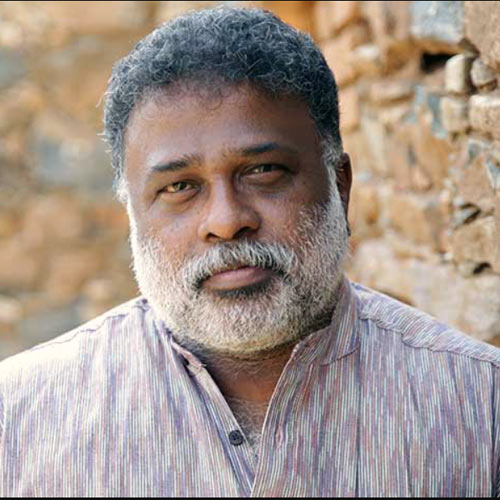
Jagdeesh Rao Puppala
Jagdeesh has spent over 35 years working at the intersection of poverty, environmental degradation, and systems thinking across ecology, society, and economy. He led the Foundation for Ecological Security (FES) as Chief Executive from its inception in 2001 until July 2020, and continues to shape the field through policy influence, knowledge exchange, and coalition-building for the Promise of Commons initiative. His contributions have been recognised through the Skoll Award for Social Entrepreneurship (2015), the Henry Arnhold (Mulago) Conservation Fellowship (2017), and the Senior Ashoka Fellowship (2022). His experience will strengthen PHIA’s work on natural resource governance, climate change adaptation, and community-led management of the commons.
He is currently the CEO of Living Landscapes and Convener of the Common Ground Initiative.
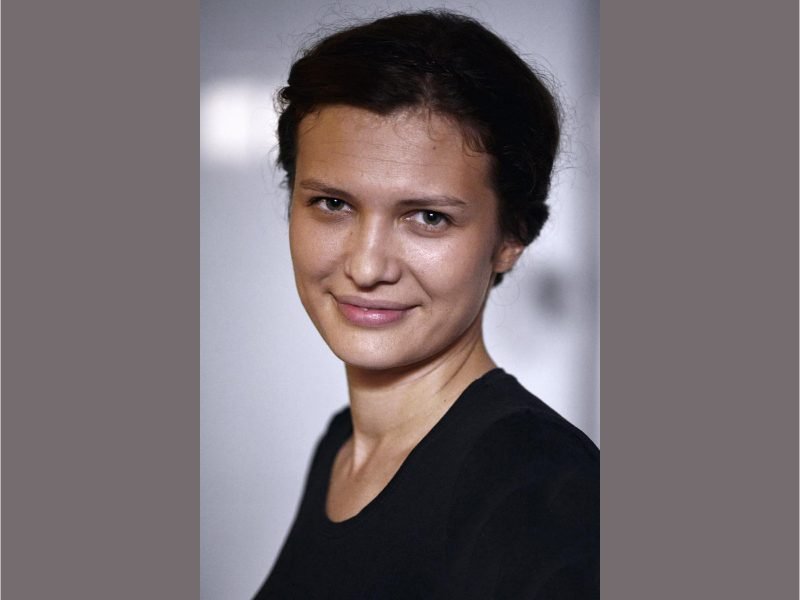
Irina Snissar Lobo
Irina Snissar Lobo is the founder of Udanta Consulting and an entrepreneurial leader with over 15 years of experience advancing systems change initiatives. A generative listener and systems thinker, she specializes in guiding philanthropic and impact organizations through transformations for greater impact , working at the intersection of strategy, knowledge curation, technology, narrative building and team creation. She is known for designing collaborative ecosystems that enable collective action, and her applied research on systems change and network effects has earned recognition from platforms including the Stanford Social Innovation Review. Previously, she served as Director of Design and Knowledge at ASPIRe — a global impact accelerator co-created by Ashoka and the Centre for Exponential Change — where she supported strategy transformation journeys for over 40 social impact organizations worldwide. In her current work, Irina partners with the Common Ground initiative to strengthen collaboration across diverse stakeholders for community-led natural resource governance.
“It’s both equally important—outside wisdom and local wisdom. It is the attitude that matters when you enter into the system.”
Jagdeesh Rao Puppala
TRANSCRIPT
Ira
What I find compelling or interesting just to imagine taking all these, the satellite images for example, right? And not just saying it will be something that’s used by the government or the department or the ministries, but saying how do you actually take this Imagery and show it to the people in the village and get them to interpret it, understand and then help you understand why the forest is disappearing, for example. Right. So really bringing the latest of technology in that sense to help build the agency of these communities, of these women, in managing their forests. And then like you said, what are some of the knowledge that they may have been missing in able to do it, being able to do it more effectively. Right. The colleges that you spoke about. So really not so much bringing the expertise from outside, but building up those expertise and abilities, capacities for the agency of these villages.
Jagdeesh
Typically, I think even village people don’t mind outside knowledge. And we should not be shy about that too, because there are several inequalities and all happening and unless you nudge that won’t be disturbed. But yes, you’re right. It’s not only this body of wisdom from outside, how it relates to the local questions, local issues, and how local people’s questions are addressed in outside knowledge. So we were fortunate that way. All these well meaning Ruth Meinzen-Dick, Gautam Yadama, Arun Agarwal, Marco Janssen. These people helped us into growing that in a collegial manner with the village, into raising the right kind of an issue where academics can help or researchers can help. One example is about groundwater depletion. And this is a behavioral change which is required because the acts and the laws of the country do not define the underground water. Basically, if you own the land, you can do anything with the water that is deep inside. In majority of the places it was like that.
So village people had to realize that my actions can influence the future of my neighbors, or vice versa. If my neighbour drills 500 meters, 500ft, then it is going to affect my bore well too. So they had to slowly get to understand that this groundwater is a larger commons owned by more people. And unless we frame rules and regulations to self govern, the groundwater is going to get depleted far more. So with Marco Janssen, with Ruth Meinzen-Dick, we developed what is called experiential games, which village people play. Like in colleges we do that, experimental games, good game theory. But in village situations we were engaging with that kind of a knowledge. Similarly, systems dynamics is generally done at college level, technology level, all those kind of level. We took that body of knowledge into village people because they were very clearly systems by design, by their compulsions, village people, living systems, thinking systems. Now how do you draw those examples, say for smokeless stoves or groundwater depletion, or a dam being constructed in that area? What are the social, ecological, economic arrows and what are the vulnerable areas where village people can work, work on where their body of evidence has to be built? Those kind of things can happen between this marriage of outside wisdom and local wisdom. It’s both are equally important. It is the attitude that matters when you enter into the system and what you want to probe.
Ira
So we are now in the first decade of FES and you mentioned this momentum happening around biofuel and the government now thinking about how the wastelands can be used for growing biofuel. So what was the story around that and how did that all pan out?
Jagdeesh
Well, several good things were happening around Right to Information, Forest Rights Act, Right to Employment and so on. There were also other things which were affecting the land, particularly in terms of biofuels and then the Special Economic Zones and most of these were targeted at the so called wastelands and which were actually at the village level, village commons. So biofuel policy was much needed then in the sense that oil prices were going above 100 or threatening to go above 100 US. And then there was local immense growing requirements for oil. So there was this magic wand of biofuels. The problem with working on land is every 10 years you’ll have eucalyptus neem moringa and someone comes with some fancy idea. And this was also one of them. But this one came with a mixed bag in the sense that the village people were being promised money and who can deny them money? And this was also being talked about as if it can grow anywhere. So village people couldn’t, you know, and the target definitely was the village commons and we were worried that that would be the only. But again, it is going back to the tree growing part of it where you forget the whole ecosystem and just focus on biofuels. Luckily, nature didn’t allow biofuels to grow that much because of course a plant can grow only in one kind of a condition. It can be just planted everywhere.
But the cynicism in FES, particularly in board discussions were increasing that we keep Doing all this beautiful work around village Commons. And these are gardens of Indian. But there is this policy which comes and the land is taken away for that. Yeah, either for oil, we saw several cases of mining, quarrying, and also biofilms was coming in. So as I was mentioning, we were a part of this international association for study of Commons for several years. In 2008, Ruth Meinzen-Dick, she was the president of the association, and she asked if FES would like to host the 13th, if I’m not mistaken, or 11th International Conference on Commons in India. India had wonderful scholarship on Commons, but India never hosted this conference at all. It happened in many other countries.
So we had a dilemma.
What does a practitioner organization, what, why should it host an academic conference? That was the discussion at the board level. And we presented that, let us not make it just an academic conference. Let us use it as an opportunity to mix science, practice and policy. That was the kind of a pitch we made to the board, and they liked the idea. And this was also presented that we can go on being cynical about biofuels, about special economic zones, but what are we doing about it as a country? And why don’t we engage with the issue and from different levels? So the Commons conference, as we started calling it, became a wonderful opportunity. We worked with four state governments. Rajasthan, Karnataka, Andhra, Madhya Pradesh. Madhya Pradesh failed. I mean, they were not interested. But Rajasthan asked that we prepare a policy on Commons. Andhra Pradesh said they didn’t have time for policies, but they would run a program around right to Employment, NREG and Commons. They allocated some 300 crores or something for implementing it. And FES was the nodal organization, along with some 20 other nonprofits in Karnataka. It was slow, different kind of a pace. So government people were also getting interested in it. In parallel, we worked with seven networks of practitioners, NGOs on coastal commons, on groundwater commons, on surface water commons, pastoral knowledge, urban commons, and so on.
That was a growing body of people. We thought, we’ll bring practitioners, we’ll bring government people. And of course it’s a conference, so there’ll be many academics and researchers too. And as luck would really have it, Lin Ostrom, Elinor Ostrom got her Nobel Prize in 2009 after she agreed to become the keynote speaker for this conference. Lynn was always very much attached to the association of Commons. She agreed. But in 2009 she became a Nobel Laureate. So the, the attention that the conference got was at a different level altogether. No more did we have to go around to governments and tell them, you know, there is a Commons conference. The minute you say Commons, they would say, what? What is Commons? Yeah, but because Nobel Laureate, she won for Commons work. So yes, fantastic. And there was a lot of support, I think, with Lin coming into India. And there was a very nicely arranged program for two days in Delhi where she met the Prime Minister and at the end of the half an hour, Prime Minister said, you should meet the Planning Commission, this is an important people. So the next morning we had a three and a half hour session, three and a half hour session with the entire Planning Commission except one member who could make, who couldn’t make it. And they said we should do something about it. And there were people on the whole, some 800 people participated from 69 countries. That was a big highlight. And we had done the homework with the governments and with the practitioner networks. So if you see 2011 after the conference, that was the time when, after the meeting with the Planning Commission, they set up A. The 12th Plan preparation process was on. So they set up one part of it, one committee to look at Commons and we were a part of it.
But what you see in 12th plan, if you compare it with 11th plan, because of our work with various practitioners over the last 2008 to 2011, all these people were in different, different committees of the Twelfth Plan. So you’d find easily more than 200, 300 mentions of Commons. I think the story I’m saying is our biggest contribution in that first decade of FES has been in contributing Commons as a common vocabulary in public policy, in practitioner networks, in Academy in India, otherwise it would have never been mentioned nowadays. If you see though Commons is still not that common, at least in government circles, in the NGO circles, you’d find a good understanding of Commons and their relevance to ecological and economic outcomes.
Ira
That’s a tremendous change. Right. And actually you can attribute it sometimes, most of the time when you talk about some of these large changes, it’s difficult to attribute to what exactly resulted, say in this transition. But here you’ve had this experience with the Planning Commission, so you can actually say that creating that bigger platform, engaging all these networks and then being able to actually represent collectively to the government and having that sort of window of opportunity with Eleanor’s Nobel Prize helped bring in that narrative and the language on commons more into mainstream policy and thinking.
I think that maybe we could make a little side note around Eleanor and her work as well. And you said you will sort of mention a bit about why her Nobel Prize was in economics. Why is that significant?
Jagdeesh
Elinor Ostram’s work, she was basically from political science background and she won for the economics category of Nobel Prize. The first woman to get a Nobel Prize in economics. That should be mentioned. And her work, I think was a contribution to governance. Commons are basically a construct where typically governments, the larger decision makers think that village people are incapable of making, managing their resources. And that spreads not only into commons, it spreads into schools, health, education, all those places where typically the government or the decision makers think village people can’t manage. So we come in. Yeah, so it is a governance issue that was being. So Elno’s work has always been around stating that village people, given the right conditions, are capable of managing their local resources, shared resources and so on. So that is a big contribution that governments need not do all this work for the villages. Governments have to enable certain things and village people can manage this. Their affairs, including, I would stretch it to health and education, they can manage it reasonably well. That’s the kind, and it’s not important to say and aggrandize that only village people can manage. Her theory says in certain conditions, governments also do well. In certain conditions, village people do well. So how do you present a plurality for governance and economic governance rather than one doctrine that only governments can manage this? That was the revolutionary cost.
Ira
And for Indian context, it’s particularly relevant with the diversity of context that exist.
Jagdeesh
All over the world. It is diverse, particularly for climate action. Each latitude degree is going to affect us differently. Each social ecological context is unique. So unless you have a vision where you think about a space based or a place based thinking and give it that flexibility to reframe, rearrange their SDGs or their aspirations with the local social ecological context, one size fits all will be a big blunder.
Jagdeesh
Say at the global level, global commons, we came up with a very nice principle, common but differentiated responsibilities. Yeah, it’s the same thing. At a village level. You will have broad, overarching kind of common principles and then depending upon the context, those people will have to adjust and reframe their thinking. It’s not to say that governments are not necessary. Governments have a larger adjudicatory role to play. Like if you go and kill a tiger, however much the village is, someone has to blow the whistle and say that no, you don’t do that at the same time the local people can manage their forests, their local, lesser kind of, if there is anything lesser wildlife to suit their own conditions.
Ira
So maybe to demonstrate this a little bit, you’ve mentioned the work that started with Rajasthan government on policy on Commons. How did that pan out and what came of it? If you could extend on that?
Jagdeesh
Yeah, it started off with a very nice. When we approached the minister, he said he would come and visit us. Very nice minister. He was in charge of Panchayatraj, rural development, some three for ministries. Never did I see a minister spend more than half an hour, one hour in a village. This man sat in a village for eight hours talking to different people, different kind of questions, really checking the whole thing out. And he was thrilled. And when he went back to Jaipur, he sent two secretaries to see what we are doing. And those people visited some 10 villages or 12 villages, saw that it’s not just one village that this is actually.
So immediately he said that he’s interested in this and then called us and we went there and he said, what is it that you need? We said that unfortunately Commons falls across different departments. You need a revenue, you need a forest, you need rural development, you need panchayatras, you need water. So that’s where this always falls in the cracks. So he said, okay, then we need a committee of people. And he set up a committee. Those are the days when Rajasthan was actually dismantling some 200 committees. Dismantling them because everywhere there was a committee, but this was the only one which made a way into forming a committee and FES was made a member of that. So we helped form the committee, draft the policy.
We firstly looked at what were the enabling provisions in the existing laws and policies of the government, tried to integrate them in the existing ones and raise the bar. Yeah, that was very much accepted because we were not asking for a fundamental change because these are all there in some element somewhere or the other. And overarching policy was being prepared. The other important thing we did was without waiting for the policy to come out, we also worked with the government to issue executive orders, government orders, government circulars in a range of ways. Like already there was a provision in Rajasthan for allotting wastelands to the villages. That was done in 70s based on the cattle census. Livestock census. In 70s, certain amount of land was put aside for village charaga or grazing land. But the calculation of the livestock Then in 70s and 2007, 2008 census, the cattle population, like human population tripled or something. So the formula that they used was only cattle, as in cows and buffaloes. What we worked with the government was to make them realize that actually the contribution of sheep and goats to Rajasthan GDP was very good and they should be factored into the formula on what is the livestock unit. Based on that, we worked with the government to issue an order that wastelands can be reassigned using this formula, the revised formula, so then we could go to the collectors, tell the village people that you apply for more land to be brought under your ownership. And that worked. In Bilwada, the larger policy ran into trouble. There was changes in the government and of course there were certain people who were feeling threatened by this, because if all the land would be village commons, then where would mining happen? And Rajasthan mining is huge. So I don’t know where it got stalled, but the final policy wasn’t brought out. But the good side over it was that several executive orders were issued which actually help village people. I am told in the last two, three years there is again a growing momentum to bring out that policy. So the lesson is policies are necessary, but you also look at executive orders, all the openings there in order to bring about the change.
Ira
So if we look at the next decade of FES after this experience of creating this conference and this huge platform, not just for your organization, but also for a whole bunch of other networks and also bringing commons into the forefront, creating a mindset shift around commons and language around Commons that wasn’t just for your organization, but in a larger context of the country. So what Was the next 10, 15 years in FES? What are some of the important momentum things that happened over that time?
Jagdeesh
The conference was a highlight in FES history and it also had paid off like we were not only recognized within the country, but internationally. It led to some good funding agencies coming approaching on property rights, on scaling a range of issues, on water related issues. I think FES seized those opportunities and started scaling. Looking back, if I was again in 2011-12, I think what I would have done is the kind of the capacity that we built in the ecosystem of the seven partner networks of the government interactions. We would have not limited it only for FES growing. We should have worked on some hundred other FES’s growing or 100 other organizations embracing it. Looking back at it, that was the realization.
So in 2018-19, when we started thinking about what is the future of FES and we started developing a strategy plan of sorts, we focused on three things. One was accelerating what is working and the impact. The second was building knowledge and evidence. A third was influencing. These are the kind of broad three directions we took. And in doing so, what we realized was that you need actually an ecosystem kind of an initiative rather than an organizational initiative. That is a fundamental shift in how organizations think. It’s not just advancing an organization, but advancing the whole body of work on commons. And that required a rejig of the organization structure, one which was inward functioning, the other one which was outward functioning. So that’s how promise of commons and in fact the common ground came into being. Basically, that the pace and scale at which things are changing on climate, biodiversity losses, groundwater inequalities, economic distress, all this poly crisis, as people say, the pace and scale at which it’s happening, it is not just enough for one FES to be there and doing it. You required a flotilla of boats, not one big ship. So what big ship? Sorry, that was the imagination around common ground. That how do you create an ecosystem of several organizations?
We know that there are already heroes in this field. Forest Rights Act, NREGA. Many people are working on this, but they work in silos. How do you see that the impact can be amplified, accelerated, rounded, by these organizations talking to one another, learning from one another. That’s the kind of a change that is required. The other fundamental change is unfortunately, most NGOs, though they might work with governments, they engage it like a delivery agent. How is it that you work with governments as an equal partner? How is it that you work with markets? How is it that you embrace technology? These are otherwise under siloed sectors, happening each on their own and each are insufficient on their own. So how do you bring an exchange between these practitioner bodies between governments, between markets, between tech initiatives? That is the whole imagination around common ground.
Ira
And so here you are after over three decades of building FES and all this work, and you find yourself now leading this new initiative. What is the transition for you as an entrepreneur? And how do you have to think differently about your role after building up? FES is still a huge organization. And here you are at the helm of almost like a startup. What’s the shift for you?
Jagdeesh
If you innately believe that collaboration, collective action, like the commons that are happening at the village level, even at the NGO level or the government ngo, if we believe that that kind of commons are embedded in collaborative Action, not competitive action. I think that is the big shift that I’m trying to grow into. And that’s what I keep talking about. We are not here into competition with one NGO or the other, but what all of us could do together. And that will give a kind of a solid capacity to face this climate, biodiversity and so on, where it is not just practice. You also engage with science, academia, you also engage with the policy, you fundamentally engage with the markets to change their behavior, as well as seize the incentives that are coming from market. How can technology. It’s nice to have these fancy tools and apps and this artificial intelligence and so on, but how is it that village people’s voice gets amplified? How is it that a village woman who doesn’t have a smartphone, how does she engage with this technology and shape her SDG5 or SD17 or whatever that is? That is the aspiration, building based on good evidence, good knowledge of their surroundings, which technology can give. Governments can allow that. Then village people plan that, yes, our village is low on infant mortality, so why don’t we do something about infant mortality using this scheme, that scheme, this public investment RSESR or the new financial instruments that are coming, like blended finance, outcome accelerators and so on.
How do you engage with all of this? With the village and the place in mind, with the technology, with the power that people can choose and determine their futures, tell their stories. It’s not just the policies and outside world telling them what to do, where there is a sound engagement between village people and these outside people, but the ultimate choice of what they want to do, push it towards the village people’s decision making. It may be a failure, it might be a mistake, they might make mistakes, but it is their mistake. They learn from it and they’ll correct themselves.
Ira
The idea of agency also includes this idea of being able to make a mistake, having the freedom to make a mistake.
Jagdeesh
That’s what we do in our personal lives, don’t we? So it’s the same in villages too.
Ira
So Common Ground, you mentioned, this is a new organization or entity. And I think coming back to the questions that you are asking yourself through your life, I can see those transitions from the kinds of questions, the nature of questions that you are asking, that then manifest in the work that you have been doing. So with Common Ground, clearly there’s a new set of questions that you’re asking that are not only around the ecological governance, but a lot around collaboration, around organizations or different institutions building on shared value, being able to share resources and sort of build together versus Building on their own or against each other in some way. How long has that journey been for you?
Jagdeesh
The design of this itself was co created by some 23 organizations and individuals beginning 22 onwards and that was itself very strong learning process. We had a small secretariat to help these 23 organizations initiatives come together and several in person, five in person workshops besides several video calls and so on which helped identify what are the common problems in the system that we are seeing? Is it the siloed nature of working? Is it a fractured ecosystem? Is the voice of the real poor getting translated? Are the policies translating into good practice? Are the market incentives sufficient? Are they doing correctly? Are they harming nature? These are the problems that we identify. But there were several windows of opportunities also in the system which we recognize. Enabling policies like more recently said Yuga came up, we worked on that in the past. How do you use the enabling policies? The tailwinds that are there? Natural farming was big thinking that was going on. How do you use those kind of tailwinds and the problems and come up with a solution?
The solution was twofold. One was the subject matter of say nature people, the practitioners. How is it that they are actually translating action on the ground? The voices of women, how are they coming up? The second is the policy related practice context based. Otherwise it is mostly blueprint kind of an approach. How do you make it policy practice into context based thinking then working with say market related? Unfortunately, forests produce has been by and large a monopoly of the forest department of governments. Let us say now with the Forest Rights act that is also opening up, but it has not matured like in agriculture. So how do you improve the value chains of forest produce? How do you improve the new instruments like carbon credits, biodiversity credits, which are all international kind of things that are coming in? How do people sit with the buyers as sellers? How do village people sit with the buyers and negotiate their rights? Otherwise it seems to be a clean sweep from the buyer side. How do you build the faith between the buyer and seller, if at all they want to engage with this carbon biodiversity credits and so on. The last piece is how do you create that infrastructure of knowledge relationships, functions across civil society, digital people, markets, people. You need a kind of an infrastructure of relationships of knowledge, systems of tools, frameworks, etc. To enable this kind of a work to flourish? So these are the broad strategies that we unfolded. Currently we are the count about two, three months ago was 58 organizations in the fold and we have something like 75 initiatives from six or so initiatives in 23 now we are into 75 initiatives all into this policy practice, markets, technology and the connections between all the four of them. That’s how it’s moving forward. We’re focusing on central India where tribal forest interface is strongest. But we do have plans to go into mountains and probably even the Western Ghats.
Ira
And you mentioned that you work a lot through the partners or with the partners. So what do you define as success for common ground? And what do you aim at when you work with partners on this larger and brilliant vision?
Jagdeesh
One distinct way, and I talk about it, when we invite people to join our team for running this initiative. We set up a backbone organization called Living Landscapes Padraka Foundation. In this we are about 15, 20 people, including you. So what I keep telling colleagues is imagine yourself that your hands are tied behind and you have to run a sprint or a marathon or both together, where you yourself are not doing this. Otherwise, it’s very easy for us to fall into the trap of executing things. Then we will become another Pradhan fes, AKRSP or something like that. No, here we have to learn to work with The Pradhans, the FES’s, the AKRSVs of the world, into their embracing it, building on their strengths and talking to one another. How are we going to play that? What should I call it? A role of a convener, A role of a connector, A role of a orchestrator, where all those people are also orchestrators. How do we hold that symphony together? That’s what is the kind of a role that we see. No direct execution. Build the capacity in the ecosystem rather than building another new organization. That’s the kind of a connection. That’s the kind of humility that we demand from our colleagues. We have to learn to be comfortable about being uncomfortable. Because collaborative action. There are so many pitfalls. Human beings fail to become human beings at different points. So how is it that you take a breath, mistakes are embraced, and still go forward with that dharma, that collective action is necessary for these troubled times?
Ira
And so in that scenario, what do you think? What does that mean? For the idea of leadership, right. Even if you are a young person and you’re saying what are the skills that I really need to be able to play play in this game? If we’re saying this is the future where there are fewer and fewer walls, it’s not about this is my institution, my organization, I’m building this project. The nature of what we are doing or anybody individual is doing is changing so rapidly. Right. And then how are you able to build on top of somebody else’s work? How do you able to play on somebody else’s strengths? How does this idea of leadership or the skills that you really need as a change maker, as a professional, as a leader, what would you define a couple of those?
Jagdeesh
There’s solid discussion around this leadership or the protagonist. Is it only one person? I do believe that it’s always in any advancing anything. It’s a group, a kind of someone might take a larger call or might commit more.
Maybe that’s what people say when they’re talking about leader. But it’s usually a group of people advancing certain kind of thinking and action. I would subscribe to that kind of leadership.
You have to have an openness to see leadership issues in everyone. Be it on knowledge, be it on their passion or to ability to see in each one what is that person bringing in. Easier said than done for those kind of persons. What I would like to see or what I try to relate to is is that person rising above himself or herself. That’s one serious. If you are just self centered, maybe that collaborative action would be less so. I always see whether the person is deeply troubled by something that’s not happening, are deeply passionate about something that’s working and rising above himself or herself into advancing that by bringing in, by putting people together, by championing for it. The second thing which I feel leadership is a sense of compelling curiosity. And I’m saying compelling curiosity because when you are curious to solve a wicked problem compellingly, then you automatically have to be open. You can’t be closed. That openness gives you a sense of how to work with one another. If you feel that I know it all, then that’s the end of the chapter. But you might advance, you might fix something, you might solve some great puzzle. But in social Related problems or complexity issues. You know that the actors, all actors have to act together. So the curiosity, if it is a principle that one achieves not in just finding a solution, but finding hundred other people to adopt the solution, then there is that humility and openness to actually work with one another. These are the two central things I think which should qualify for leadership.
Ira
So if you could share through your life this tremendous journey that you just described, what were some of the significant influences in terms of people, books, ideas that you feel have really shaped and formed the way you think?
No, there’s this Hollywood movie, I don’t remember the name, in which that person says the books come to me. Yes. So when you are again having that compelling curiosity, you get the right kind of a book, you open the right kind of a page, you see a Govinda cinema, some kind of a terrible cinema, and yet find something meaningful in that. So these things are, I used to think, serendipity. No, someone said that is by design, because you are looking for this. And so several books came. One of the early ones, books wise, was Consilience, which I think all of us should read of coming together, of systems, of coming Together of knowledge systems which again Edward Wilson brother’s seminal work. If you see my book there’d be so many notes on each page about that kind of the other ones which I can remember of course is fifth discipline on systems thinking. Fifth discipline. But more that opened me to several other books of Donella Meadows and Jim Forrester and so on into systems thinking. That was very central. And I was telling the systems thinking has to be elementary school level now we cannot if you have to depart away from the siloed thinking. Systems thinking has to be grade one, grade two, all the grades. That’s the way to change the another person wise.
I also am a managing trustee of Andhar a trust called the Dilip Maathai Nature Conservation Trust. Mr. Dilip Maathai gave away all his wealth Indian all his wealth for nature conservation. He I think formed a big big his thoughts about. He was a naturalist in the true sense. But he wouldn’t look at. You know when we used to Typically when you’re talking of conservation related issues you get into this book birds, butterflies, tiger, the charismatic species. Just missing the point. The most important story which has not been told sufficiently is the role that forests play in the hydrological cycle. Forests for water. If all our cities have to depend on water somewhere, then we better take care of our forests for continuous, regular and clean supply of water. That’s the kind of end. He taught me so many things especially about human beings located within the larger ecology and we being only one of the life forms that kind of thinking it was centrally there was of course Lin Ostrom. More importantly, I think the more connections were with Ruth Meinzen-Dicks, Gautam Yadama, Arun Agarwal. These are all people who throw. You interact and you learn.
And within the team there were several within our team itself, some people whom I recruited myself. But then you see them growing and the kind of thoughts that they bring in that’s phenomenal. And then you have to say okay, you’re good. You recruited the right kind of a person. And how are you creating that space for that person to become whatever his or her interests are like one I could claim was what we started as India Observatory in fes.
That kind of an openness is necessary. I don’t know where I went into that.
Ira
Thank you. Jagdish, it’s been a pleasure speaking, learning from you, hearing all of these stories and experiences. Thank you for your time.
Jagdeesh
This is something I really like. These initiatives where experiences of people are talked about. Not those necessarily those icons or anything. People who have spent life into wicked problems and maybe not so wicked problems. Richness in thinking. And I really like and more and more of such things. And I do hope people listen to this also. And how do we push it down so that these are echoed more and more. I’m not talking about mine, but generally so that there is a change in behavior. I would say generally a call for every citizen. Unless we all reimagine it in a different way, that this has been happening for centuries and we need a total reset. It’s going to persist because the project is in the making. It is not that it was in the making. Even now all our actions, policies, programs are somewhat totally economic oriented and probably individual oriented. Now how do you build a society where the future generations would see the same kind of ecological well being, the same kind of ecological, social and economic well being. That’s the kind of a future that we all have to aspire for. Thank you once again.
Ira
Thank you.
HOST
Thank you for listening. Reach out to us at www dot rohininilekaniphilanthropies dot org or join the conversation on social media at rnp_foundation. Subscribe to never miss an episode.