
E-26
Jagdeesh Rao Puppala – on Embedding the Commons in Collaborative Action
For more than three decades, Jagdeesh Rao has devoted his life to addressing one of the most complex challenges of our time: the stewardship of the commons: our shared resources and the collective responsibility they demand. A close collaborator of Nobel Laureate Elinor Ostrom, he is a co-founder of the Foundation for Ecological Security and served as its chief executive for nearly 20 years. The organization is widely recognized for its thoughtful, deeply grounded approach to managing shared natural resources and for reimagining how communities can come together to protect them.
In the first of a two-part conversation, Jagdeesh is in conversation with his colleague Irina Snissar Lobo, and they reflect on his early years in rural India, his enduring connection to nature, and the difficult lessons he has learned in working to safeguard both ecosystems and the people who depend on them.
Grassroots Nation is a podcast from Rohini Nilekani Philanthropies. For more information go to www.rohininilekaniphilanthropies.org or join the conversation on social media @RNP_foundation.
Speakers
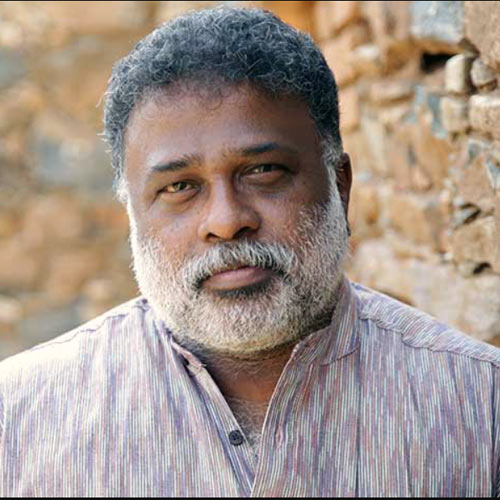
Jagdeesh Rao Puppala
Jagdeesh has spent over 35 years working at the intersection of poverty, environmental degradation, and systems thinking across ecology, society, and economy. He led the Foundation for Ecological Security (FES) as Chief Executive from its inception in 2001 until July 2020, and continues to shape the field through policy influence, knowledge exchange, and coalition-building for the Promise of Commons initiative. His contributions have been recognised through the Skoll Award for Social Entrepreneurship (2015), the Henry Arnhold (Mulago) Conservation Fellowship (2017), and the Senior Ashoka Fellowship (2022). His experience will strengthen PHIA’s work on natural resource governance, climate change adaptation, and community-led management of the commons.
He is currently the CEO of Living Landscapes and Convener of the Common Ground Initiative.

Irina Snissar Lobo
Irina Snissar Lobo is the founder of Udanta Consulting and an entrepreneurial leader with over 15 years of experience advancing systems change initiatives. A generative listener and systems thinker, she specializes in guiding philanthropic and impact organizations through transformations for greater impact, working at the intersection of strategy, knowledge curation, technology, narrative building and team creation. She is known for designing collaborative ecosystems that enable collective action, and her applied research on systems change and network effects has earned recognition from platforms including the Stanford Social Innovation Review. Previously, she served as Director of Design and Knowledge at ASPIRe — a global impact accelerator co-created by Ashoka and the Centre for Exponential Change — where she supported strategy transformation journeys for over 40 social impact organizations worldwide. In her current work, Irina partners with the Common Ground initiative to strengthen collaboration across diverse stakeholders for community-led natural resource governance.
“Systems thinking is very much natural at village level. It is us who have to get more familiar with it rather than thinking in compartments.”
Jagdeesh Rao Puppala
TRANSCRIPT
Note: This episode is produced for the ear and designed to be heard, not read. Readers are encouraged to listen to the show to get the full experience. The transcripts are meant as support documents and may not include inclusions from the day of recording and may contain errors. The audio version is the final version of the show. Ignore the timestamps mentioned. Ignore grammatical errors.
Introduction
HOST
Welcome to Grassroots Nation.
For over three decades Jagdeesh Rao has worked on the challenging issue of the commons. From his role as a co founder of the Foundation for Ecological Security to his close relationship and collaboration with Nobel Laureate Elinor Ostrom, he has been at the forefront of important work that has helped reimagine the commons and our responsibility for shared resources.
Throughout his career he has worked closely in partnership with people across disciplines and affiliations. In this episode he talks about his early life, spending time in rural India as a child, his love for nature and the hard lessons he learnt along his career about how challenging it is to protect nature and people.
In this two part conversationJagdeesh Rao is joined by his colleague Ira Snissar.
The conversation was recorded in Goa.
Ira
Hi Jagdeesh. Thank you so much for being here today in International Center Goa. It’s really a pleasure to be talking to you.
Jagdeesh
Thank you. It’s nice to be in Goa and to be with you. And thank you very much for agreeing to interview me for this.
Ira
So why don’t you start by telling us a little bit more about your growing up years. Where were you growing up? What was it like? What are some of the highlights of your childhood and youth?
Jagdeesh
I come from, what should I say those days, middle class family, second generation so called educated people. My parents and the entire generation, my parents, uncles were in that socialist Nehruvian era. Engineers basically civil engineers, electrical engineers and so on. So growing up was in a. A small town particularly created for building a huge dam. Nagajarjuna Sagar it’s about 150 km from Hyderabad and that’s where the entire childhood to even now that we spent some time there. My parents, my father was as I said, civil engineer. So a lot of dinner conversations were around the dam and what goes into the dam. And he was an encyclopedia on the dam. That was one side of the story. The second part was also my mother comes from a place which is about 100, 200 kilometers from Vizag. It’s a small town called Jeypur. And so every vacation was going to Jeypur. That’s in Korapur district of Orissa. And the drives were awesome. Dense forests, and this I’m talking about 70s too, thick, dense forest. Even during daytime you wouldn’t be able to see the sun. And that’s how the travel used to be. So that particular journey, even now whenever you get onto that road, I can’t even sleep a wink. It’s to see how the forests have changed. Well, practically there’s nothing left of it anymore these days in that particular road. So it was a mix of a kind of upbringing about a dam, about a huge reservoir right next to our house and occasionally or every year twice going to Jeypur and the forest there.
The discussions were also at home and during the youth were also about what is happening in the country. And I think we were recovering. I do remember Emergency days though, I was about 10 or 12 or so, and how everyone had to hush up and I was sent to Baroda because there was no English medium school in Nagajarjuna Sagar. And I stayed with my uncle there and did majority of the school schooling there. Those are also interesting times as a child to grow up in a north Indian environment with this skin. So I was to be called dambar goli. So basically because I was dark and I thought they were also not too fair. But most of them used to call me that and that used to hurt. Hurt even now that if I had to. If you ask me about my childhood, probably, probably the first thing that I would recollect is this dambar goli. I think it was very, very common in India and probably even now to look at the complexion of the person and make a solid statement about it. So that was one direct face to face, kind of an engagement with issues of hurt and victimization. And that stays with you all through your life.
And growing up was also, I think the highlights of it were a wonderful six month stay in a village. Though I don’t come from a city background, I was still in a town. So staying in a village was. Well, in many ways it opened my eyes. The early periods of that I was attached to a farmer, a lead farmer and he was a big reddy there and I had to spend time to understand the village as part of my agriculture undergraduate course. And that really opened up in many ways hurt again. Because once when I was walking with this big farmer and I saw a person about 100, 200 meters away on the street coming in our direction and I was following my farmer and that person as we were approaching, he removed his sandals, picked it up in his hands and he was facing the wall. Well, I couldn’t understand why he did that. So later in the evening there was a small tailor shop which we used to meet. I asked the tailor there, what’s this? And he said oh that’s. He must be one of those castes which were considered untouchables. And I’m talking about 84. So it was after say 30 – 35 years of independence and this was still on. And it’s not some remote area. This was about 150 km from Hyderabad, near Mahbubnagar.
So that again on that day I started seeing so much of this untouchability which, which was otherwise blind for me. In the same village I noticed the place where we used to have tea there was a separate tumbler meant for some people. And those people could not come into the tea stall. They would stand outside, they would get the tea in the tumbler. And I also noticed even at home I started thinking there were some people who only entered the house from the back door. They would never come from the front door. So this was again another thing which stayed with me and continues to stay with me.
And all this did not happen like some sudden epiphanic things. Reflecting back as I started seeing more and more of rural life I saw how divided it was, how unfair it was in many ways. And it’s not only rural life. In many of our so called city lives or modern lives too we see these inequalities quite strong. The same thing if I look at the kind of an impression that I had around those days the forest that I saw in Jeypur, tract of Orissa right in front of my eyes started getting thoroughly degraded. There were recent, I mean more recently there were efforts around bringing in coffee and eucalyptus but those were not the true forests. And I could see the changing tribal culture there too. Getting more and more modernized if I might say, but losing their centuries old wisdom. These were all happening say from 70s that I started observing till now and things have changed drastically.
Ira
So you mention some of these observations, experiences that you had and you mentioned that you were studying agriculture while actually most of your family was from an engineering background. And so once you have completed your agriculture degree, where has it all led you? And how did you end up at IRMA? And you know what were some of the years there?
Jagdeesh
This was 1984, towards the end of this undergraduate course in agriculture. I had some interactions with a couple of seniors of mine from same agriculture college. One of the meetings there was really, I think that was the beginning of thinking about rural areas as a profession that I got into. These are also interestingly, those days, when voluntary action, which was post independent independence, several people used to work for orphanages, set up orphanages, schools, education and so on. Whereas this mid-80s was the time when professional development started happening. Professional NGOs started mushrooming everywhere. And rural management as a course was set up by the National Dairy Development Board, basically to bring in professional qualified people into rural areas for helping village communities.
So this friend of mine, when I went to visit him, he was wearing his convocation dress and showing off to his mother. And then it was a very nice time because he was rich in his thinking about what happened in his two years. And he gave a few of us a very nice account of what he did in those two years and how it helped him grow in confidence, grow in empathy and so on. I thought that was a cool thing to do. And so I landed up in this Institute of rural management in 84, 86. And for me it was just another course. It was not as if I was devoted to any particular cause or anything. Rural areas seemed familiar, something that I was comfortable because of my undergraduate course in agriculture. But otherwise management as a discipline was totally new to me.
MUSIC
The entire two years was recollecting the six months that I spent in the village. And what happens in a village. The six months went into studying the village. So we knew who were the people who had land. And obviously there were only five families who had land, reasonably big land. And the rest of the people either didn’t have land or small parcels of land who had irrigation. Again, it was the five families and they were the well off who grew anything which was going to the market crops. And it was again these people. So you could understand village life and the dynamics, the political economy of a village life, which helped me frame my thoughts in rural management when I was doing the course there. Not that it was playing out very consciously, but all my mental models were based on those thinking of what happened in that village. And it continues to be. I visited that village some five years ago and it’s totally transformed. Totally, totally.
Of course, I was just passing by, I didn’t see the whole village and what is the economy there or what are the quality of life of people. But it’s totally changed with irrigation-
Ira
In a good way or ..
Jagdeesh
I would say as a general thing. Many good things happened in India over the last. They are not spoken, but yes, many good things happen. If you notice, many of the Chief Ministers are not from the high castes anymore. Otherwise it used to be dominated by only those higher castes. Maybe they still work behind the scenes. But you see that thrown up. You see many village people like my class in agriculture, they were all first generation education people, several of them. And so they were getting into banks as middle class employees. So things were happening even from the rural side in a positive way. There are many other things which are not so great, which are also happening in rural India. This particular one, I was pretty surprised by the radical change. What was dry, you know, bone like landscape was totally irritated. That surprised me. I think it’s a lot of government interventions in the last 10 years or so which brought about this transformation. Who gains? How much does one gain? Who owns the land? Does the woman have a voice in that village? I can’t answer. But typically if you have to go to some other place, I think there is a lot to be done around inequalities, particularly from the very marginalized and women in particular. So there is serious inequalities even persisting today.
Ira
So tell me a little bit more about what happened after that degree and that first 10 years of your work was the tree growers cooperatives. How did you get into it and what was the context of this whole initiative that was happening.
Jagdeesh
Mid-1980S… This was the first time when satellite imageries were being used for civil purposes. Otherwise, satellite imageries in India were largely for defense purposes. That threw open a big question for Indian public policy. There was some estimates that almost half the country, about 170 million hectares of land, could be called wastelands. The estimates ranged from 70 million to 170 different classifications. But suddenly people started thinking that the land was being wasted or was not under productive cover. So in 1985, when Rajiv Gandhi became the Prime Minister, in his first speech to the nation, he said that people’s movement would be initiated to revegitate wastelands. And several organizations mushroomed around this.
One statement of his of basically trying to improve the quality of land, water, forests and so on. That was the first job, the only job anyway, that I picked up upon. And I joined it for a couple of reasons. In the interview that one of the biggies in NDDB, National Day Development Board, when he was interviewing, he was asking, why is it that you want to join this small, you know, project and we don’t even know the future of this project. Why is it that. Why not join the NDDB per se? I told him that I wanted to have the same thrills that he had as part of a team in setting up Amul. It’s a different game altogether to start a new initiative and see it grow. And the second thing I told him was, I don’t want a big chair which can’t move. I need a small chair which can move a lot. And that’s how I got the job. I think he didn’t ask me any more questions. And so this was appealing to me. NDDB was National Development Board was into many, many things. Milk, oil, seeds, vegetables and all. This was the closest that they came to nature of forest, water. And it was also new. For NDDB It was important that they work on it because animals, milk, animals need fodder, water. And they had to address that issue for the government of India started this project called Tree Growers Project. It was also important for them that they attached to NDDB because of NDDB’s strong experience in milk cooperatives with village people. And if you had to revisit this land, as Rajiv Gandhi said, it has to be a people’s movement. So we started forming tree growers cooperatives in five states as pilots.
MUSIC
Interesting experiences. As we started doing the first meeting that I remember going with a couple of senior persons who had gone from Amul in a village. People threw stones at us and we had to run. We had to run in and get into the ambassador car, the windshield got broken. But then we started understanding land is a highly contentious issue, contested issue.. Village land which had to be revegitated, was being used to prove illicit liquor. So the minute we said that we would like to go and revegitate that, and the village people were sitting there. These people found that their interests would be threatened if we step into that land. So people threw stones.
I also remember, I was not directly there, but I remember the first day of this initiation of the Tree Grows Cooperatives Initiative. A couple of ministers flew down from Delhi. Dr. Kurian, Namrita Patel, Tribuwan Daswai. All of them were there in the village and the ceremonial planting of saplings. And we came back to the office. My colleague said that there was a person sitting in the corner of the room in the office, very silent and we didn’t really know what it was for. So when questioned, that guy said he came from the magistrate’s office and he was slapping a notice at us that we were trespassing on public land. So that was our 101 on who owns the land. That’s a big issue. So there was people who thought it was village people who thought that it was their land, whereas the government thought it was government land. And to initiate this process you had to go through a whole saga with five state governments trying to tell them that these lands are better managed by village people rather than the government sitting in the district capitals and all. You can’t really govern or manage these lands. Further, government people, it was a nice thing to do. And they were wanting the village people to grow trees and be happy. But they wanted to slap a lease fee on this. Firstly, getting the land from the government and passing on to the villages was an important job, Herculean task. But we started managing. But the governments were insisting that, you know, we should pay a lease fee on a land which had nothing and where village people were wanting to do something productive about it. The government was coming up with this, I would say disincentive of slapping a lease fee.
Again, it went into several circles. New Delhi had to step in to say that why don’t you give it free, zero lease fee. If you had to put a zero rupee value on it, it would have required a change in several laws in each state. So instead the government, state governments agreed a nominal lease fee of one rupee per acre. So these are the kind of contestations that happen between a village and the government at different, different levels in different, different states. And then it went into the actual village life. I hope you don’t mind me saying a story, right?
Ira
Please go ahead.
Jagdeesh
I was working in villages near Madanpalli in South Andhra Pradesh, Chittur district then at least. And these were a couple of tribal villages right adjacent to a forest. And they had huge tracts of so called wastelands, revenue wastelands. The government by then had already agreed to lease the land to them. So here I was, a management graduate. I now call it damagement. But anyway, I went there with the village with those bright ideas that this was a small hamlet of 18 households and totally illiterate tribal people. And I thought with this hundred acres of land or something that they got you can really fix the economic problems around that. There were already some saplings, there were already some, well, badly lobbed trees. And as the trees were starting to green, the forest there was beginning to evolve. I suggested to the village headman that there are this Butea Monosperma, that is. Flame of Forest trees from which you make leaf plates. There were leaf plates being made.
So if the village people can harvest those leaves and make leaf plates out of it, at least two households will get year round employment. And then anyway, we are going to the villages, we can bring those leaf plates to the nearby town and thereby a couple of houses out of the 18 houses would have had stable income more or less in the year. And then we could go into tamarind, we can go into other kinds of things which are anywhere there in the villages. So the headman, listened to me very patiently and he said, yes, yes, yes, yes, we will do this. And after a couple of months, when I went back to the village, he told us that he decided to sell it off for a paltry 200 rupees or something that was worth in my calculation somewhere around 2000 or 3000 rupees then. He sold it off to the people. One strange guy. And I was so annoyed I said that. But we had a plan. He said, yeah, yeah, yeah. So I had to probe him why he took the decision. And then he told these people have been customarily coming from some decades to that land and had been picking up those leaves. Now suddenly these people have got leaves from the land, from the government, but those people don’t know about it. If you have to assert your rights, then firstly what his game plan was this year, 200 rupees. Next year when they come, 400 rupees. The third year 800 rupees. And the fourth year he would go and tell them to jump.
Ira
The fee was for what? For collecting the leaves?
Jagdeesh
Yeah, to collect the leaves. So he was in a way asserting that they own the trees and it’s not belonging to the persons who would otherwise come and pick it up. So he taught me how the political navigation of how to assert your ownership on your land. That was never taught in a management school. Yeah, he connected my economics into what was in his understanding a social, political kind of situation. He opened my eyes into systems thinking. Yeah. And like you have to connect the dots between seemingly, at least in the academic way we look at it, they’re all not connected. But his way of thinking was all about connecting social, political, ecological, economic issues. That was like totally new to me. And I realized, and I think, thank my stars, the humility to understand his wisdom. At least I had that, that village people might be illiterate, but they are not dumb. That wisdom no classroom would teach you. And then I started looking at village people in a very, very different way. That they are highly capable of managing their affairs. What they need some assistance is how to interact with the governments, how to probably raise public investments and so on. But otherwise the wisdom to self govern was very strong.
MUSIC
That was a big, big, big thinking.
And so as I moved on, there was a friend of mine who used to visit as part of this project from Canada. So he was asking me what’s going on? What are you thinking about these days? I said that when I go to a village, typically people are all talking about the same issue, but they come to it from a very different point of entry. They are talking about say water, but someone comes about it from a fodder perspective. Someone comes about it from a quality perspective. Someone comes about it from sufficiency perspective. But then all the same, they are all talking about the same problem with. But the point of entry into that situation was very clearly from different, different angles which they perceive is most important. So he said oh, you’re talking about systems thinking. And then he introduced me to Donella Meadow’s school, School of Systems Thinking and sent me a couple of books. One of them is Fifth Discipline by Peter Senge. And that opened my eyes about of course this is how life is, the interconnections between all of them. And that really, really helped me mushroom.
So as much as the entire organization, we took them through systems thinking, systems dynamics as a necessary exercise to be done at village level. For 10 years we interacted with the University of Washington at St. Louis into having winter schools where students graduate, students from there come and interact with TISS and IIT Bombay and equal number of staff from our side to probe villages mind their cause and effect relationships. So systems thinking is very much natural at village level. It is us who have to get more familiar with it rather than thinking in compartments. That was one of the central things that happened in the early 10 years.
Now going into 10 years are also very, very looking back. They look like wonderful, rich experience. But at that point in time we were doing big blunders, big, big blunders.
Ira
Why do you say that?
Jagdeesh
You know, cooperatives are a wonderful social concept. They were very successful in milk, and I’m sure in many parts of the world in different, different. But they were all around private resources, like, I have a cow and I sell the milk. So you become. You’re managing your cow. But to understand cooperatives in a village common situation where the land belongs to everybody, cooperatives can be pretty dangerous. Cooperatives are all said and done, private entities. So the five of us can form a cooperative. Well, I think seven of us are required. Seven of us can sit together and form a cooperative. And by design, excluding, under, exclude under 10 people. So in the way that you enter into a village and you start setting up a cooperative, usually the ones who are savvy and who know how to interact with the outsiders, they come in and they start forming the cooperative and they. Whatever the local political happenings are, they could. And in many places they did exclude the very people that we were working for, tree growers. Cooperatives were essentially to meet the basic needs of the rural poor. By basic needs, I mean firewood, fodder, medicines which are available on that land. That was the whole design. But by taking the structure of a cooperative, we were somewhere privatizing this land to the not so poor people and by design excluding the very poor people. That was a very unfortunate thing, but we realized it.
Ira
So it was somewhat an unintended consequence of the work. And I think you also mentioned that these were the early years for India as a whole. Even taking cognizance of these wastelands and then understanding them as commons, and like you said, even thinking about what are the legal structures that actually need to govern these lands, which didn’t exactly exist. And you were in the forefront with some other organizations at the time figuring it out what will work. And I guess from the cooperative movement, the first natural fit was to use this model for governance of these lands.
Jagdeesh
Absolutely. We mistook cooperation for cooperatives. What we were intended to do was bring cooperation in the villages. But we took a structure like cooperative and thereby dismantled whatever was there as cooperative cooperation in the village. The second unintended thing which happened, and equally important is cooperatives, all said and done, are financial bodies, at least in Indian context. The very cooperative act was farmed for sugar cane and milk with that in the background. And these were merchandiseable activities. So we were taking this cooperative structure into the village. And where they did not have any idea or intention of selling anything from that land, they were wanting to use it for subsistence. But we are putting that thought into their head that you can grow trees and sell them. The minute you start talking that language again in the village, the people who are slightly better off, they start coming for that because anyway they can meet their firewood and all from their other resources. And there again, by bringing in this kind of a thought, you are by the very design, excluding the village people.
The way it started working out was the village people used to come up with some very nice, seemingly nice thoughts, like we will auction all the firewood in the village. Which woman can buy firewood for the whole year in an auction? The second thing that they came out and which seemed to be good, because those days, forests and forest management used to say, grazing is bad. Okay? So immediately their thought process, cows are not bad. So if we will allow the cows, but we won’t allow the sheep and goat. Now, unfortunately, the poor people have sheep and goat only. And there, by the design, the simple mechanics of how you introduce structures and the motivation of a structure can actually by design, disenfranchise these local people. That was another solid lesson we learned from these cooperatives and how they are.
This was also a time when the 73rd Amendment happened. So panchayats, who were in 93, 92 and so on, Panchayats, the hope was that they would be the bedrock of this Indian democracy. That was the whole intent of how do micro democracies happen for the macro democracy to function. So that was the intent of Panchayats. And this was also a time with considerable push, probably when forest management started recognizing the value of working along with village people. Otherwise forests were. And villages were on two sides of the spectrum, people and nature. For working on forests, you need to exclude people. That was the village people. That was the mainstream thinking.
But this was the time when first it initially, I think they call it social forestry, and then it moved into joint forest management, where they started recognizing that there is another partner involved in this. In the initial and probably even now, they are still used. Village people are used for managing the forest. Not as co owners, though the name says joint. So that moved on. Maybe we’ll come to that.
Maybe in 2006 we had the Forest Rights act, where the ownership moved on. So somewhere in this mid-90s, there was not only cooperatives, there were Panchayas, there were joint forest management arrangements. And all of them needed to be helped. But we were by design only cooperators. So it required a solid rethink of what, as an organization, we should be doing. We worked in between 96 and 97 in carefully articulated workshops. The whole organization met into what is working, what’s not working? And the senior people, the steering committees of the project, those people, they had the foresight and I think the pragmatism to see, instead of just whipping the cooperatives to death, they said, though it’s not working, it’s not the intent. So we should look at other ways of designing this, revegetating wastelands, rather than just sticking to cooperatives.
Ira
So that’s a tremendous example also of certain mental responsibility to stick to truth and to say, despite all that effort, 10 years of work, millions of dollars invested, to be able to acknowledge that maybe this is not really doing what it’s meant to do and then take the responsibility to redesign and to rethink what is possible. And you mentioned in earlier conversations this wording of shattered vision. And you know, so what came out of these exercises and how did the, the foundation for ecological security emerge from this transition?
Jagdeesh
Yeah, by the way, it was called shared vision. So we used to make fun of it and call it shattered vision or sad vision and those kind of things. But the exercise was a good recognition for any pilot in the world. When you start off on pilots, most of the times, at least in NGOs, no pilot fails. So here was an example where people went through the thinking in the teams we were working by then in some six states or five states. So all the teams, the teams usually compose people who either joined the initiative for nature or for poverty. And how do you bring these two together? And all these happenings of the real poor being left out were manifested in different, different ways in different parts of the country. So much so these mechanics led to in a couple of places, murders. In one place, at least a murder where because you’re working on land and with village people, you are touching on all the important things that concern village life. You know, in economics, you call land labor, capital, organization. All the four are affected when you go to the village and start working with them on, with an external kind of assistance. So those kind of contestations actually started coming out more and more. And these two years went into going and actually speaking to villagers about what is the vision that they had about this life instead of just planting these trees that we were doing for about 10 years. And surprisingly these were external people facilitating. It’s not the team. Surprisingly, this was 95 – 97 period. Most of the village people had a very gram swaraj, Gandhian view. And that was 97, 50 years or so after 50, 50 years after independence, very strongly that these lands were being seen as a whole.
And the main large connect almost in all geographies was about water.
That’s how they saw. So these lands, when forested, would bring about water. And they also talked about a range of other uses, including hunting, including aesthetic value. But whereas we were just looking at trees in that and trees, the too which will go to the market. So that was an important fundamental tenet which had to be changed. So instead of trees, you had to go for the whole ecosystem approach and connecting forests, water, agriculture, livestock systems kind of thing. Thinking that was one very important one. The second, of course, as I mentioned, was this cooperatives or cooperation. And so you had to embrace a form, several forms of institutions which the current laws allow. Forests are now they are under the Forest Rights Act. Then it was under joint forest management Panchayats which were otherwise being eroded or neglected. There was a solid filip, so how do you work with them? A range of institutions instead of just one cooperative.
And importantly, as we started seeing the whole design of these three gross cooperatives was to address India’s wastelands, the more and more decision making that we were doing with village people in consultation with village people because of the cooperative thinking, they were always member oriented and self oriented. So they were not looking at helping other villages. So the design of the cooperative had the structure. That project which we had to required an umbrella institution which would look beyond projects at the whole Indian context and start off initiatives that address wastelands or village commons. That was the big larger thinking that that happened, which led to FES being set up both from the institution side as well as from the nature side.
HOST
Jagdeesh Rao is one of the founders of the Foundation for Ecological Security and served as its chief executive for almost 20 years. The organization is best known for it’s nuanced and deeply grounded approach to managing the commons and shared resources. Its views have helped to reimagine how people must work together to protect nature.
Ira
So you spoke about this transition to foundation for ecological security and several important pillars or tenets that became more clear not just to you, but a team, because it was already a quite a large organization right, around this idea that these lands, it wasn’t just the lands, it was also very connected to people who were living on these lands. And people were not just there to grow the trees, but they were actually intrinsically connected to those lands in multitude of different ways. Not only their livelihoods, but also their cultural context and so many other different aspects of the lives of these communities. And so that became that tandem of people and nature outcomes that actually needed to be maintained in whatever design or the interventions that were being created. So tell us a little bit more because FES was a long journey. It still continues as an organization, but you spend over 25 years in the leadership of the organization. First of all, how did you become the CEO? Because you were not necessarily the founder or you were not the only founder. And then what were some of the big highlights in that journey of FES over the years?
Jagdeesh
The 10 year reflection, the shared vision exercise that we did centrally had brought out the value of nature and how village people saw nature. That was one important. The second important element that was about the how seemingly, you know, well intentioned initiatives can cause irreparable damage at the local levels through the structure, structures and mechanics that one introduced the orientation that you take to the village people. So that’s a big story, which is even valid today because many people do not look at the way these institutions or structures or orientation actually causes more damage. That is the biggest contribution. Alongside that journey, there were also a couple of conceptual enrichment that happened in the. In the organization. As I said, systems thinking, looking at interconnections, not just forests or forests, forests with agriculture, forests with livestock, social with political, social with economic. All these interconnections were happening. That was the one. The second important thing was we were always associated with people who were as a society, they were calling themselves International association for the Study of Commons. And they were basically scholars, scholars who came from practitioners, strong practitioner background. This body of thinking of using commons was, though we were just using it as a generic language, common land. But to understand it conceptually and the theoretical construct of it, we progress along with this international association. Some of the notable figures are Elinor Ostrom, who won a Nobel Prize for her work on Commons in 2009 for economics, much later, but we were associated with her from 1992. Many of our colleagues, including me, used to participate in this scholar practitioner conferences across.
I think that thinking of how theory informs practice is also very important for an organization, a learning organization. It is not just doing, doing, doing, reflecting on the conceptual moorings of what you are doing. The 90s and 80s were also very important narrative shaping decades. This was, as you all know, that, you know, there was a strong centuries old belief of nature against people or people against nature. Anthropocentrism or ecocentricism. That was the kind of thinking that was going on. But being positioned in the tree grower’s cooperatives by design. We had to work with the nature and people. And in a country like India, which is, you know, all the landscapes are human dominated, most of them, you have to see the conjunction between nature and people. And that body of thinking was very nascent, if at all in international and in Indian circles. So probably the way we were designed actually helped contribute to this thinking. And much later now we see socio-ecological thinking as a natural discipline. Many of the conservationists who are hardcore conservationists now talk about socio-ecological thinking, that whole body of thinking around socio-ecological. Of course, Madhav Gadgil and Ramchandra Guha’s seminal work started off this and there are many, many budding conservationists who actually work around this connect between nature and people, entire socio ecological thinking. So in a way the tree growers cooperatives is located in the transformation. How much it contributed we can’t say. But what we have learned in this thinking is phenomenal for a country like India. And coming to the question of how this transformed into fes, FES became a kind of an organization which we start off with the premise of working with the commons and the larger landscape, but always with a compelling curiosity of what’s working and what’s not working. That learning kind of a mindset in the organization and amplifying what’s working but correcting what’s not working. Very few organizations have that kind of a culture of openly looking at deep issues. And if it’s not working, challenging ourselves.
How can we make it work? Many of the lands, if you see 2000s, also saw very nice things happening in the country. You had your Forest Rights act coming in, right to information coming in, Rural Employment Guarantee act coming in. These are also probably a response to the farmer suicides that were happening then. But these were very nice progressive thoughts that were happening. So FES suddenly landed up in 2001 in this midst of these very nice happenings. And how do you accelerate them? One of the things which probably we learned very early on was how technology could be useful. Because when you’re working on issues like forest, land and water, you need a bird’s eye view. And satellite imageries actually give you that much better than a bird’s eye view.
And we started developing an in house capacity for remote sensing and gis basically to help guide decisions on land use and help village people challenge those whatever the satellites are showing and also adapt to those changes. Interestingly, say in a place like Sadhukonda, which is In Madanpali area, 32 villages were situated all around it. And all these people were thinking that their forests become because of their protection measures, they were thinking that their forest was improving. Then a couple of colleagues worked with the Indian Institute of Science, some scientists there, and we deciphered the satellite imageries to say yes, that the forest is growing, but it’s not going at the desired growth rate. So there was quite a lot of felling also happening and which the village people then started recognizing. So we did a deep study, 360 days study on how much of firewood is being consumed at the local level and where is it in the forest, where is it that these patches are, where degradation has happened and how it can be. That brought out very nice social institutional arrangements. The villages came up with their own village check post to not allow firewood to go out. We realized from the study that the local consumption of firewood was not the main culprit. This was also a time in Andhra Pradesh where mandals were being formed. There was devolution from a block to a lower level called mandal and this was spread out everywhere. So small towns were emerging and for them restaurants were coming up. Many such things were happening. So all the firewood was being guzzled for these restaurants which were in the small towns. And so then we had to work with the small towns and the restaurants to improve. Then we worked on biogas or improved stoves for the restaurants. So you connect these dots. So the social institutional arrangements in isolation are good. But you have to have a macro view of where the drivers are actually causing this change to see an overall development. That’s the kind of a transformation that happened over years.
The other important thing from the Right to Employment Guarantee act, which is both the acts, the Forest Rights Acts and the Right to Employment, where God sent for the body of work that we do and the Forest Rights act declared about the ownership of the land for the tribal. The second one, employment, was the much needed public finance to restore these degraded lands. But the skills necessary for aligning with the Right to Employment act were missing. Village people know how to manage their lands, but their measurements, the quality of checks, all that were new to them. Now you had to. Then we set up a couple of rural colleges like workshops of village people where one village trains the other village on how to improve the measurement, how to get better money for the same work, how can women also claim the same wage rate. This was a kind of a political education which happened at the grassroots level. And as this was progressing, the government came up with this biodiverse biofuels policy that was a big threat for us.
HOST
Thank you for listening. Reach out to us at www dot rohininilekaniphilanthropies dot org or join the conversation on social media at rnp_foundation. Subscribe to never miss an episode.