Framing Solution-Centric Narratives Around Disaster
Key Questions
- How do we shift disaster narratives from reactive reporting after an event to conversations about preparedness, resilience, and prevention?
- What stories remain invisible when disasters are framed primarily through physical damage, death tolls, and emergency response?
- How can communities be recognised as first responders and knowledge holders, rather than only as victims requiring aid? How do development choices, governance failures, and social inequalities shape disasters and how can narratives make these drivers more visible?
Climate disasters are becoming an everyday reality across India, yet public discourse continues to treat them as isolated emergencies rather than recurring systemic challenges. To explore how narratives influence public understanding, policy, funding, and action, Rohini Nilekani Philanthropies, together with Asar Social Impact Advisors, Momentum Shifts, and Youth Ki Awaaz, convened a day-long workshop in Bengaluru on 4 June 2026 with more than 30 journalists, researchers, communicators, civil society organisations, and community practitioners.
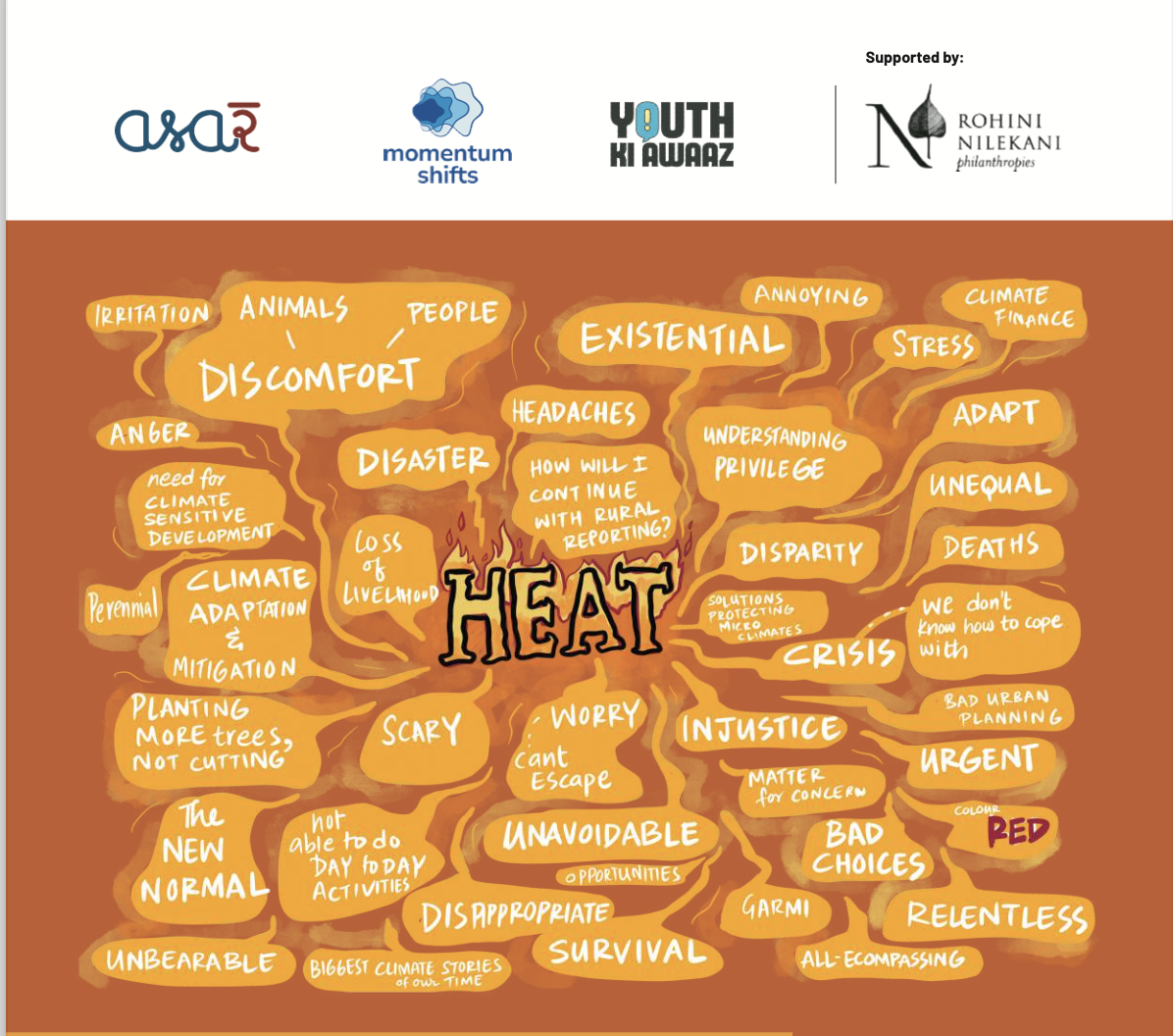
Participants examined dominant disaster narratives across five disaster types- heat, cyclones, rural flooding, urban flooding, and landslides- before collectively identifying narrative shifts that could move the conversation from response to resilience. The report synthesises these discussions into practical narrative frames and stakeholder actions for media, philanthropy, researchers, civil society, and government.
Key Takeaways
- Disasters must be reframed from one-time events to recurring systems failures. Rather than treating disasters as isolated emergencies, participants argued for narratives that foreground preparedness, prevention, adaptation, and long-term resilience alongside response.
- Communities should be recognised as first responders, not merely victims. Disaster narratives need to centre community agency, local knowledge, and leadership, shifting the focus from charity and relief to participation, dignity, and shared accountability.
- Recovery extends far beyond physical and economic losses. The convening highlighted the need to make visible the long-term human impacts of disasters—including trauma, mental health, displacement, disrupted education, loss of livelihoods, erosion of social networks, and cultural loss—that are often overlooked once media attention fades.
- Disasters are shaped as much by development choices as by natural hazards. Participants called for moving the narrative from inevitability to accountability by examining how land-use decisions, infrastructure, environmental degradation, and governance failures create or worsen disaster risk, creating greater space for prevention and more resilient development.
You may also want to read