
Philanthropist Rohini Nilekani, who donated Rs 47 crore of her personal wealth, feels the rich in India need to open their purses more. Noted philanthropist and chairperson of Arghyam Foundation Rohini Nilekani feels the philanthropy sector changed during the coronavirus pandemic as members of civil society donated generously. However, she is of the opinion that the wealthy need to open their purses even more. Nilekani led the EdelGive Hurun India Philanthropy List for 2020 among women with a Rs 47-crore donation. Her husband, Infosys co-founder Nandan Nilekani, is at number 7 with RS 159 crore given to charity. The couple has also signed the Giving Pledge. The 61-year-old had told Forbes India that more wealthy people in India must come forward and say that a portion of their wealth belongs to society. Her foundation looks at water and sanitation issues, while her philanthropic efforts earned her a spot among Forbes Asia’s annual list of Asia’s Heroes of Philanthropy in 2010.
Type: Article
Taking Risks in the Face of a Pandemic
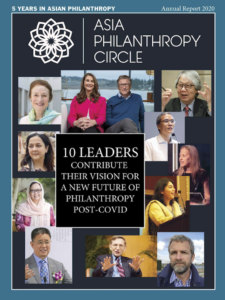 2020 has been a sobering year for the philanthropy sector, not just in India, but globally. We have witnessed rising inequality even in these past 6 months, with a few of the rich getting even richer while hundreds of millions of people fell behind in the ensuing economic slowdown. There are some who had just risen above the poverty trap, only to fall back in. This is only one of the many ethical issues that have surfaced during the pandemic.
It calls for a humble reflection by philanthropists on the role and responsibility of wealth in society.
Philanthropists and philanthropic institutions were very quick to respond to the humanitarian crisis created by the pandemic. Through their institutions, government channels, and social sector organisations, philanthropists have pumped out hundreds of millions of dollars in the past few months.
My husband Nandan and I, of course, also did what we could. We agreed to double our budgets this year. Our focus was first on immediate humanitarian assistance, locally and across the country. It was next on bolstering all our partners and grantees to stay afloat to continue their critical work. Alongside, we helped create mental health training sessions for the social and healthcare sectors, because first responders can become very fragile themselves.
Our teams also began to quickly look at how we could further what we call Societal Platform Thinking (www. societalplatform.org) to respond at scale with speed. Societal Platform Thinking is wrap-around thinking around an ecosystem of platforms designed to address complex societal problems. It aims to reduce the friction to collaborate between society, the state and markets.
As part of this on-going effort, our EkStep Foundation worked with the Union Government of India to make its national digital education platform Diksha respond more effectively during this time. Even as over 300 million children in India faced a loss of learning because of the school and college shutdown, Diksha saw a massive spike in participation from teachers, children and parents. In the past few months, over 175 million learning sessions have taken place on this government platform.
Nandan’s teams are also collaborating with a host of experts from all sectors to think through several strategic issues. Coming out of their experience designing India’s unique identity system, Aadhaar, one preoccupation is how the Covid vaccine, when it comes, can be effectively and equitably administered to 1.3 billion people in India.
We believe a triple approach may work well for philanthropy in the post –Covid world. First, make provisions for a rapid response to crises. This involves nurturing trust between various institutions of civil society and government before any calamity strikes. Second, give institutional, unconditional support to the partners who can deploy rapid responses so that they can continue to develop the leadership necessary in a crisis.
Third, support the creation of better intellectual infrastructure. Invest in think tanks and academic institutions that are designing for long-term cooperation across sectors, using a robust system analytic. This may help converge on the framework of resilience needed globally.
After all, the pandemic has taught us several lessons, but perhaps the most valuable is that we need to focus sharply on communities and society. We don’t know when this pandemic will end; we know this will not be the last pandemic. We know that climate change, for example, will continue to create devastating disruptions in people’s everyday lives. So abnormal is the new normal. Volatility is the only constant. And the only way to face this new world is by building the societal muscle to adapt, to be flexible and to develop resilience. Linear responses will not work; top- down mandates will face resistance. Local efforts will remain local even when successful.
The need of the hour is for philanthropy to support a new imagination. A new imagination where communities can be the heroes of their own story. A new imagination that engages emerging technologies of this digital age to connect ideas, people and solutions in real-time.
We are not referring to market platforms that reduce users to consumers. We are not talking about governmental platforms that require obedient subjects to comply. Sure, state and market platforms play an important role. But if we want the world to recover and to remain resilient in the future, we must bring in societal entities to the front. Can we embrace a core value – to restore people’s agency and choice? Can we, as philanthropists, unleash innovation and creativity? Can we help people to become part of the solution and not remain part of the problem? We can. We can do this by supporting local, contextual problem solving, allowing for a diversity of responses, at scale and with speed.
It is a tough time for philanthropy and the social sector. Many organisations have had to cut back their budgets because of the cascading economic impact of the pandemic.
But those of us who can should become more ambitious. We must double down on our philanthropy. We must get ever more compassionate, ever more trusting, ever smarter, and ever more strategic.
We are in a privileged position to help co-create a better future, post the Covid-19 pandemic. Let’s use that opportunity – with kindness and most importantly, with humility.
Rohini Nilekani’s latest book is what you need to help your kids learn everything about the Moon
What’s the science behind the Moon and the changes in its shape and size? Rohini Nilekani speaks about her new book, The Hungry Little Sky Monster, that answers this question.
Like every mother or grandmother, Author and Founder-Chairperson of Arghyam Foundation Rohini Nilekani told stories of the Moon to her grandson when he was three years old. And this is what turned into her latest book The Hungry Little Sky Monster, which has been published by Juggernaut Books and released this Children’s Day. Rohini, who is also the Co-founder of Pratham Books, says, “The book is meant for kids aged between 2 to 5 years and it revolves around this little monster who eats up the Moon little by little. That’s how it becomes smaller and turns into a half Moon and finally, disappears for a few days. But the story is about how we get the Moon back. The book explains the changes that this celestial body goes through phase by phase in the form of a story through beautiful illustrations by Megha Punater.” She adds that parents can use the table given to draw the shape of the Moon and lead children to understand the science behind it all.
 Rohini Nilekani handing over books to kids at one of the literature festivals
Unlike many of us, this author, whose life’s wish is to see every child with a book, has found this year to be a rather productive one. She says, “This is the second book I’ve published this year. Early this year, I wrote a book in the Sringeri Srinivas series where the protagonist adopts a resolution during the COVID pandemic. This one was also written in a short span of time and I did it as soon as the lockdown was announced. This too is meant for 2 to 5-year-olds. I think for any writer, the lockdown period has been the most fertile time for us to think about life and the issues we are surrounded by.”
Rohini, who has been always been a great storyteller, has been writing books for over 15 years but the first book she published was with Pratham books. She has written over 13 books for the NGO and The Hungry Little Sky Monster is her first commercial children’s book. Aside from writing and being part of several webinars, Rohini and her husband Nandan Nilekani have been working extensively for EkStep Foundation that they co-founded with Shankar Maruwada in 2015. “Technology is a tool to empower people as it distributes the ability to solve problems and EkStep Foundation is one the best examples of this. Here, we provide learning resources in literacy and numeracy for students. And anybody can be part of this community to create and access thousands of pieces of learning content,” says Rohini who hopes that kids will love to read her latest book.
Stewards, not Bystanders: Civil Society Creates New Opportunity to Co-Design Cities
Citizens now have more opportunities to take active part in building urban resilience
This year, I have been from Bengaluru to Kabini and back several times. Every time I return from the forest and the rural countryside, my eyes and senses hit refresh, and I see my home city with a new perspective.
The overwhelming impression is of a metro undergoing a painful renewal. Masses of threatening concrete overhead, piles of rubble underneath. And through this grey canvas, dots of colour as hapless citizens weave through the traffic, without proper visibility or signposts, navigating past trucks and haulers, moody traffic signals and perplexing roundabouts.
It feels as if Bengaluru, like so many other cities in India, is testing its residents. The unfinished infrastructure is a poster promise of a better future. The city demands patience, demands faith, demands hope. The residents experience resignation, weariness, and a lasting numbness.
When I finally get home, I enter an urban version of the forest I left behind – my neighbourhood has a dense canopy of trees. Yet Bengaluru is not homogenous, and my sylvan surroundings are an anomaly now in the erstwhile garden city. It has a criss-cross of diverse identities and designs. It has layers and layers of privilege on top and tiers of disenfranchisement below. Yet, the dysfunctionality of the city creates a perverse equaliser. It brings an end to the secession of the elite. Our bubble breaks with the chaos of the traffic, the pervasive pollution and limitations on personal spaces.
But there are now new opportunities to engage with the city’s future.
All over India, there are efforts inviting citizens to re-imagine belonging. To make the city their own. The discourse has firmly shifted from whether the city should grow to how it should grow and change, and who should participate in the change-making.
Today’s technologies enable mass participation in civic design. In metropolitan areas and beyond, digital age civil society organisations (CSOs), often helmed by creative young leaders, use tech-enabled design to challenge the supremacy of the State in urban futures. Thriving Residents’ Welfare Associations (RWAs) and dynamic CSOs seem determined to take back their city.
For example, during the lockdown, Yugantar filed a Right to Information (RTI) petition to find the total number of slums and their population in the Greater Hyderabad Municipal Corporation. This data was then shared with local NGOs to better target relief work. Haiyya, through a local campaign called Health over Stigma, helped hold service providers accountable for providing safe, non-judgmental sexual and reproductive health services, especially for unmarried women. Reap Benefit in Bengaluru has developed an open civic platform that comprises a WhatsApp chatbot, a web app and a civic forum. The chatbot guides users with simplified steps through a variety of civic challenges that are engaging and fun. If you see a pothole on the road, you can send photos, but go beyond reporting to next steps. A friendly technology helps convert agitation into action and turn bystanders into stewards.
Civis understands that technical environmental legislation can sometimes bypass civil society, even though we are all heavily impacted by environmental degradation. In March 2020, a draft notification with radical new rules was put up by the environment ministry for public consultation. Civis put up a simplified version and more people were able to directly participate in the consultation.
We must encourage these and many other samaaj-based efforts. More importantly, we must each find our own way to participate in these ventures. Democracy cannot be a spectator sport. Good governance must be co-created, not just consumed. No matter who you are, you are first a citizen. Even if you head a government department or a successful business — you remain a citizen first, a part of your community. And I believe it is only the samaaj and institutions of the samaaj that can hold the State accountable to the larger public interest of making our cities more livable for all.
Luckily, today’s new technologies allow us to participate more effectively with relative ease. I am not talking about simple clicktivism, but how a tech-enabled, societal ecosystem can distribute the ability to solve; can democratise civic engagement; and can help people co-create their city’s future.
However, there is an important caution here. We need civil society itself to get more digital in the digital age. Especially because only an engaged digital samaaj can keep tech corporations more accountable and prevent them from unleashing tools that distort the political and democratic process or reduce individual and collective agency. Urban movements are critical for this cause.
The pandemic has forced us to speed up our thinking on what cities should look like in the future. Citizens now have more opportunities to take active part in building urban resilience. Young leaders are creating more options for empowered citizens to co-create more humane environments. When we return to the city from the forest, we should feel a buzz, not a burn.
Gift a Reading Life to a Child this Festive Season
What is a good time to introduce a child to books? Different parents may have different answers. I found the right age to be six months. For both my children, I had cloth, plastic or board books about animals or very simple stories with repetitive words. I would show them the books, and slowly read them out. At that stage they were mostly interested in consuming the books rather literally, trying to taste them with their mouths. By eight months though, they would be eager for the books, actually picking up the ones they liked. By three years, my daughter was reading simple books to my infant son, who would gurgle happily as though he understood it all. It was their first bonding experience.
We had the same experience with my grandson. By six months, he was being read to at sleep time, a pile of books kept ready next to the bed. His favourites were the four board books published by Tulika Books, including Dosa Amma Dosa. He wouldn’t wait even for a few seconds between books and would begin a mock cry as the last page of a book was read, as if to say, “Hurry up, I want the next one.”
These are common experiences in many households around the world. Yet far too many families simply do not have access to good books for their children.
There are many reasons for this. Parents may not be readers themselves, for example. This would influence whether or not their children have books. Yet many parents who are not avid readers still want their children to read. They understand the importance of having good stories that unleash a child’s imagination, improve her vocabulary and of course, also keep her out of one’s hair for a bit!
Yet books can be expensive, or impossible to find, or simply not be in the right language. Or they can be alienating, with stories and characters that are too unfamiliar, or culturally unapproachable.
Luckily, the past two decades have been extremely good for children’s publishing in India. While the National Book Trust and the Children’s Book Trust have been publishing good, affordable books for decades, many publishers have recently come into play, offering attractive books in several languages for India’s 300 million children.
Pratham Books has been part of this journey. I co-founded Pratham Books in 2004 with the mission “A Book in Every Child’s Hand”. It was a non-profit born from the Pratham network which had helped thousands of children to become fluent readers. But there simply were not enough books in enough languages that were accessible and affordable, for them to practise their new skill. So we decided to become publishers ourselves. We saw it as a societal mission, involving samaaj, bazaar and sarkaar, to influence the world of children’s publishing, and to democratise the joy of reading.
Fortunately, we succeeded in quickly becoming India’s largest children’s publisher, innovating a new model to publish books simultaneously in up to 12 languages. We inched closer to our goals in 2008, when we put up our books online, under an open source creative commons licence. Suddenly, lots of books in many languages became available to parents, children and teachers, completely free. Today, the leadership team has taken this idea even further via our open source digital repository, StoryWeaver, with incredibly diverse books in dozens of languages, all free for children anytime, anywhere in the world.
What a marvellous opportunity this is for parents and teachers to introduce children to all kinds of books, without worrying about cost. Thanks to many new publishers as well as non-profits such as Room to Read and the International Children’s Digital Library, Indian parents now have many reading experiences to choose from. They are empowered to give their children perhaps the best gift of all—a reading life.
There is much evidence to bulwark this statement. Research has linked all manner of benefits in life to reading.
A 2018 Ohio State University study looked at the relationship between children’s vocabulary and reading in children younger than five years. The study found that children who are never read to, hear about 5,000 words, whereas those whose parents read them one book a day hear about 300,000 words before entering kindergarten.
Similarly, research has shown that parent-child book reading (PCBR) is effective at improving young children’s language, literacy, brain and cognitive development. Reading to children during early childhood is also a strong predictor of children’s brain development and performance in school.
There is one more study I can personally vouch for. Caitlin Canfield of Boston University reports that shared book reading at six months is associated with increases in observed and reported parental warmth and decreases in parenting stress at 18 months. These findings suggest that early parent-child book reading can have positive collateral impacts on the parent-child relationship over time. I could go on citing research. But the important takeaway is that there is no better time for parents to encourage reading in very young children.
Please buy books if you can. Download free books if you can’t. Leave books lying around the house; get siblings to read to younger kids; ask children about the stories they read. Get as many kinds of books as you possibly can—books of different cultures, in different languages, with a range of illustration styles. In the festival season, let children feast on books.
‘महिलाओं के साथ पुरुषों में भी आत्मविश्वास जगाना होगा हमें’
हाल ही मैकिंजी ग्लोबल इंस्टीट्यूट की एक रिपोर्ट आई थी, जिसके मुताबिक महिलाओं को कोविड-19 से जुड़ी आर्थिक और सामाजिक समस्याओं का सामना सबसे ज्यादा करना पड़ा है। उसकी वजह यही है कि वे लैंगिक भेदभाव का शिकार सबसे ज्यादा होती हैं लेकिन लैंगिक भेदभाव ने कोविड से जन्म नहीं लिया है।
यह परिस्थिति इसलिए है कि आज भारत के 20 करोड़ नौजवान आजाद तो हैं लेकिन उनमें से अधिकतर अपने भविष्य को लेकर चिंतित हैं। ज्यादातर संपूर्ण रूप से शिक्षित नहीं हैं। उनके पास रोजगार के सीमित संसाधन हैं और इन कठिनाइयों का सामना करने के लिए वे किसी सहारे की तलाश में हैं। दुर्भाग्य से, इन सब चीजों की कुंठा ये नौजवान कभी-कभी स्त्रियों पर निकाल देते हैं। यदि हम चाहते हैं कि पुरुष अपनी समस्याओं का सामना कर पाएं, तो पहले उनकी समस्याओं को गहराई से समझना होगा।
हम पुरुषों पर अपने बहुत सारे विचार थोप देते हैं, जैसे कि उन्हें मजबूत होना होगा, कमाने वाला बनना होगा और किसी भी हाल में सफल होना होगा। छुटपन से ही, हम लड़कों को कहते हैं कि रोना लड़कियों का काम है। जब वो थोड़ा बड़े होते हैं, वो सुनते हैं कि मर्द को दर्द नहीं होता। उनकी मनोस्थिति से उनके घर पर कोई वाकिफ नहीं होता। उन्हें अपने साथियों के सामने अपनी मर्दाना छवि प्रस्तुत करनी होती है और सब कुछ ठीक होने का दिखावा करना पड़ता है। इन सब चीजों का किशोरों के विकास पर हानिकारक प्रभाव पड़ता है।
अगर हम एक अच्छा समाज और समृद्ध देश चाहते हैं, तो हमें पहले इन 20 करोड़ नागरिकों की जरूरतों पर ध्यान देना होगा। उन्हें भी सुने जाने का, देखभाल का, शिक्षित और सशक्त होने का पूरा हक है। लड़कों के लिए सकारात्मक रोल मॉडल्स होने चाहिए औऱ उनके पास खुद को व्यक्त करने का विकल्प होना चाहिए। क्या नागरिक सामाजिक संगठन एक ऐसा सुरक्षित मॉडल बना सकते हैं, जहां लड़के बिना हिचकिचाए एक-दूसरे से बात कर सकें, अपनी परेशानी साझा कर सकें? जैसे महिलाओं के पास आज स्वयं सहायता समूह होते हैं। एक संतुलित समाज के लिए हमें महिलाओं के साथ-साथ पुरुषों के आत्मविश्वास को उभारना होगा।
इसके मायने यह नहीं है कि हम महिलाओं के सशक्तीकरण को लेकर किए जा रहे कार्यों को कमतर आंके या उन्हें रोक दें। यह भी उतना ही जरूरी है और जारी रहना चाहिए लेकिन इसके साथ महिलाओं के सशक्तीकरण के लिए किशोरों और युवाओं का सशक्तीकरण करना क्यों आवश्यक है, इसे एक उदाहरण से समझते हैं। आपने एक महिला को सशक्त कर दिया लेकिन शादी होकर वो एक ऐसे परिवार में जाती है, जहां पुरुष दकियानूसी सोच रखते हैं, तो सोचिए क्या होता है?
ऐसे में उस महिला के पास दो ही रास्ते रह जाते हैं, पहला वह विद्रोह कर दे या शायद वह भी अपनी आधुनिक सोच को पीछे छोड़ दे। दोनों ही स्थितियां घातक हो सकती हैं। सोचिए, अगर उस घर के पुरुष सदस्यों का आत्मविश्वास ऊंचा हो और वे प्रगतिशील सोच रखते हों तो दोनों मिलकर परिवार का कितना भला कर सकते हैं।
मैं कुछ दिलचस्प संस्थाओं के साथ इस विषय पर काम कर रही हूं और चाहती हूं कि प्रत्येक घर इस काम में सहयोग करे। एक ऐसे देश में, जहां की आबादी का 50 प्रतिशत से ज्यादा हिस्सा नौजवान हैं, हमें इस विषय को गति देने की जरूरत है। हर घर में चर्चा होनी चाहिए कि महिला और पुरुष, दोनों को अपनी मानवीय क्षमता हासिल करनी है तो घर में किस प्रकार का वातावरण होना चाहिए?
Daan Utsav: Investing For A Better ‘Samaaj’
From the beginning of October and through the end of December, our minds are more attuned to giving and sharing. The giving season starts with Gandhi’s birthday and goes on well past Christmas. In between, there are many festivals of sharing, and gratitude, including Dassera and Diwali.India’s Daan Utsav is well-timed to enhance the feeling of fellowship and to encourage people to open up their hearts, minds, and pockets.
This year, the pandemic gives us even more reason to share the burdens of others, and to practice kindness to strangers. We have learned in these past few months what the state and the markets can and cannot do for us. We have also learned what the samaaj or society can do. We have seen generosity pouring out across the country; we have seen a rise in the philanthropy of ordinary citizens, both in terms of their time and money. We have seen the civil society sector, and the voluntary sector, rise up to stem the worst of the suffering.
This is a beacon of hope in these bleak times. It is the signal in the midst of all the noise. It tells us that when people engage in concerted action to help others, then we are on a strong foundation to nurture a society that all of us, not just some of us, would like to live in and belong to. I have personally always structured my philanthropy around this simple idea. If we can continue to build a good, resilient samaaj, which derives its energy from a moral leadership; which is inspired by the interconnectedness of our fates; and which is driven to co-create positive change, then we can face any future with the optimism that is unique to our human species.
So how do I help this idea along? Luckily, there are hundreds of organisations in India that are trying to do something similar: they want to help people become part of the solution rather than remain part of the problem. They want to unleash innovation, find change-makers, and support them to become leaders and institution builders. They want people to engage as citizens, especially at their local level and figure out how to come together to resolve societal issues. These cover a wide spectrum from water, health, education, livelihoods, public infrastructure, environment, and also issues of access and voice.
With my amazing team’s help, I try to find and support ideas, individuals, and institutions that resonate with the vision of building a strong samaaj, a good samaaj, through personal action. We call this portfolio – Active Citizenship. Citizenship is typically seen through the lens of voting during elections, making claims of the state, and sometimes of active resistance.
But there is ample space for deepening this idea of citizenship. Here’s just one example. We are a young nation coming of age in a digital era. This can upend the traditional imagination of citizenship and citizens’ engagement. Emerging digital technologies, now widely adopted around the world, increase the possibility and space for participation. They can allow you to better understand your community’s issues but also your own rights and duties. They can help find allies outside one’s narrow circles. They can increase the discovery of other people’s solutions.
Luckily, India’s voluntary sector is just beginning to tap into this potential. There are many initiatives, both urban and rural, rising up from the samaaj, to expand citizen participation. There are instances of new, diverse institutions of the people – from neighbourhood societies to digital, issue-based affinity groups.
I have been able to support about a dozen wonderful organisations, most led by young, dynamic leaders. Organisations like India Rising Trust and Reap Benefit work to build more opportunities for civic engagement at scale, to solve hyper-local problems. Jhatkaa works to mobilise citizens around issues and help them take action. Other grantees work to reduce the friction between the citizen and the state. Civis is a platform that helps citizens understand and give feedback on drafts of legislation and government policies. Nyaaya works on the other side, helping citizens understand laws and regulations. Socratus Foundation for Collective Wisdom looks to understand wicked problems and bring all stakeholders together through a deliberative, outcome-oriented process.
I find great inspiration from the work of these leaders and institutions, no matter their size. I do believe that this space needs to be better seeded with magnanimous philanthropic capital. I hope much of it will come from small givers giving big. I hope some of it will come from big givers giving big. During and beyond Daan Utsav, we must support organisations that activate people to become better citizens – first for themselves, and then for society. So that we can all thrive in a better samaaj.
Distributing the Ability to Solve
Water is the key sector when it comes to climate change related challenges. It is ever changing and complex, with equity, quality and quantity issues rising routinely. Usually, water issues have to be dealt with locally, in context. For example, even if you planned to bring water from a faraway river to a city, it is the city planners who need to engage with how equitably that new water will be used; they will have to design to carry away excess flow and sewage and so on.
For that, you need local talent. You need communities to come together along with trained professionals and local leaders to understand how THEIR water behaves, both above and below the ground. They must be able to find granular solutions that accommodate upstream and downstream solutions created by others. For example, to manage groundwater sustainably in one panchayat, you need to find out if you are sharing an aquifer with another panchayat, and co-create an equitable system.
This means that we cannot push for one size fits all solutions. Instead, we must design capacity building in order to distribute the ability to solve. A technology backbone, which is unified but not uniform, which allows local, contextual problem solving at scale is the need of the hour. Our teams at Societal Platform.org and Arghyam are beginning to build just such an open, digital, shared public infrastructure.
Nurturing community capacity and resilience in the face of climate change is critical. In the water sector, for life and livelihoods, it is especially so.
[Written for the September 2020 issue of the ICC Newsletter]
How to Leverage Trained Water Professionals
If we have to effectively tackle the current and future pandemics, and collectively address climate-related emergencies, flexibility, adaptation and resilience are not just words. They are critical skills that communities must build quickly. The water sector is a good place to innovate in service of this imperative
Water is a key sector to overcome public health, livelihood and climate crisis-related challenges. To create lasting water security, the State has to actively engage with empowered local communities and innovative markets to enable the improved flexibility, adaptation and resilience that the sector demands.
Water projects can be imagined at any scale, but contextual, local responses remain critical. For example, even if you planned to bring water from a faraway river to a city, you would need to understand how that new water will be used, design for excess flow and for sewage to be carried away.
For this, you need trained professionals, local leaders and citizen volunteers who understand how local water behaves, both above and below the ground. They must be able to find granular solutions that accommodate upstream and downstream solutions created by others.
Over the decades, successive governments have become more and more ambitious about scaling up water infrastructure. The ministry of jal shakti (MoJS) has budgeted ₹30,000 crore for water-related works in this year alone. And the Jal Jeevan Mission hopes to cover all the 145 million unreached rural households with Functional Household Tap Connections (FHTC) by 2024. The Atal Bhujal Yojana aims to improve groundwater management in 8,353 gram panchayats in five years.
Tens of thousands of people across the country have been trained for such programmes. Across the country, they may be called bhujal jankars, dhara sevaks, or jal surakshaks. This excludes all the rojgar sahayaks, krishi mitras and swacchata doots who work in allied areas.
Yet, if we had to map where all these trained people are, we would be in a fix. Nobody has a comprehensive idea of how effective the training has been either. What has been the impact on the livelihoods of these trainees? How has the knowledge transferred taken root in communities for ongoing problem-solving? There is no system to understand the latent, dispersed knowledge about water. There is a societal memory loss.
These millions of skilled workers are hard to discover, but even if we could find them, there would be little trust in their prior knowledge and experience. So each training effort starts afresh, rarely building on the foundations that exist.
How can we change this?
What if we could “light up” all the people who have already undergone training in a way that programme leaders and also communities know who and where they are; what they already know; and what they have already done? Everybody would then have the ability to seek out exactly the people they need. Equally, trained practitioners would have the agency to access this information for their own purposes.
Such discoverable, certifiable water leaders could be critical to create verifiable impact at scale in any water initiative. If done right, we believe that this can contribute to half a million jobs across the country.
As we make skilled people more visible, what if we also digitally map and attest resources that they engage with, use and produce? There could be electronic registries of master trainers, teaching modules, water security plans, and water assets such as wells and farm ponds. Capacity-building budgets could then be redirected to fill only the gaps in training. The money saved could be used to pay for services delivered. This would incentivise people to remain in the sector, and both receive and provide value across time.
Arghyam has recently funded the deployment of one simple digital attestation service, to begin with, in a few large programmes being implemented in some states together with non-governmental organisations. The pandemic has forced some physical training to go virtual. Interestingly, people are now experiencing the convenience of any time, anywhere, atomised learning sessions with expert trainers. Through this process, the trainees receive a digital attestation that they can own, access and share to leverage new opportunities. Our efforts are aligned with the tech design and the principles behind capacity-building platforms adopted by the government such as Diksha, ECHO and iGot.
The early results are promising. Open data sets and a shared digital infrastructure can be very powerful in restoring the agency of samaaj through community institutions, of sarkaar through local government, and of bazaar through new livelihoods for skilled workers.
If we have to effectively tackle the current and future pandemics, and collectively address climate-related emergencies, flexibility, adaptation and resilience are not just words. They are critical skills that communities must build quickly. The water sector is a good place to innovate in service of this imperative.
Kabini:A Heritage to Conserve
The Japanese have long propagated the joys of Shinrin-Yoku, or ‘forest bathing’, as a meditative practice, especially for urbanites. I was very lucky to spend a few days in the Kabini forest, just before the parks closed. Though partially work-related, it was my most healing experience since the pandemic emerged.
The forest was lush green, and the dreaded lantana weed was flowering profusely, adding a blaze of joyous colour through the occasional shafts of sunlight that pierced the rain-drenched canopy. The lantana’s beauty let us forget, for the moment, just how much it has invaded territory and crowded out other species of flora.
We were incredibly lucky with sightings, especially because we saw five bears in a high-decibel interaction full of tree-rubbing and running! There were hunts, and kills, and wounded tigers. There was a face-off between a herd of mighty gaur and a young leopard. There were majestic elephants, some familiar, some new.
For me, Kabini is a very special place. It defies many notions of wilderness. It challenges ideologies of pristine perfection. While it is part of a continuous protected area of 2,600 sq. km., the Kabini forest is as much man-made as it is wild. For one, it is adjacent to the backwaters of the approximately 13,000 sq. ft. reservoir built in 1974. With dead tree stumps littering the waterscape, and remnants of shrines surfacing in the summer, it is a constant reminder of the true cost of the submergence. Secondly, the natural dry deciduous and moist deciduous forest is dotted with teak and eucalyptus plantations, an old practice that the Forest Department has now mercifully abandoned. Add to that the invasive species of lantana, cassia and parthenium, among others, and you might be fooled into thinking there is little biodiversity in the Kabini forest.
You would be wonderfully wrong. Kabini is thriving with flora, and especially fauna. It is a haven for big cats, elephants, gaur and, of course, the ubiquitous langurs and chital deer, along with innumerable other species. Kabini nurtures sustainable livelihoods for its forest-dwelling tribal communities, like the Jenu Kurubas, who live there despite all odds. Though less than 10% of it is open to the public, it attracts adoring tourists from around the country and the world, creating a thriving local economy. There is much work ahead to realise Kabini’s exceptional potential for responsible eco-tourism, and tourists from Karnataka can lead the way.
The Kabini safari has surfaced at the top of people’s bucket lists partly because it is home to the world’s most famous living black panther. Because of his beautiful coat, he is simply referred to as ‘kariya’. This black panther is as elusive as he is magnificent, and I belong to the humbled hordes that have not seen him despite several attempts.
Chronicling this wonderful jewel of a forest is another tribe — that of documentary filmmakers and wildlife photographers. In Karnataka, and especially in Bengaluru, we are lucky to have several extremely talented, globally renowned lensmen, who have spent months and years patiently capturing the beauty, fragility, resilience and danger in the Kabini forest.
Just recently, three of them have released documentaries that include many stars from Kabini. Sandesh Kadur of Felis has filmed Wildcats of India and India’s Wild Leopards (Disclosure: I am part of the team). Amoghvarsha and Kalyan Varma created Wild Karnataka in partnership with the government. And then there is Shaaz Bin Jung’s ode to the “The Real Black Panther.”
I have missed others too numerous to name, and we should support and celebrate them all. Some reveal the histories and predicaments of forest-dwellers, the expert stewards of the jungle. Others let the world get a peek into the rich natural treasures of our state. They exhort us to realise that even if we cannot witness these wonders ourselves, it is enough that they exist and thrive. These photos and documentaries awaken us to our intergenerational responsibilities as well – that we all have a role to play to protect and enrich our bio heritage.
Many of these intrepid photographers spend hundreds of hours in dangerous, rough conditions to capture just the right light, angle or behaviours in the jungle. The most unexpected and dangerous encounters are usually with tuskers, who can flip over a jeep with one angry swipe. And sometimes do. There are unpredictable bears, tigers and leopards as well. One mistake could cost you your life.
These risks are ever-present for forest guards and officers. Every day, they must walk through the jungle, be it in sweltering heat or pouring rain, to keep fires and poachers at bay, among other gruelling tasks. Admittedly, they can be overzealous against locals, and there is a robust dispute about whether some fires should be allowed to regenerate the forest floor. Yet, the Forest Department has played a critical role in Karnataka topping the list of states that showed significant gain in forest cover, as per the recently released India State of Forest Report (ISFR) 2019.
That is good news for these terrible times. We cannot go at will into the forest anytime soon. But we can invite Kabini into our homes through its many documentaries. Our virtual, vicarious Shinrin-Yoku could be a rehearsal, so that we can later return, not just as tourists, but also as trustees of this remarkable forest.